The Stacks Project serves as a foundational encyclopedia for modern algebraic geometry, a field that studies the relationship between algebraic equations and geometric shapes. Initiated in 2005 by Johan de Jong, the project organized decades of scattered mathematical knowledge—spanning commutative algebra, sheaves, and cohomology—into a unified, self-contained reference. Because it provides the essential building blocks for complex structures like algebraic stacks, it is often compared to a 'Linux kernel' for mathematics: a massive, open-source library where every theorem is explicitly linked to its underlying assumptions and dependencies.
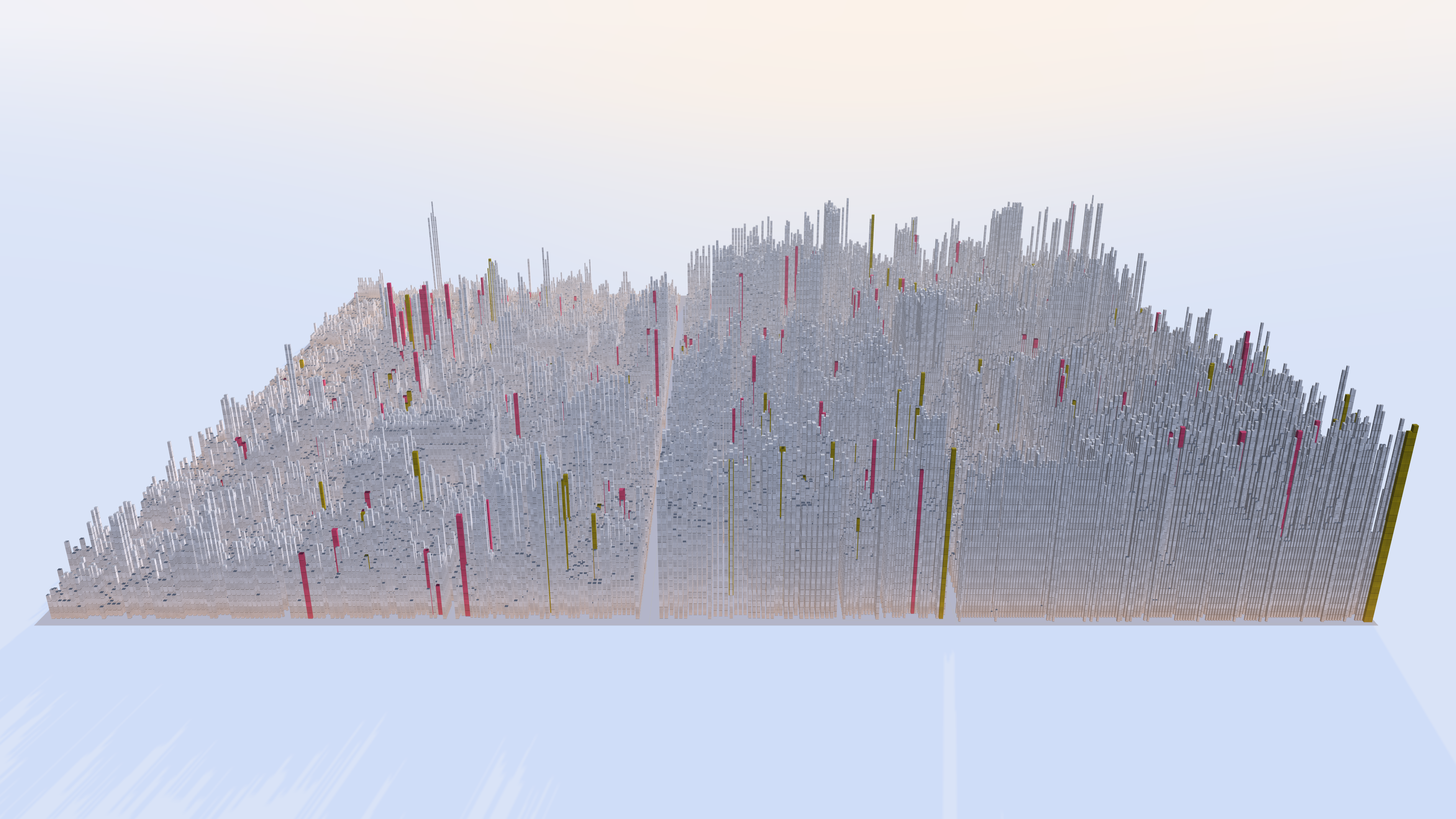
This image illustrates the massive scale and hierarchical structure of the Stacks Project, which Axiom is formalizing into a machine-checked library.
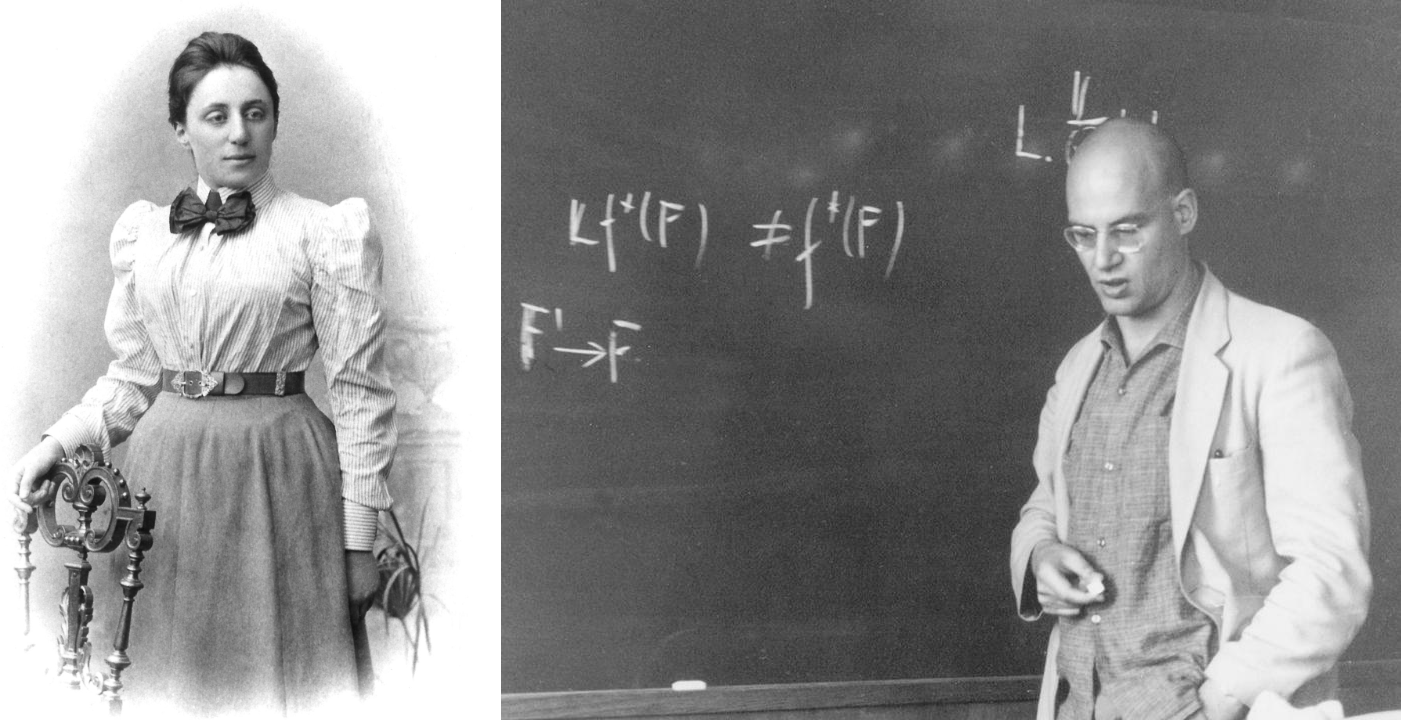
These figures represent the historical lineage of the mathematical concepts organized by the Stacks Project.
As artificial intelligence begins to generate mathematical arguments at a speed that exceeds human inspection capabilities, formal verification becomes a critical safeguard. Axiom's release addresses a significant bottleneck in algebraic geometry: while many modern proofs are now being formalized, they often rely on a long chain of prerequisite theorems that lacked a machine-checked infrastructure. To bridge this gap, Axiom translated the Stacks Project into Lean, a formal proof language. This effort involved managing 16 million lines of code, a task that required more than just isolated scripts. To maintain a coherent library where definitions remain compatible across thousands of interlocking lemmas, Axiom deployed a hierarchical system of coordinated AI agents. These agents worked in parallel to translate statements, search for existing abstractions in the Mathlib library, and resolve prerequisites while ensuring that every definition remained aligned across the entire codebase.
The process of formalization also served as a tool for mathematical refinement. During the project, the system identified dozens of statements in the original Stacks Project that required local corrections, such as missing hypotheses or edge cases in specific mathematical characteristics. Rather than viewing these as failures, the agents diagnosed the underlying obstructions and constructed explicit counterexamples to prove where the original statements were incomplete. These resolutions allowed the team to repair the mathematics so that downstream chapters could still function. While this Lean formalization is an independent open-source project maintained by Axiom, it preserves the original Stacks Project's permanent tag structure, allowing researchers to view the informal text side-by-side with the machine-checked code at stacks.axiommath.ai. This milestone provides a verified starting point for both human mathematicians and AI agents to explore new frontiers in algebraic geometry and its neighboring fields.