The AhaKey X1 is a specialized hardware peripheral designed to facilitate 'vibe coding'—a development workflow where programmers use natural language and AI agents to generate code. Rather than relying solely on complex software shortcuts or navigating multiple windows to interact with AI models, the device aims to keep developers inside their primary work environment. It serves as a tactile interface for the essential loop of interacting with AI assistants like Claude, Codex, and Cursor, attempting to reduce the cognitive load of context switching during rapid iteration.
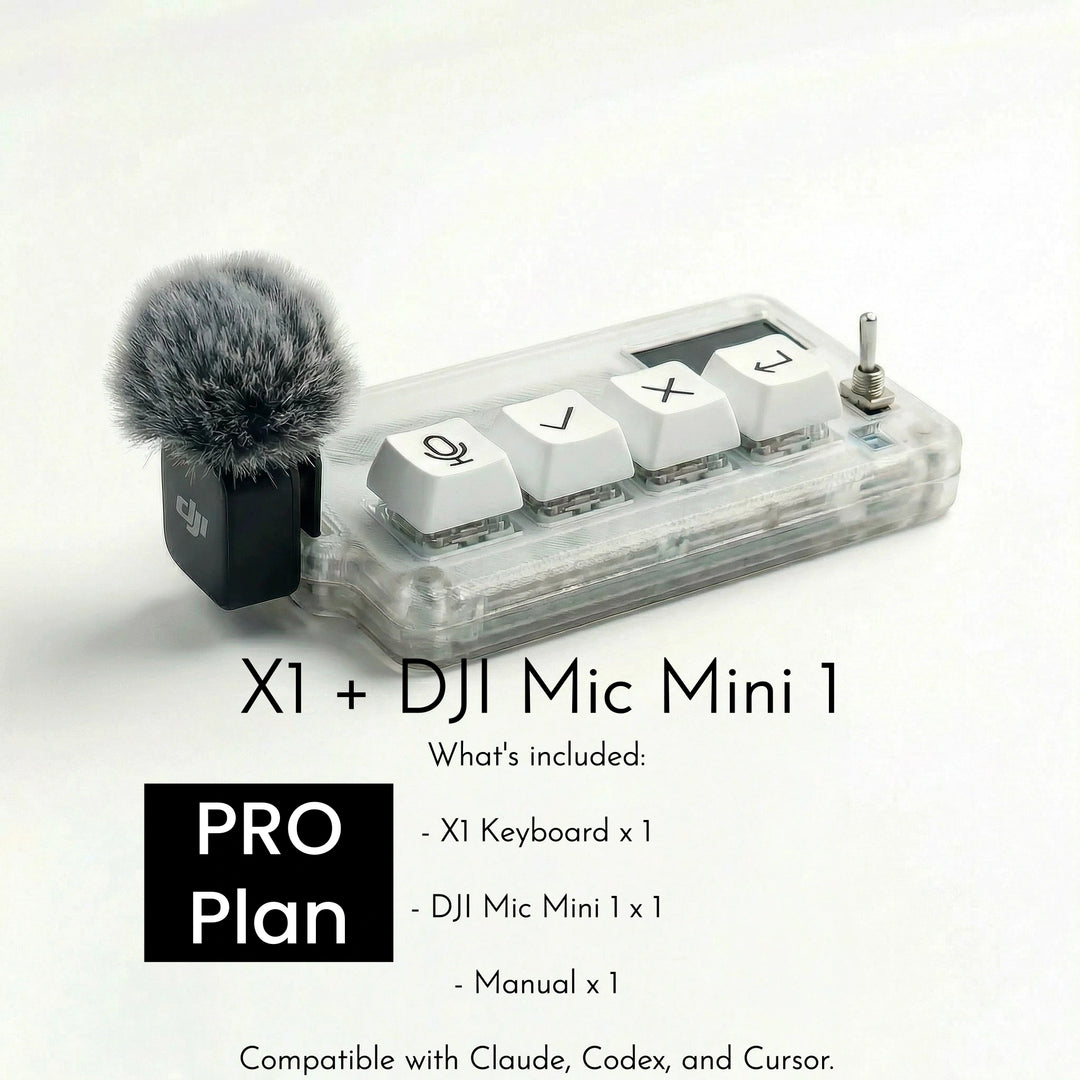
This image illustrates the physical design of the AhaKey X1, which serves as a tactile interface for interacting with AI assistants.
The device functions through a dedicated hardware loop centered on four tactile keys, a metal toggle, and a status display. It is designed to capture 'whisper-level' voice input at 20 dB, allowing a developer to speak a command without interrupting the room or their train of thought. The workflow follows a three-step process: first, the user presses the microphone key to record an instruction; second, they review the resulting transcription or AI response; and third, they use a physical key to either confirm the result or cancel it and try again. This hardware-centric approach is intended to make the AI loop feel more integrated into the physical workspace.
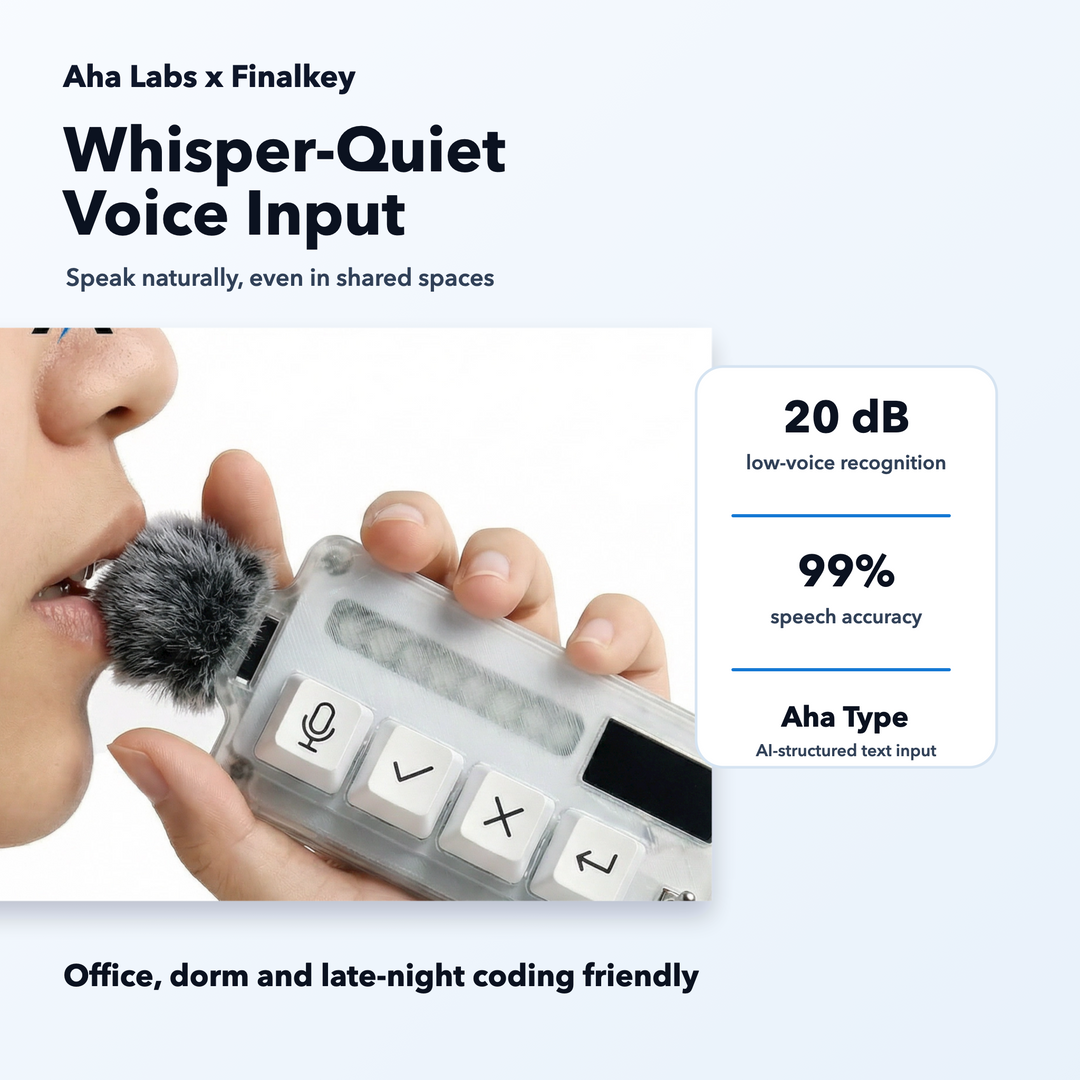
This image supports the description of the hardware's ability to capture low-volume voice commands for a seamless workflow.
While the device offers a streamlined physical interface, it involves specific technical trade-offs and design choices. The hardware is built for low-profile use and supports both USB-C wired and Bluetooth wireless connections across macOS and Windows. However, the source material does not provide independent performance benchmarks to verify if these physical buttons significantly improve coding speed compared to standard software shortcuts. Additionally, the hardware's specific capabilities, such as its microphone's sample rate, may impact the accuracy of transcription for complex technical instructions, a factor that remains a point of consideration for developers seeking high-precision voice integration.
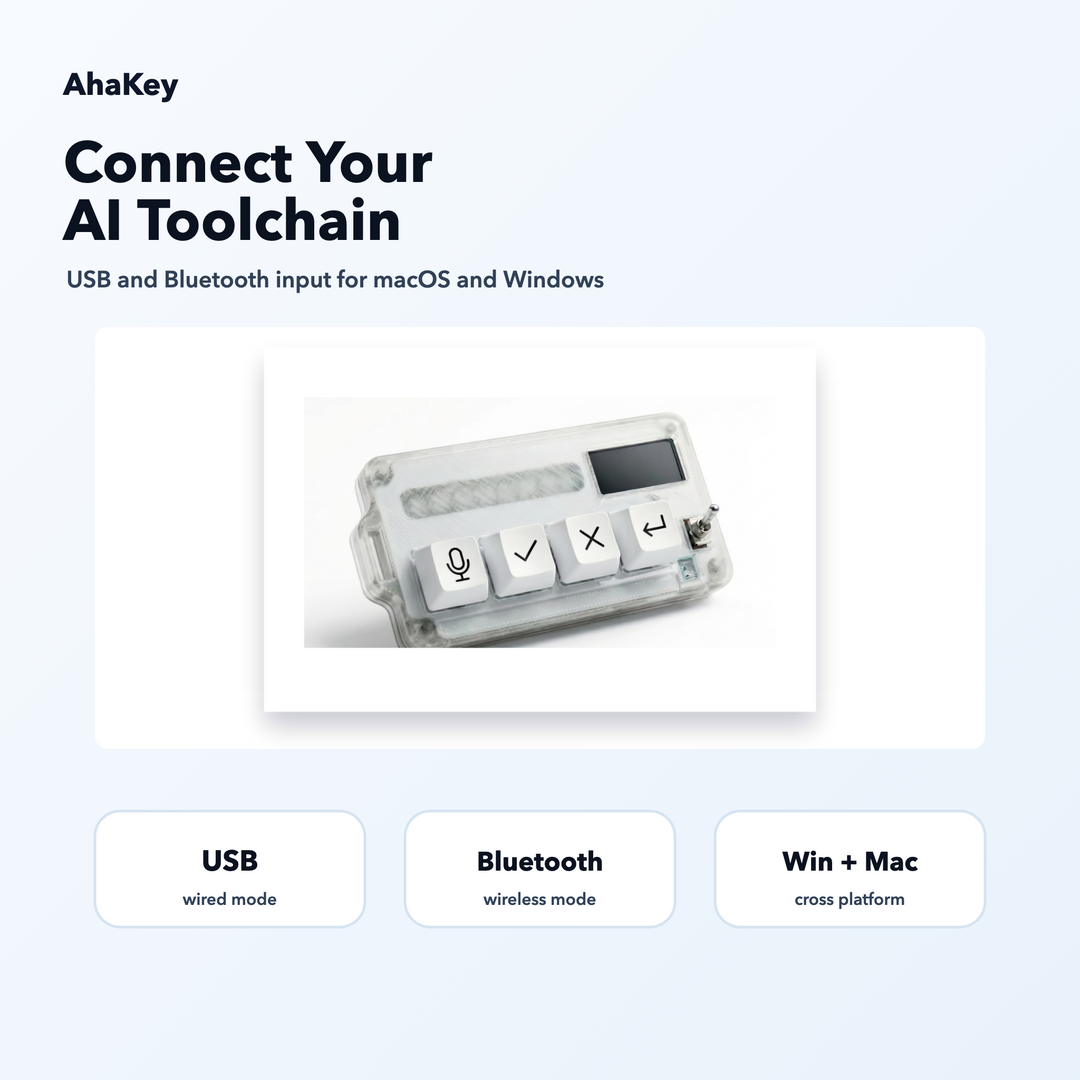
This image highlights the connectivity and cross-platform compatibility mentioned in the technical specifications.