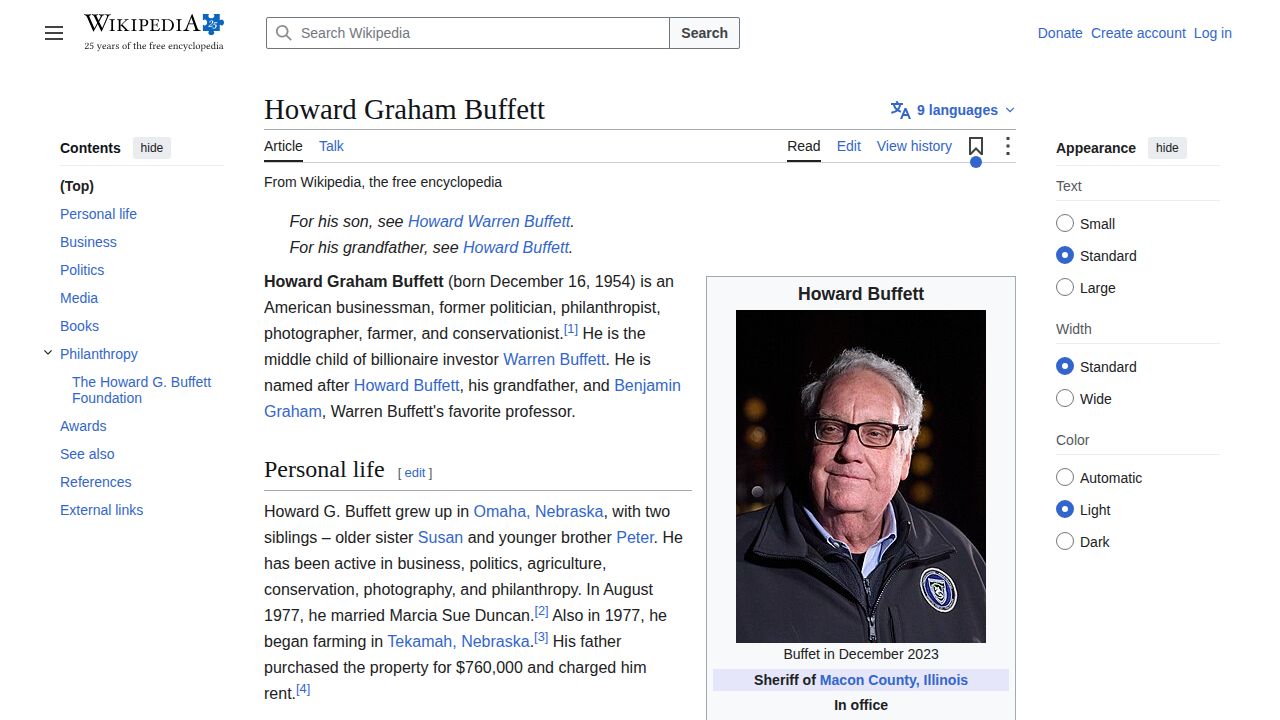
Warren Buffett is set to step down as chairman of Berkshire Hathaway, naming his son, Howard Buffett, as his successor. This transition marks a significant milestone for the investment conglomerate, which has long been synonymous with Buffett's personal leadership and investment philosophy. The move is intended to ensure a smooth transition of the company's governance as Buffett moves away from his primary leadership role.
Crucially, the role Howard Buffett will fill is that of a non-executive chairman. This distinction is central to the company's future structure: while Howard will oversee the company's culture and the family's interests, he will not be responsible for the day-to-day operational management. That responsibility remains with established executives, such as CEO Greg Abel. This structure suggests a governance model where the chairmanship acts as a guardian of the company's core values and long-term vision, while the executive team handles the practical mechanics of running the business.
Howard Buffett's qualifications for the role have drawn mixed reactions. Warren Buffett has characterized his son as a "farmer" who understands the company's values, though Howard also possesses a significant professional background, including experience as a director for several corporations and a long-term role on the board of Berkshire Hathaway. Despite the shift in leadership, some observers suggest that Berkshire Hathaway's long-term investment strategy remains a viable alternative to index funds. However, the move also faces criticism regarding the use of hereditary succession and the potential difficulty of maintaining a specific corporate identity without Buffett's direct, personal oversight. It remains unclear what specific succession plans exist beyond this non-executive chairmanship or what the exact scale of Howard's ownership will be in the coming years.