In his essay for the London Review of Books, Adam Phillips explores the existential tension between human curiosity and the internal mechanisms of self-control. Drawing on Freudian psychoanalysis, Phillips describes the 'superego'—the internal voice of conscience and restriction—as a force that seeks to inhibit and control our instinctual lives. While early psychoanalytic thinkers hoped to temper this restrictive authority to liberate the individual, Phillips suggests that the superego remains a powerful 'saboteur' of curiosity. It functions by providing a sense of certainty and moral order, often at the cost of suppressing the more unpredictable, exploratory impulses of the human psyche.
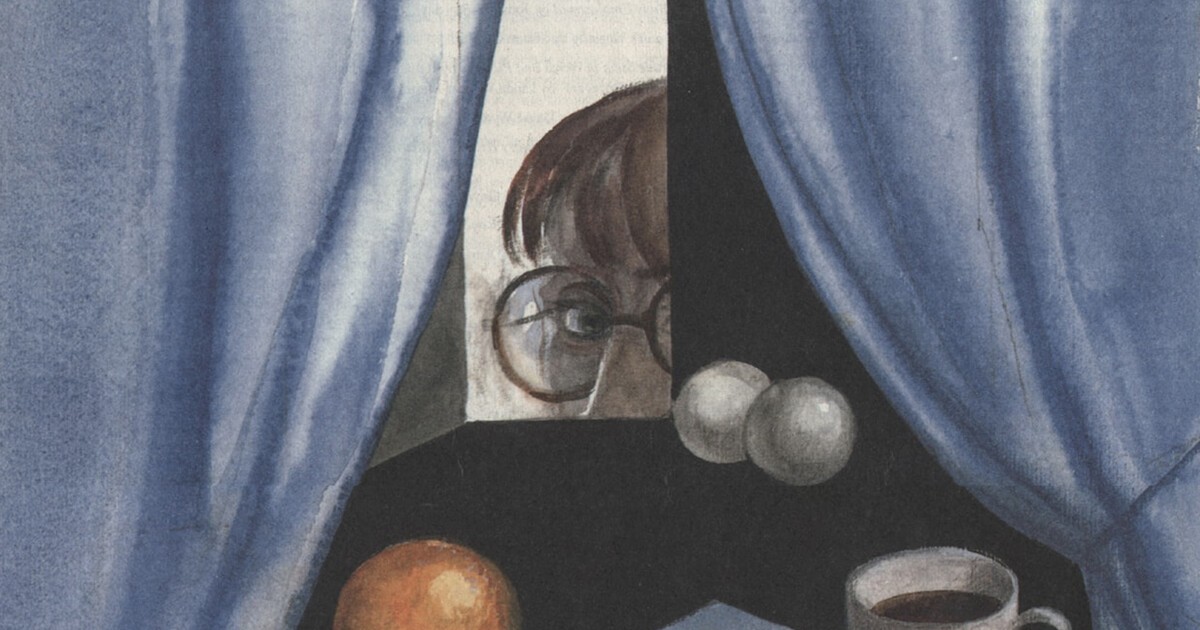
This image identifies the author of the essay, Adam Phillips, who discusses the internal mechanisms of self-control and curiosity.
Phillips argues that curiosity is fundamentally a form of risk because it is 'direction without a destination.' To be curious is to acknowledge a lack—a recognition that we are not omniscient and cannot predict the future. This admission of dependence and helplessness is what makes curiosity frightening to the internal self. When we follow a curious impulse, we relinquish the safety of known boundaries and enter a state of moral and emotional perplexity. The superego, by contrast, offers the comfort of 'knowingness,' attempting to domesticate curiosity by giving it a predictable target or a known moral framework. By making us feel guilty or ashamed, these internal authorities stop us from seeing things from contested points of view, effectively closing down the 'democracy of our own minds.'
Ultimately, Phillips suggests that living a life committed to curiosity requires a willingness to embrace what John Stuart Mill called 'experiments in living.' This involves a trade-off: one must relinquish the security of absolute certainty in exchange for the 'forbidden pleasure' of discovery. Curiosity serves as an antidote to modesty, humility, and self-doubt, but it also exposes the sheer scale of our own unconsciousness. By choosing to follow curiosity, an individual acknowledges that they cannot be entirely self-sufficient, accepting the risk of what they might find—or what they might become—in the absence of a pre-determined destination. Phillips concludes by framing curiosity as a radical act of free association, where the primary goal is to acknowledge how little we truly know about ourselves or the world around us.