During a London trial, a Mercuria freight trader disclosed how the company navigated the 'impossible' task of moving crude oil through the Strait of Hormuz while Iran was actively attacking tankers. To manage the extreme security risks, Mercuria utilized specialized chartering terms that incentivized shipowners to cross the strait as quickly as possible while providing a financial safety net for cargo holders if vessels became trapped.
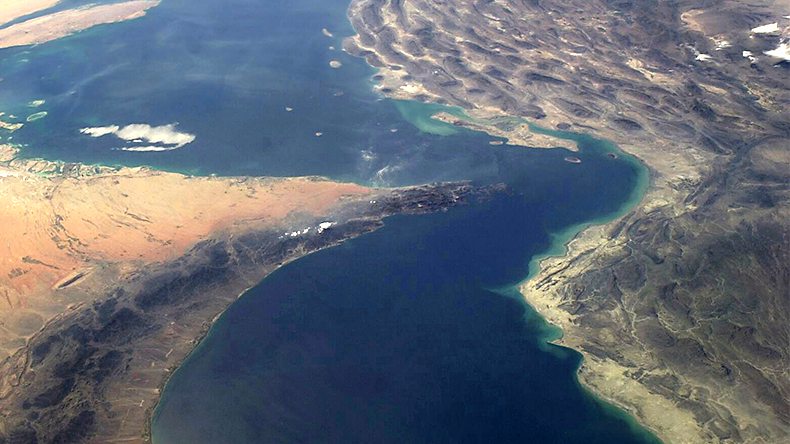
This satellite image provides geographical context for the Strait of Hormuz, the primary setting for the high-risk trade described in the article.
Navigating the 'Impossible' Strait
In the early months of the Hormuz crisis, Mercuria found that standard chartering for Very Large Crude Carriers (VLCCs) inside the Arabian Gulf was effectively impossible. Owners of vessels from companies like Olympic Shipping and Maran Tankers were unwilling to risk their ships transiting the strait without specific protections.
To overcome this, Mercuria turned to Sinokor, a key non-state-backed player in the region. They secured fixtures for Sinokor vessels at 'extremely high' prices, primarily because the company had few other options to move its stranded crude.
“This structure was designed to incentivise the shipowner to cross the strait as soon as it was possible to do so, given that the demurrage recovery would continuously decrease.”
— A rare glimpse inside the high-risk, high-reward Hormuz trade
The SOH Clause and Declining Demurrage
A critical mechanism in these high-risk trades was the 'Strait of Hormuz Clause' (SOH Clause). This provision gave the ship's master or the owner the right to refuse a transit if they judged the conditions unsafe, a necessary concession to secure tonnage during the conflict.
To balance this risk, Mercuria implemented a declining demurrage structure. As a cargo holder, Mercuria agreed to pay a daily fee that decreased over time. This meant that if a ship was trapped inside the Arabian Gulf for an extended period, the cost of the fixture would drop, effectively turning the vessel into a low-cost floating storage unit.
This structure was specifically designed to incentivize owners to cross the strait as soon as it was safe, as their recovery of demurrage fees would continuously diminish the longer they waited.
Shuttle Services and Military Escorts
The Adnoc shuttle tanker system provided a way to bypass the strait's risks entirely. By performing ship-to-ship (STS) transfers in the Gulf of Oman, Adnoc allowed cargo interests to move oil without requiring their primary vessels to enter the high-risk zone of the Strait of Hormuz.
Mercuria utilized this service through Navig8, which acted as a middleman for Adnoc. This arrangement allowed Mercuria to fix VLCCs loading off Oman, shifting the transit risk away from the cargo holders and onto the shuttle system.
During a brief period of diplomatic cooperation, Mercuria even secured a US military escort for a Sinokor voyage. However, this window of opportunity closed quickly as attacks on ships in the strait resumed, causing market confidence to deteriorate again.