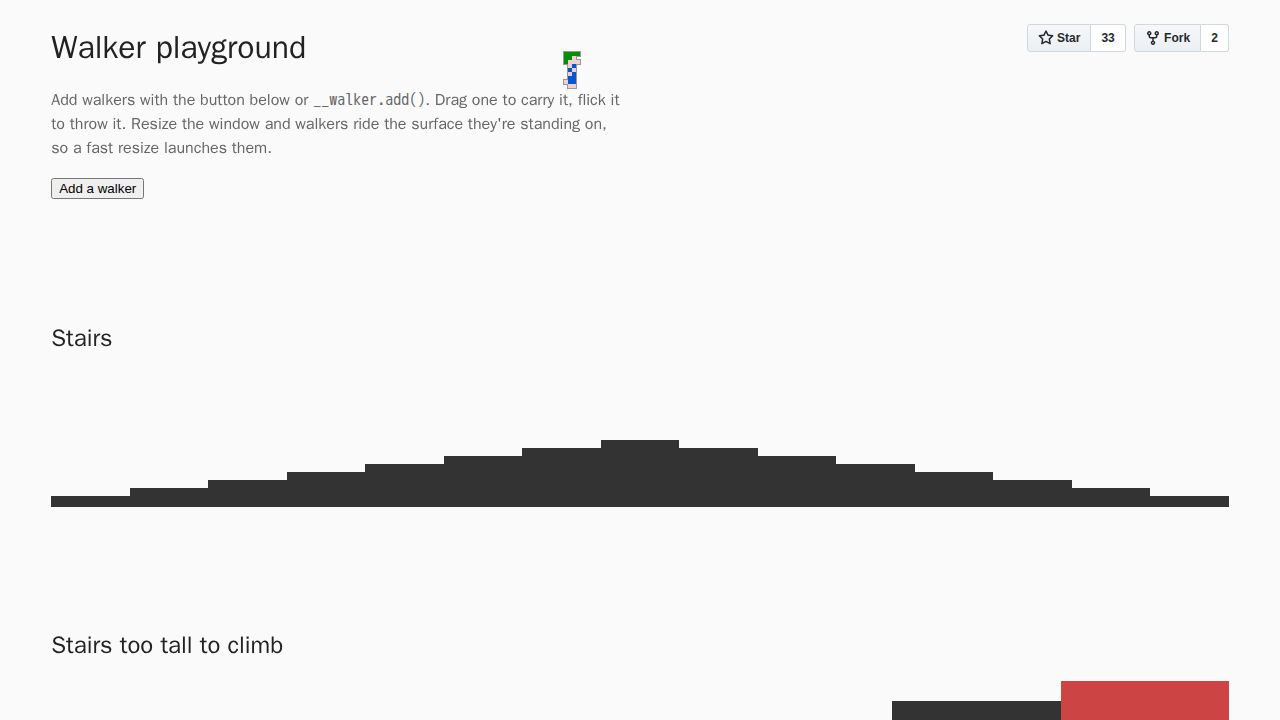
A developer has released a project that recreates the mechanics of the classic game Lemmings using CSS animations. In this implementation, 'lemmings' navigate a digital environment composed of text and web elements. The project highlights a shift in web capabilities, moving away from the era of server-side rendered pages with minimal JavaScript toward a modern environment where complex, character-level animations can be orchestrated directly within the browser.
One of the technical highlights discussed by observers is the ease with which modern browsers can determine the exact block size of individual characters. This precision allows the lemmings to navigate around specific text elements rather than just treating entire DOM (Document Object Model) blocks as obstacles. This capability enables more granular interactions, such as lemmings reacting to viewport scrolling—where they might 'plummet' during a downward scroll or 'bounce' as if on a trampoline during an upward scroll. These behaviors demonstrate how CSS and browser rendering engines can be leveraged to create interactive, physics-like experiences on standard web pages.
Despite the technical polish, the project faces several practical and accessibility constraints. For instance, users who have 'reduced motion' enabled in their operating system settings may see no animation at all, a common hurdle for motion-heavy web projects. Additionally, mobile users may encounter zoom bugs, which some suggest could be mitigated by specific CSS properties like `overflow-x: clip` and `touch-action: manipulation`. There are also design trade-offs regarding the 'scenery' layout; some observers noted that the current positioning can cause lemmings to fall off the side of the screen, suggesting that more 'pits' or adjusted padding could improve the navigation flow. The project serves as a showcase for how far web animation has come, while also highlighting the ongoing need to balance visual flair with accessibility and responsive design.