Ladybird is a new browser project currently in its pre-alpha phase, aiming to provide a fully open web experience. In its October 2026 update, the project achieved a significant milestone in browser responsiveness by moving style and layout processing off the main thread. In most traditional browsers, JavaScript, style, and layout all run on a single main thread; if a script is busy, the page cannot update. Ladybird now runs style and layout on their own threads, and paint recording on another. This allows CSS animations—including those that change layout properties like `width` or `font-size`—and `:hover` states to remain functional even while a long JavaScript script blocks the main thread.
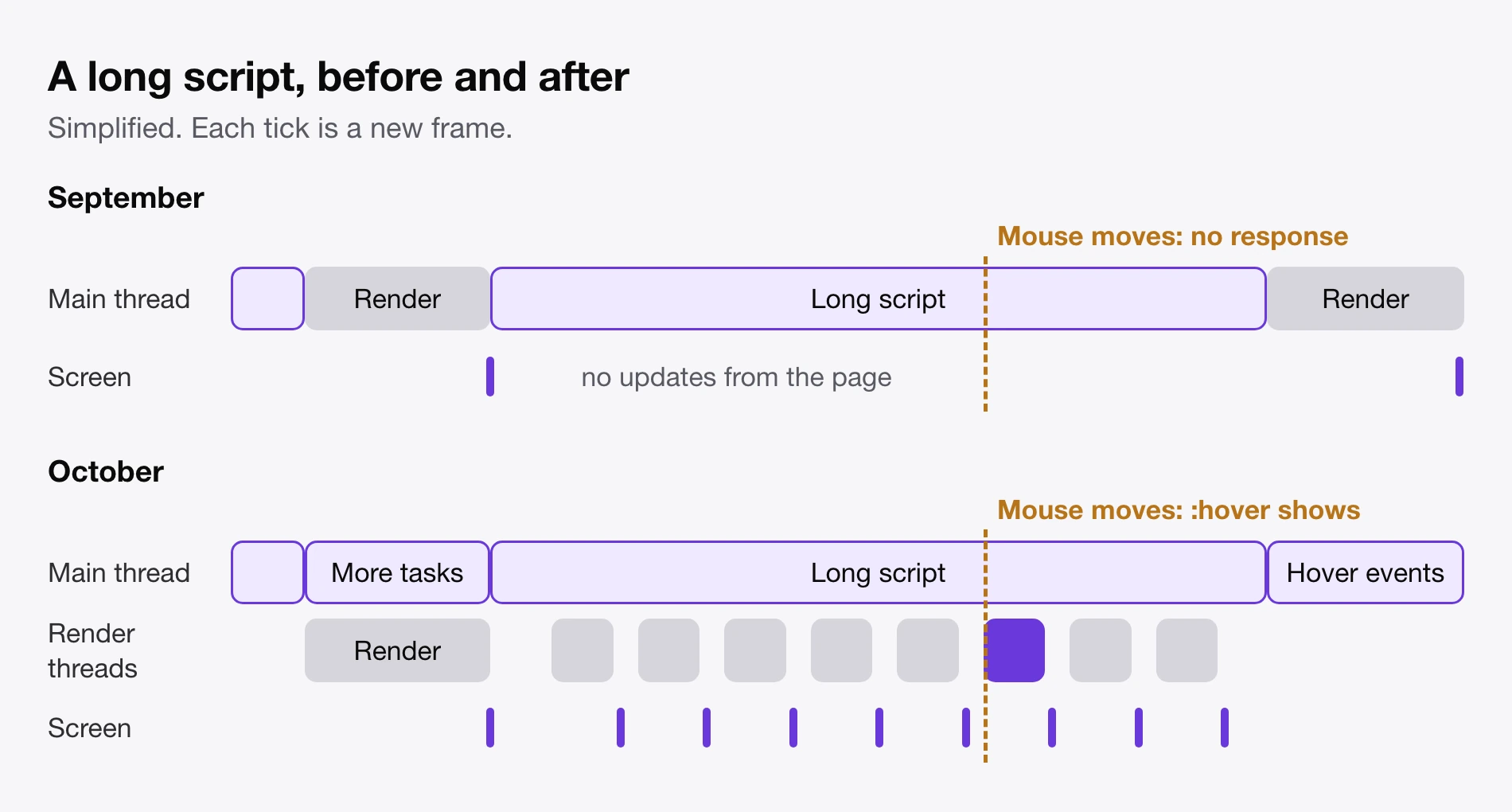
The image demonstrates the transition from a single-threaded model where scripts block the UI to a multi-threaded model where style and layout remain responsive.
To improve execution speed, Ladybird introduced a JavaScript Just-In-Time (JIT) compiler for Linux and macOS. The JIT uses speculative optimization based on runtime type profiling to compile 'hot' JavaScript code into machine code for x86-64 and AArch64 architectures. Alongside this, the project replaced its previous C++ WebAssembly engine with a new engine featuring its own interpreter and JIT. This new engine supports modern WebAssembly features like exception handling and garbage collection, achieving a 7x performance increase on specific JetStream 3 Wasm workloads compared to the previous engine.
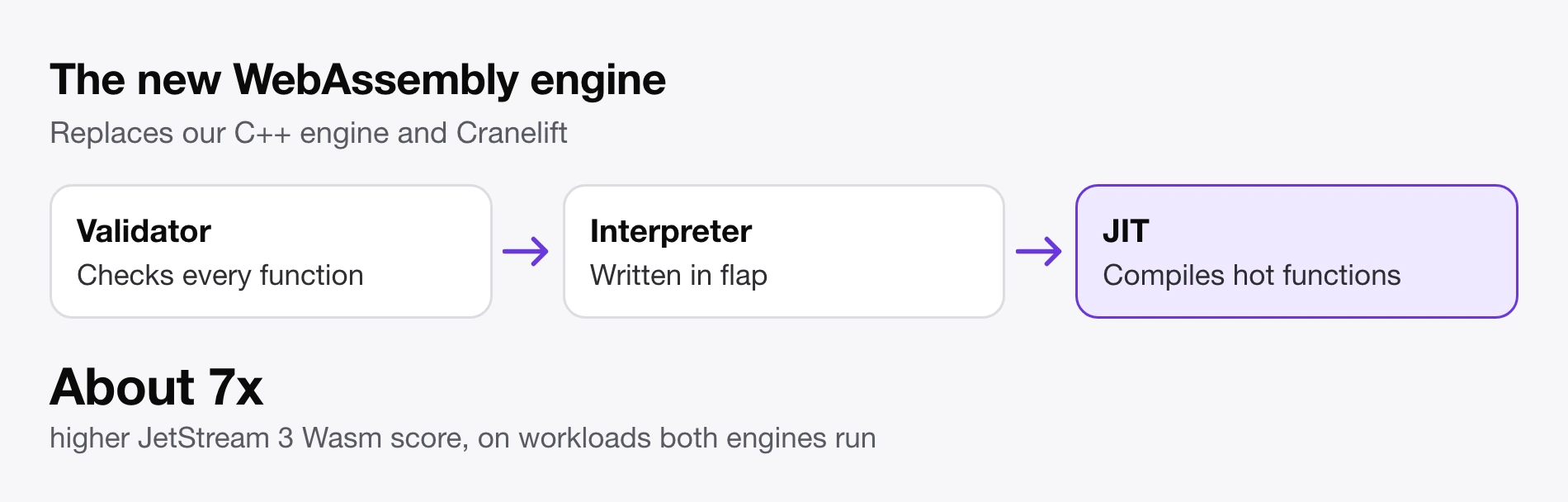
This diagram explains the internal components of the new WebAssembly engine mentioned in the second paragraph.
Ladybird also enhanced security and process isolation by giving cross-site iframes and popups their own renderer processes and assigning each top-level site its own network process. These changes ensure that a compromised renderer is more isolated from other parts of the system. While these updates significantly improve performance and responsiveness, the browser remains in pre-alpha, with some features like screen reader support still requiring substantial development.
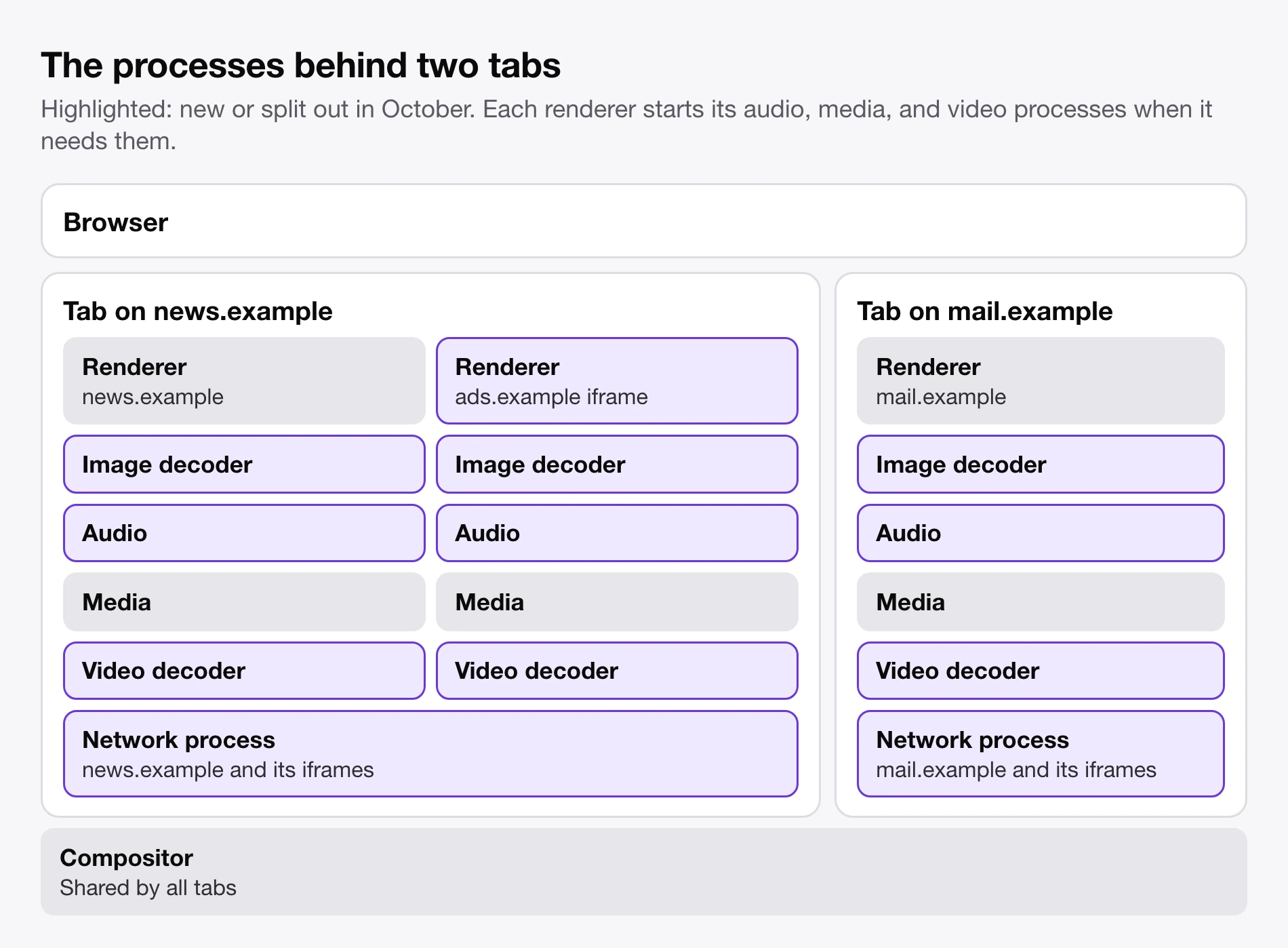
The image illustrates the process isolation and security enhancements described in the final paragraph of the article.