Kino is an integrated media platform designed to consolidate the fragmented tools typically used in video production. By unifying storage, editing, and review into a single environment, the platform aims to streamline the workflow for both human teams and AI agents. Unlike traditional setups where footage is stored in one cloud service, edited in a non-linear editor (NLE), and reviewed in a separate feedback tool, Kino hosts all assets and project data in one place. This integration allows for a more cohesive experience where every clip is transcribed, described shot-by-shot, and searchable by metadata such as codec, camera, lens, and shoot day.
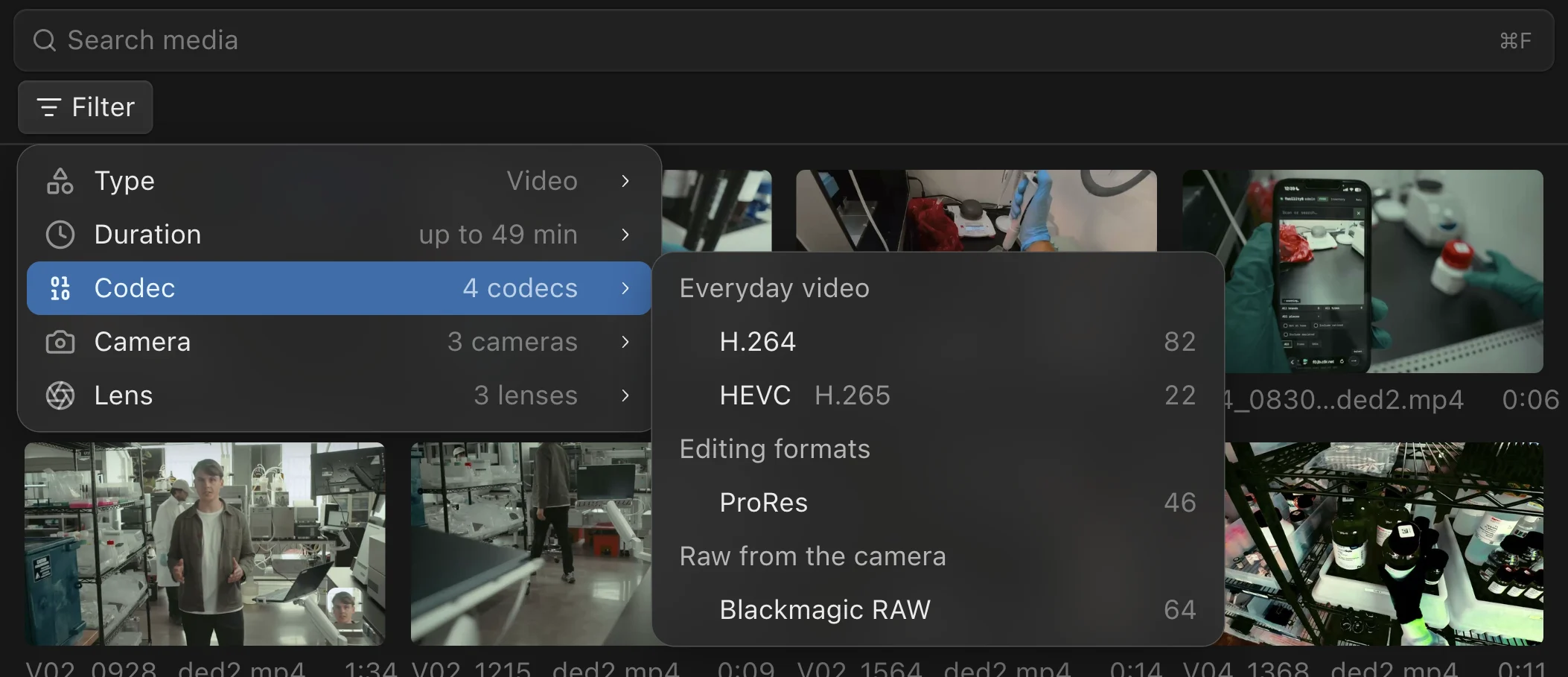
This image illustrates the platform's ability to manage and filter high-resolution raw files and various codecs in a single library.
The platform's core mechanism involves the use of AI agents that can perform 'one-shot' tasks to accelerate the production pipeline. These agents can read footage to perform rough cuts, generate motion graphics and animations—built on the Remotion framework—and find relevant b-roll from sources like YouTube. While the agents handle these repetitive or time-consuming tasks, the human editor remains in control of every creative decision. For example, a user can prompt an agent to make a video vertical or follow a specific speaker, and the agent executes the change while leaving the clips on the timeline for the human to refine. This allows creators to act as creative directors overseeing a 'swarm' of agents rather than performing every manual adjustment.
Technically, Kino distinguishes itself by handling high-resolution raw files, such as RED and Blackmagic RAW, locally without requiring transcoding. This ensures that projects remain consistent across different machines because every clip streams directly from the Kino library. The review process is also integrated into the timeline: stakeholders can view a link and leave notes that appear directly on the timeline. These notes can then be sent to the AI agent, which can interpret the feedback and automatically apply the requested changes. While the platform offers significant automation, its current capabilities are primarily established through first-party demonstrations and user testimonials, leaving the specific accuracy of the agents in complex scenarios or the platform's performance under extreme multi-user stress as areas for further observation.
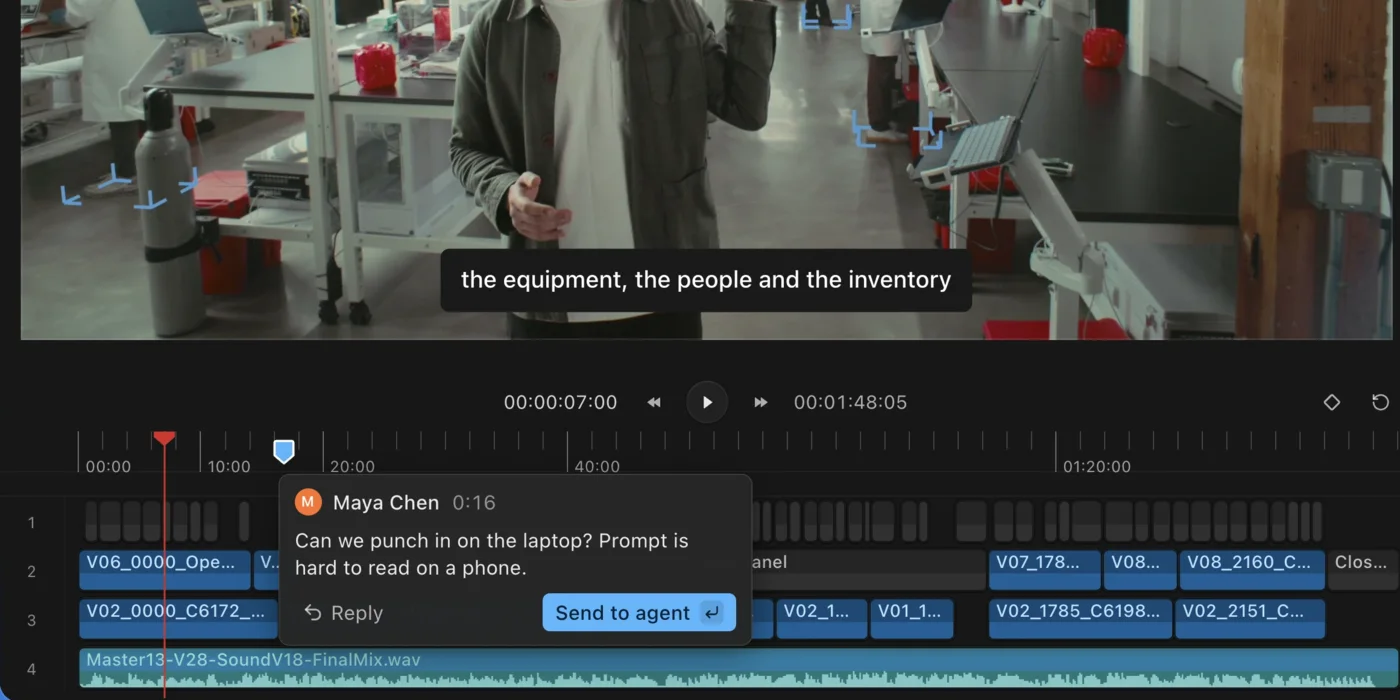
This visual demonstrates the integrated review process where notes appear on the timeline and can be interpreted by AI agents.