A 'Hackintosh' refers to the practice of installing and running the macOS operating system on non-Apple hardware, a project with a history dating back to the late 1980s. For years, this community relied on x86 architecture to achieve near-native performance through technologies like KVM and PCI passthrough. However, the release of the M1 MacBook Air in 2021 marked a significant turning point. As Apple transitioned to its own ARM-based silicon, the viability of x86 versions of macOS began to decline, leading many to believe the Hackintosh community would eventually fade away as software support for non-Apple hardware was phased out.
Recent developments suggest a resurgence in this space, driven largely by the rapid advancement of artificial intelligence. Developers are now leveraging AI-assisted tools, such as Claude Code and OpenAI Codex, to accelerate the analysis of complex system files and create workarounds for hardware incompatibilities. This shift has enabled a surge in activity over the past few weeks, allowing for the successful execution of macOS 27 on Snapdragon laptops and even the deployment of iOS 17 on a Nintendo Switch OLED. These milestones demonstrate how AI can act as a force multiplier for reverse engineering, helping developers navigate the intricate requirements of the Apple ecosystem more efficiently than was possible manually.
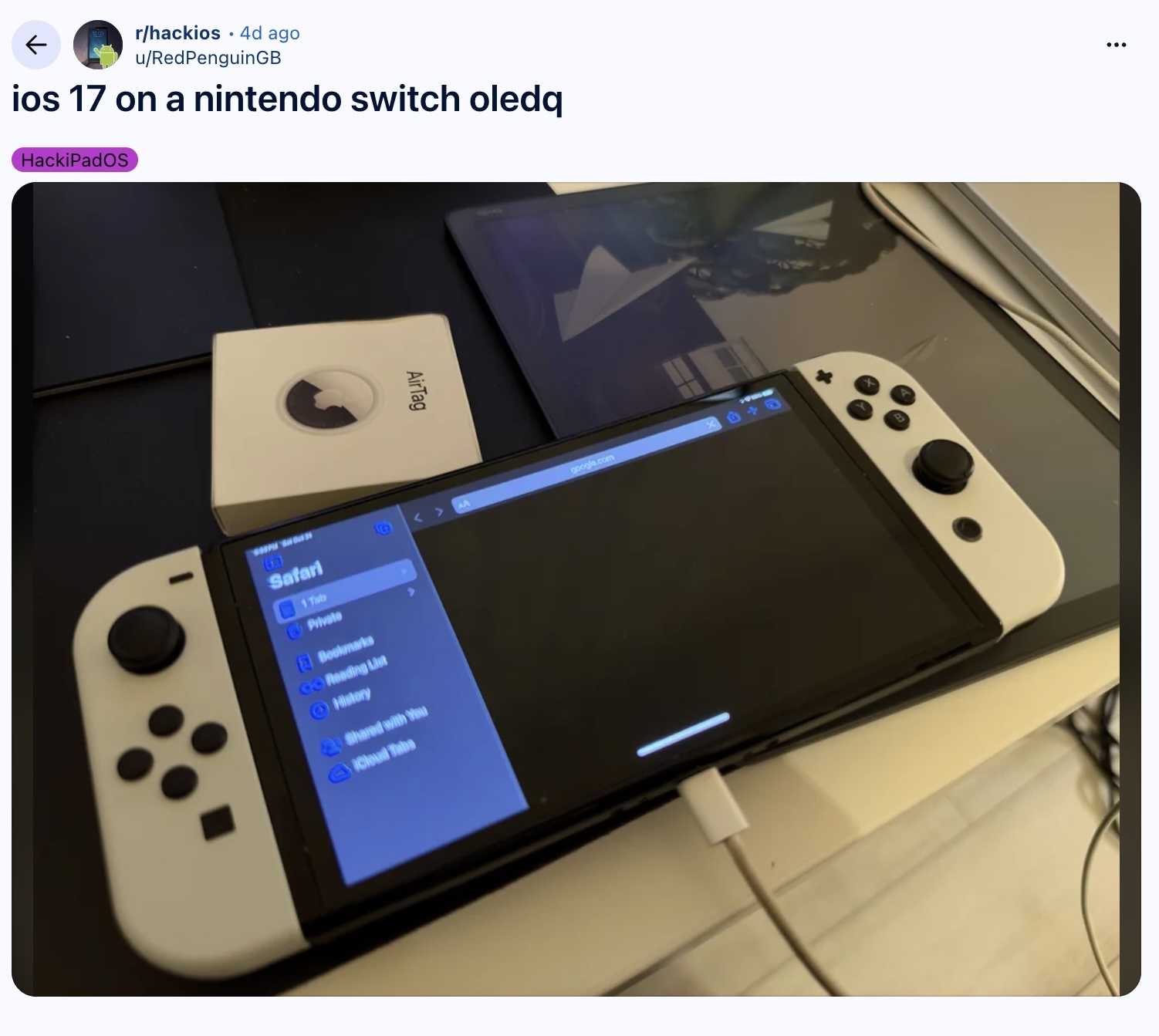
The image illustrates the technical environment where AI-assisted tools like Claude Code are used to analyze system files.
Despite these technical milestones, the practical utility of these setups remains a point of consideration. While the community is successfully pushing the boundaries of what hardware can run macOS, some users note that the primary value of such configurations may be limited to specific use cases, such as headless build machines. Furthermore, while AI-generated patches and drivers—such as those for 50-series Nvidia GPUs—are emerging, the long-term stability and security of these non-standard configurations remain unknown. The current era of 'Hackintosh' is defined by a trade-off between the technical feat of hardware ownership and the inherent complexities of maintaining a system supported by AI-driven workarounds rather than official manufacturer support.