Starting in early 2027, Google plans to turn off AI tools by default for K-12 Google Workspace for Education accounts. However, this move includes a significant caveat: Google Search will also be disabled by default in these accounts. According to Chris Phillips, Google's vice president for education, the two services are 'deeply integrated,' making it technically difficult to decouple them. While Google later clarified that schools could opt back into Search independently, the core issue remains that Search results are increasingly tied to AI-driven features like AI Overviews, which provide synthesized answers rather than a list of raw sources.
Educators argue that this integration threatens the fundamental mechanics of learning. The central argument is that education relies on 'friction'—the effort, struggle, and perseverance required to understand a concept before it 'clicks.' In this view, a search engine is an engine of discovery where students learn to reflect, weigh, and synthesize clashing perspectives. By providing immediate, AI-generated answers, the technology removes the necessary struggle of research, potentially weakening a student's ability to develop critical thinking skills. Educators express concern that over-reliance on these tools leads to 'outsourcing' the very thinking students are in school to develop, a risk compounded by the fact that AI can occasionally 'hallucinate' or fabricate information.
The tension highlights a conflict between corporate incentives and educational goals. Because Google's primary customers are advertisers, its tools are optimized for speed and engagement. In contrast, educational tools are ideally aligned with the user's need for evidence-based discovery. Alternatives like Kagi Search attempt to address this by offering a 'user-aligned' model where AI is optional and results are ad-free. For schools, this model allows for greater control over when and how AI appears, ensuring that students can still access the open web without being forced into a specific AI-mediated experience. The debate ultimately centers on whether the convenience of a 'speed-run' to an answer outweighs the long-term value of the struggle to find it.
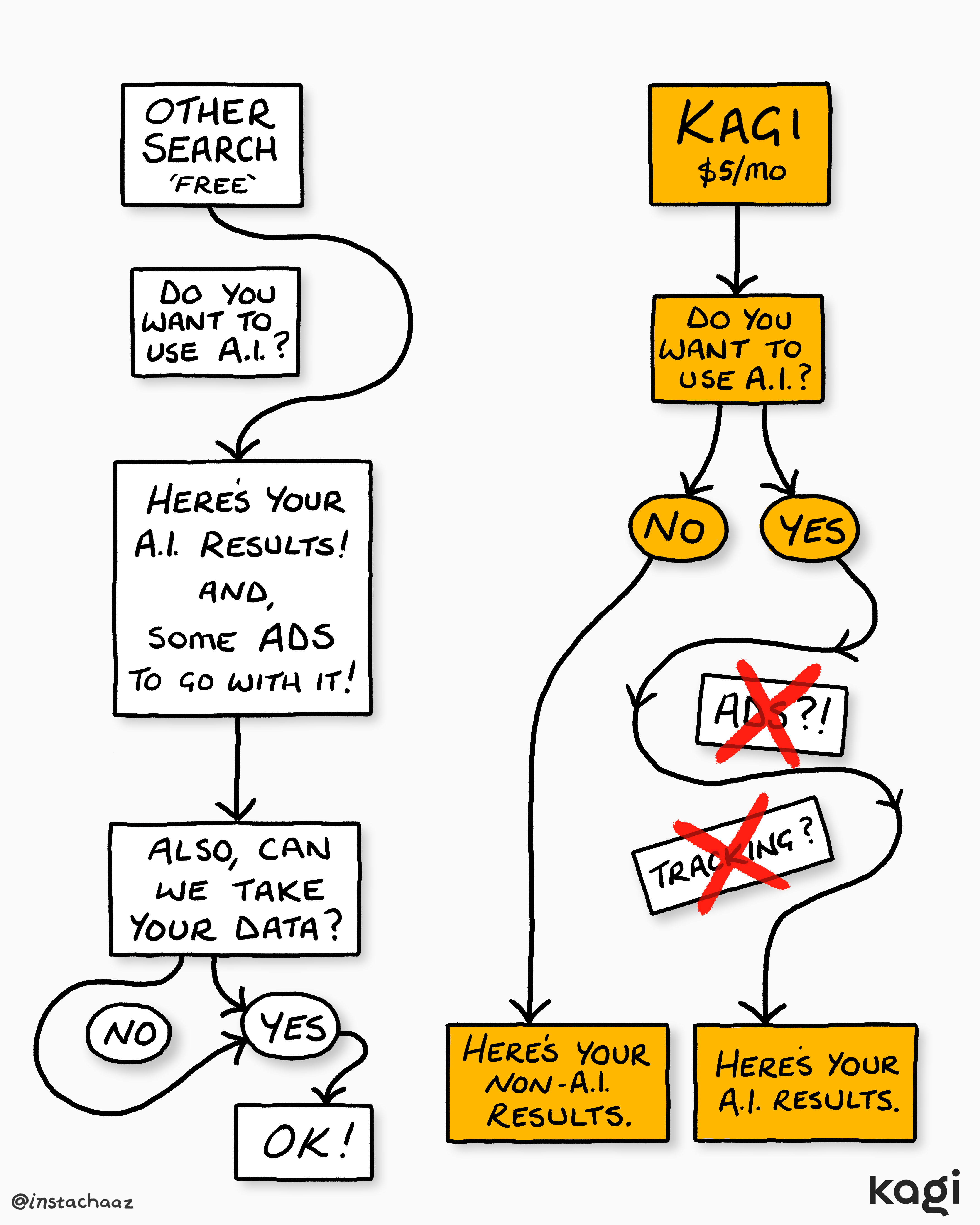
This comic illustrates the difference between standard search engines that bundle AI and ads, and user-aligned models like Kagi.
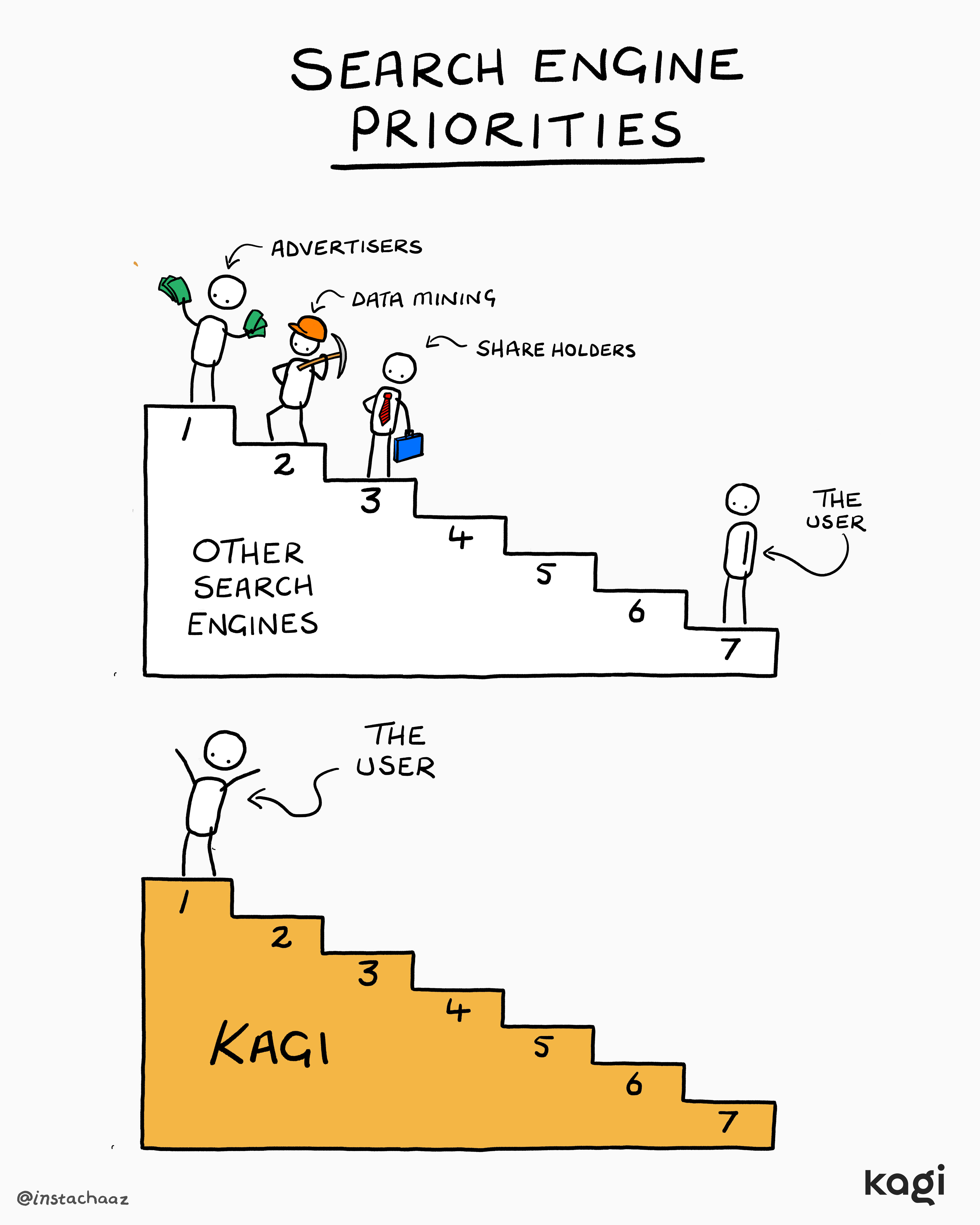
This graphic highlights the conflict between corporate incentives and user-centric educational goals mentioned in the text.