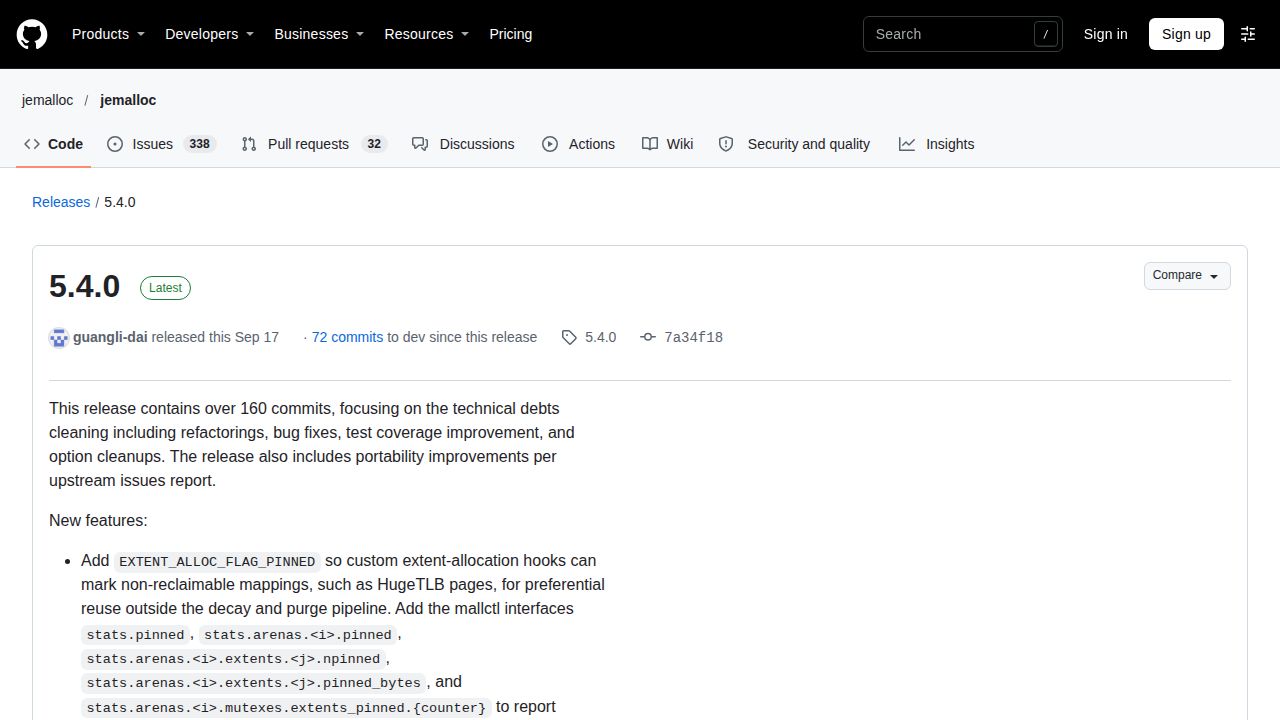
The release of Jemalloc 5.4.0 marks a notable return to active maintenance for the memory allocator after a period of relative inactivity since 2022. Jemalloc is a general-purpose memory allocator frequently used in high-performance computing and web applications to manage how software requests and receives memory from the system. Its recent update has sparked community discussion regarding the project's long-term health and its transition away from direct involvement by Meta (formerly Facebook), which was a primary driver of the project's development for many years.
Users have reported substantial practical benefits from switching to Jemalloc, particularly in production environments running Ruby on Rails applications. One commenter reported a dramatic reduction in memory usage, falling from 8GB to under 1GB for a Sidekiq queue. These efficiency gains are a primary reason the allocator is favored in containerized environments like Kubernetes, where minimizing the memory footprint of individual services is critical for scaling and cost management. While the specific technical changelog for version 5.4.0 is not fully detailed in the discussion, the community's focus remains on these real-world performance improvements.
Beyond general memory efficiency, Jemalloc offers specific technical features that distinguish it from competitors like tcmalloc and mimalloc. Specifically, it provides per-thread allocation counters, which allow developers to track memory usage on a per-thread basis and enforce strict memory budgets. This capability is particularly useful for CPU-bound applications where developers may want to route requests to specific threads and ensure no single thread exceeds its allocated memory quota. However, the project's future remains a point of discussion, as the community observes the shift in governance and the removal of the original creator's name from the primary branding following his departure from the project.