The Flipper One is an open Linux multi-tool designed for network analysis and hardware hacking. Unlike its predecessor, the Flipper Zero, which operates on a low-power microcontroller, the Flipper One utilizes a dual-processor architecture to balance core device management with high-performance computing. A low-power Raspberry Pi RP2350 microcontroller handles the physical buttons, status LEDs, and the LCD display, while a high-performance Rockchip RK3576 octa-core CPU runs the Linux operating system. This separation ensures that the device remains accessible even if the Linux kernel is offline or initializing.
At its core, the Flipper One is built on a mainline Linux kernel, a design choice intended to ensure long-term software maturity and community support. By partnering with Collabora, the developers aim to provide a platform free from vendor-specific binary blobs and locked boot systems. This architecture allows the device to function as a sophisticated network toolkit, capable of managing up to five uplinks for multi-WAN routing, failover, and load balancing. It also supports Wi-Fi 6E scanning and packet injection via a Mediatek MT7921U chipset, and can act as a VPN tunnel, a Wi-Fi hotspot, or a passive sensor to detect network anomalies.
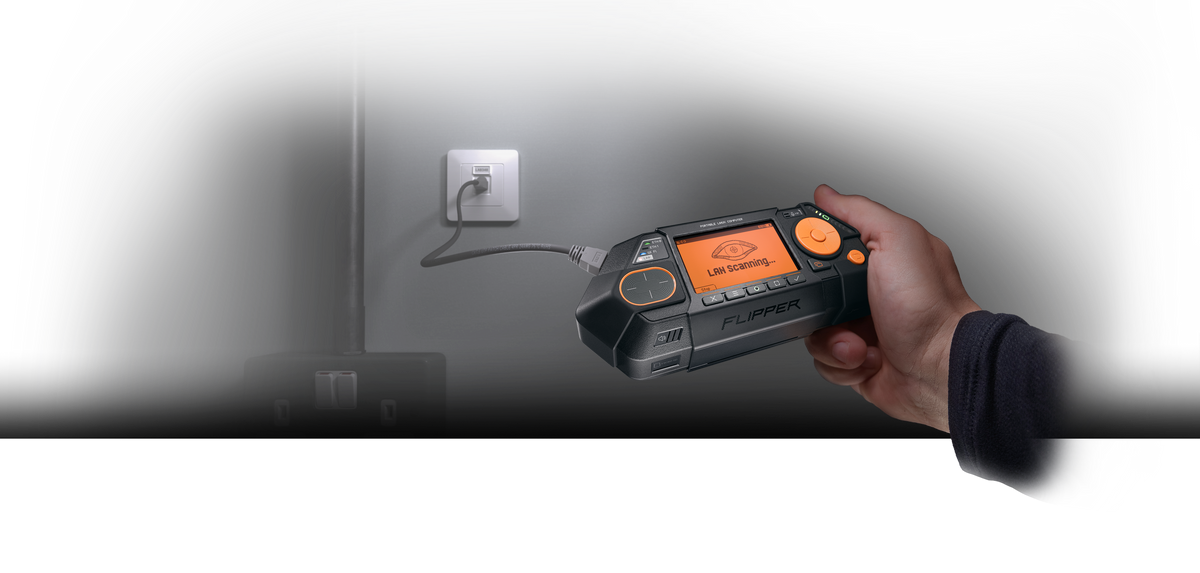
This image illustrates the device's ability to function as a sophisticated network toolkit for scanning and analysis.
Hardware extensibility is a primary feature of the Flipper One, centered around an internal M.2 expansion slot. This slot supports a variety of modules, including 5G cellular modems, SDR radios, and NVMe SSDs. Additionally, the device features a physical GPIO connector for DIY modules and a built-in eSIM for experimental connectivity. While the platform is highly capable, some features are still in development; for instance, while the RK3576 is largely supported in the mainline kernel, hardware video decoding and NPU acceleration are not yet fully functional. These limitations represent the current trade-off of choosing a cutting-edge, fully upstream-supported hardware path over a more mature, proprietary stack.
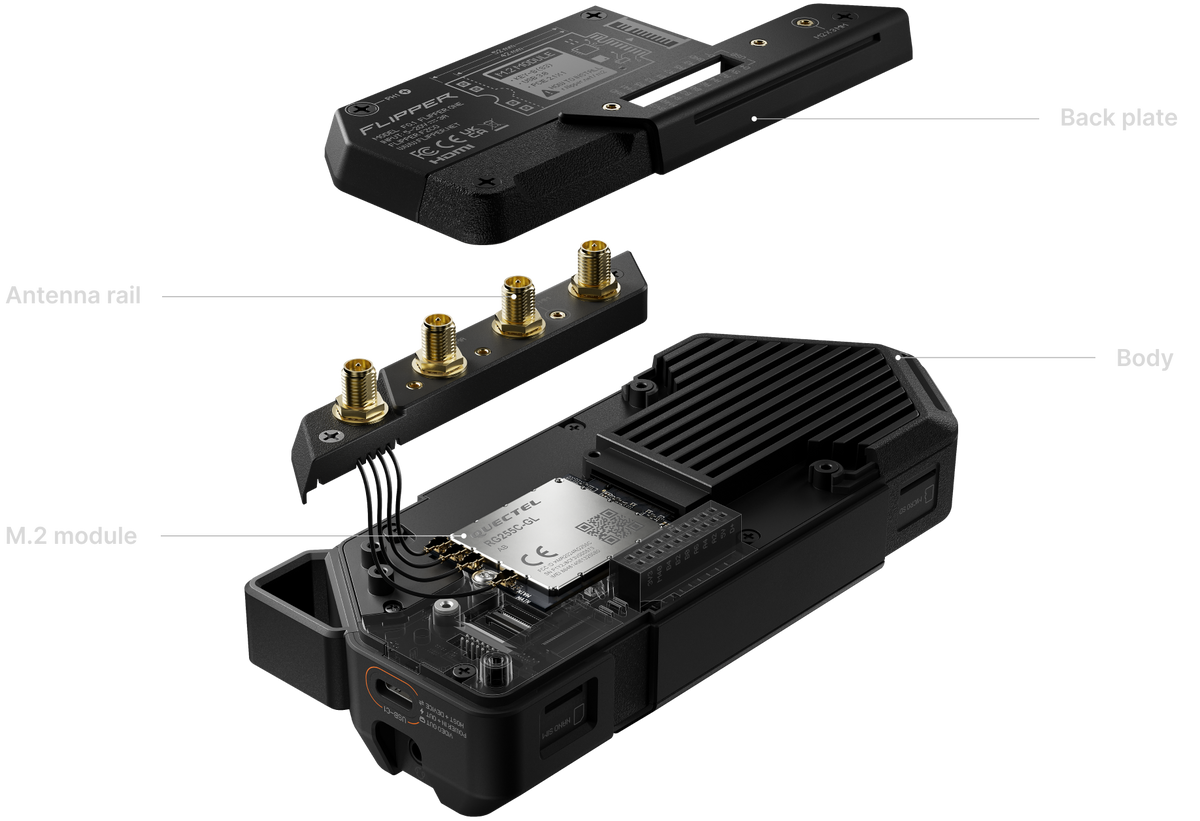
This visual demonstrates the hardware extensibility and the variety of modules supported by the M.2 slot.
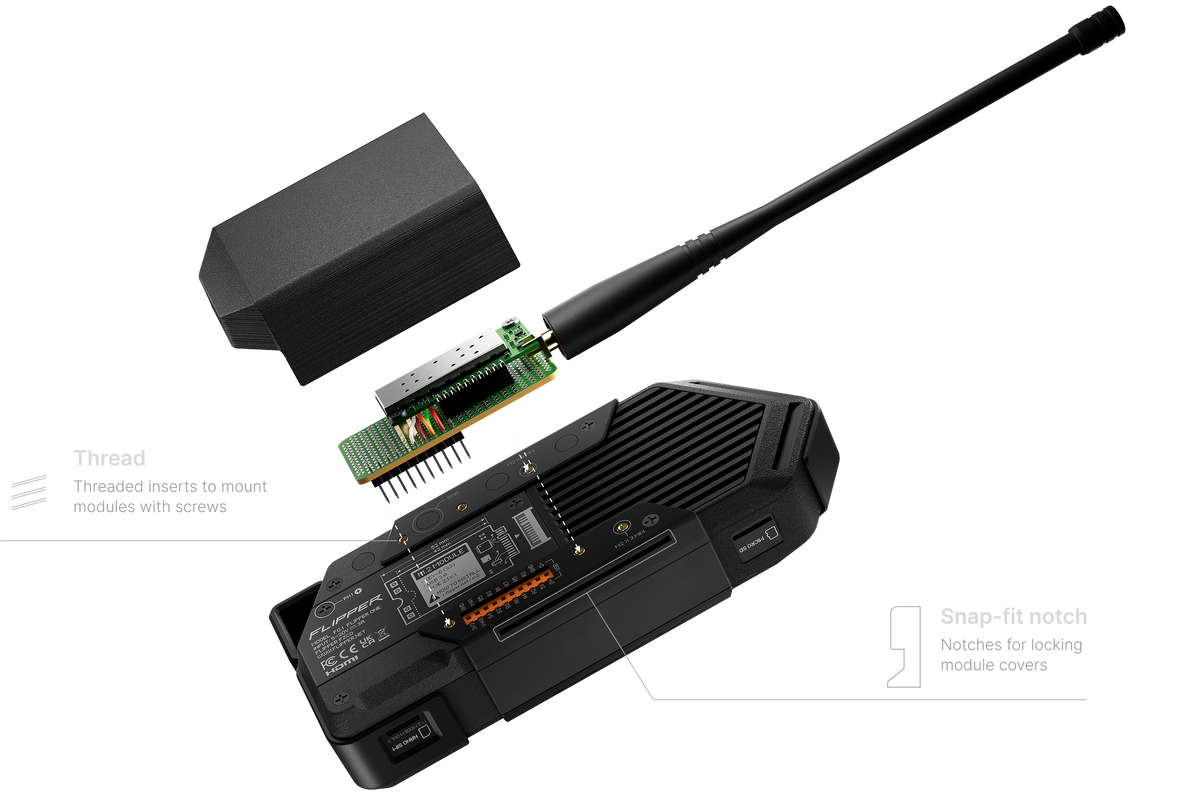
This image highlights the physical GPIO connector mentioned as a primary feature for hardware extensibility.