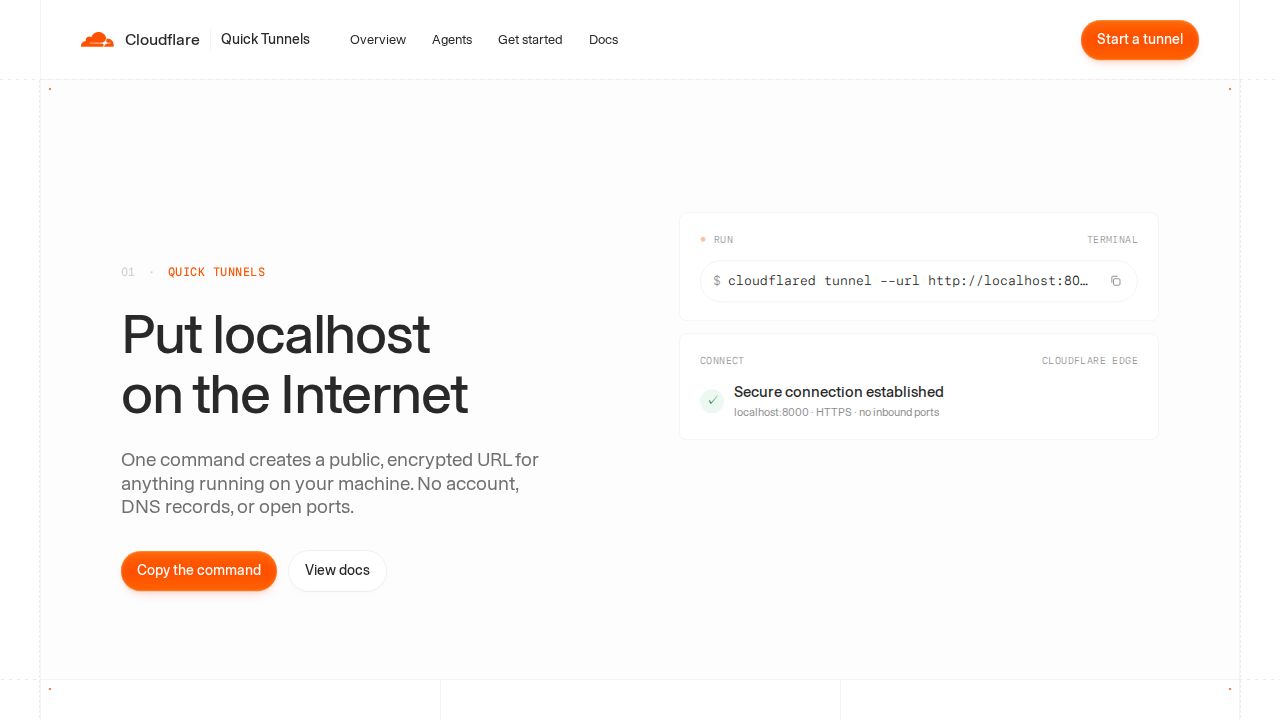
Cloudflare has introduced a streamlined method for developers to share local projects instantly through 'Quick Tunnels.' This feature allows a user to run a simple command—such as `cloudflared tunnel --url http://localhost:8000`—to generate a unique, publicly accessible HTTPS URL from any service running on their machine. Unlike many other tunneling solutions, this specific workflow requires no Cloudflare account creation, no manual DNS record management, and no complex configuration files, making it designed primarily for rapid development loops like sharing previews, testing webhooks, or providing endpoints for coding agents.
The underlying mechanism relies on an outbound-only architecture. Instead of requiring the user's router to accept unsolicited incoming traffic (which usually necessitates port forwarding), the `cloudflared` connector initiates an outgoing encrypted connection to the nearest Cloudflare edge location. Once this bridge is established, public requests are routed through the Cloudflare network and delivered back through that existing connection to the origin server at `localhost`. Because the communication starts from inside the private network, the user’s internal IP address remains hidden while benefiting from Cloudflare’s standard infrastructure features, including automatic TLS encryption and DDoS protection.
While Quick Tunnels offer high accessibility, they differ significantly from permanent production setups or private networking tools like VPNs. These tunnels provide ephemeral URLs intended for temporary tasks rather than persistent hosting. The tool also includes specialized functionality for automation; by adding an `--output json` flag, developers can receive machine-readable results directly into scripts or AI-driven coding agents. However, users have noted that while these quick tunnels are easy to deploy without a dashboard, more permanent configurations using the broader 'Zero Trust' suite may involve different complexities regarding account management and platform stability across different operating systems.