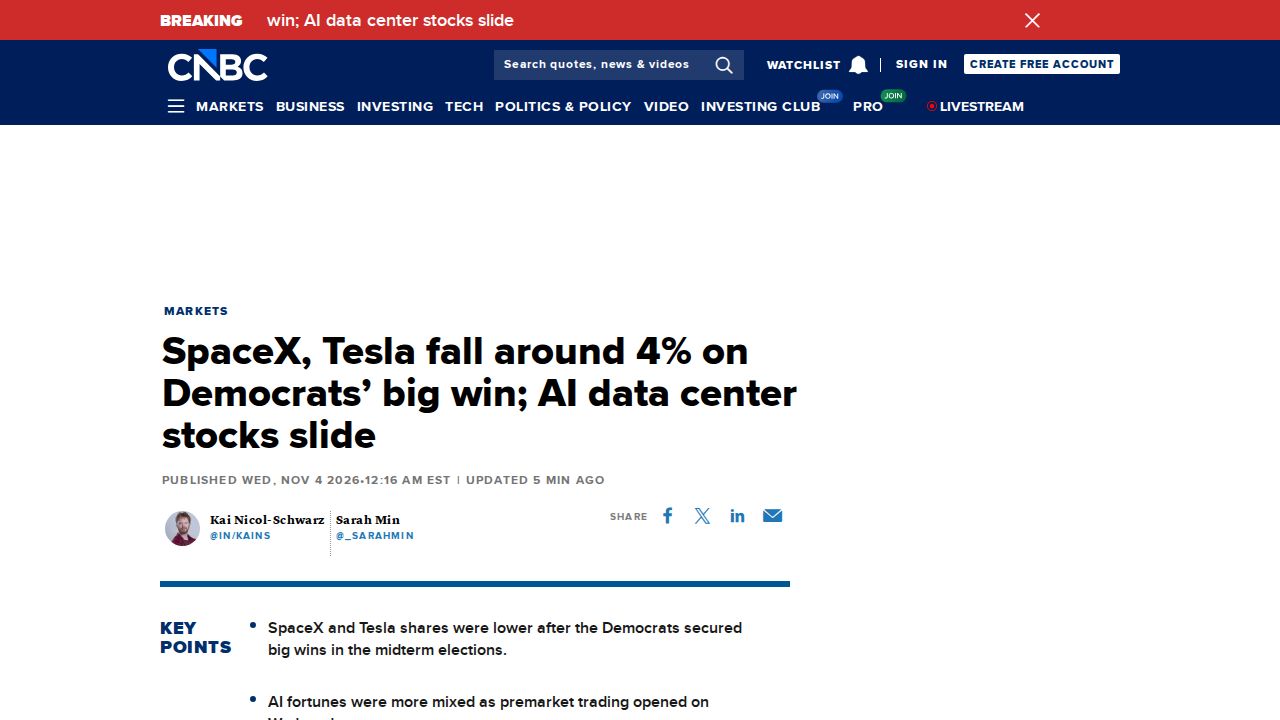
Artificial intelligence-linked stocks and tech-heavy indices saw a sharp decline in overnight trading following the 2026 midterm elections. Futures on the Nasdaq-100 fell by 0.8%, while the State Street Technology Select Sector SPDR ETF (XLK) dropped 2%. The decline was particularly pronounced in companies directly tied to AI infrastructure, including CoreWeave, which fell 7%, and SpaceX, which saw a 6% drop. These market movements were largely attributed to the election results in Texas, a primary hub for the massive infrastructure build-out required to support the growing AI industry.
The primary catalyst for the sell-off was the victory of Democrat Gina Hinojosa in the Texas gubernatorial race. Hinojosa campaigned on a platform of imposing tougher limits and potential moratoriums on data center development. This shift is significant because Texas is a critical geographic hub for the industry; according to Wells Fargo, the state accounts for 27% of all planned data center gigawatts in the United States. Analysts have described a Democratic win in Texas as a 'left-tail event' for the AI trade, as it threatens the availability of 'fertile ground' for the rapid construction of the facilities needed by hyperscalers and private AI firms like OpenAI and Anthropic.
Beyond Texas, the election results signaled a broader shift in the political landscape for data center expansion. Democrats were also projected to win or retain governorships in other key states, including Georgia (representing 7% of planned gigawatts), Ohio (5%), and Pennsylvania (5%). This trend reflects a changing sentiment where data centers have transitioned from being viewed as popular economic development tools to becoming political 'pariahs.' State and local officials may now see a political advantage in blocking, delaying, or increasing the costs of these projects, potentially creating a significant hurdle for the continued growth of the AI sector into the end of the year. While the specific legislative mechanisms Hinojosa will use to enforce these restrictions remain undefined, the shift in leadership in these key states introduces a new layer of regulatory risk for the AI infrastructure pipeline.