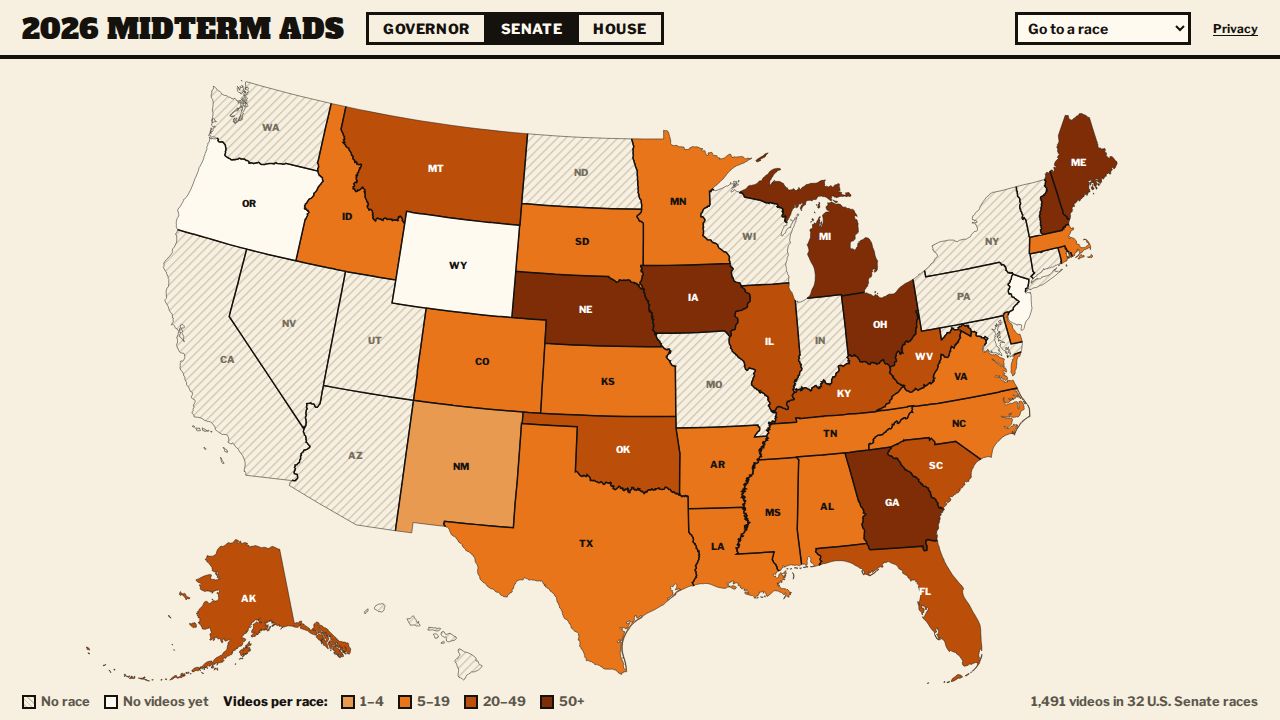
The Ad Map project serves as a visual repository for over 5,000 advertisements released during midterm elections. By aggregating these materials into a single accessible platform, the project allows users to explore the sheer volume and variety of messaging deployed by various political campaigns. The initiative aims to provide a transparent look at the landscape of political communication, making it easier for the public to see the breadth of content being pushed to voters.
Discussion surrounding the project highlights the psychological strategies embedded within these advertisements. Some observers noted that because voting can be a time-consuming and costly endeavor for individuals, campaigns often rely on emotional engineering to bypass critical thinking. By appealing to deep-seated emotions rather than purely rational arguments, these ads are designed to sway voters into making choices that may not be based on a nuanced analysis of policy. This strategy is intended to overcome the personal 'cost' of voting by creating a sense of urgency or emotional resonance that drives people to the polls.
Analysis of the ads reveals recurring themes that focus on simplified human needs and character attacks. Common messaging includes promises to make life more affordable or framing opponents as corrupt and out of touch. These tactics are often used to gain mass appeal, even by politicians who might otherwise have more complex platforms. While the project provides a significant tool for political study and historical preservation, certain technical details remain unknown. The specific methodology for gathering the 5,000+ ads and the exact criteria for the data ranges displayed in the visualization have not been publicly disclosed by the project's anonymous creators.