The Raspberry Pi 5 16GB single-board computer (SBC) now retails for $385, marking an $80 increase over the previous price hike in April 2026. This sharp escalation reflects a broader trend of rising costs for high-memory hardware as the industry grapples with a severe shortage of SDRAM, a situation exacerbated by massive demand from the artificial intelligence sector.

This image identifies the specific hardware model experiencing the price surge described in the opening paragraph.
Escalating Costs for High-Memory Models
Raspberry Pi has implemented a new price list that specifically targets models with 16GB of RAM or more. While the Raspberry Pi 500+ mechanical keyboard PC remains at $410, the core SBC and Compute Module lines have seen substantial jumps.
The Compute Module 5 (CM5) variants now range from $375 for the 0GB Lite model to $415 for the 64GB variants. Notably, the price remains identical for both 32GB and 64GB eMMC flash configurations.
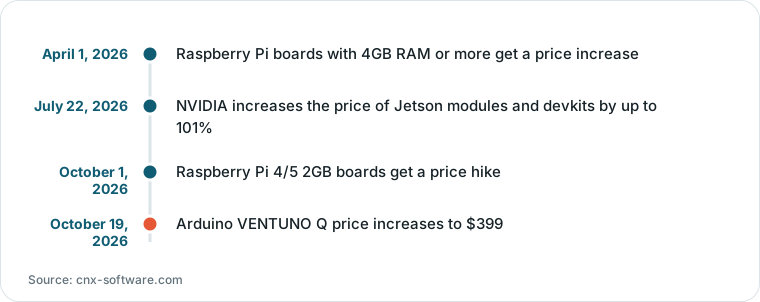
Chart drawn by HN Digest from figures reported by cnx-software.com; values are shown as written in the source.
The AI-Driven Memory Shortage
The primary driver behind these price hikes is a global shortage of SDRAM. Industry reports suggest that AI production contracts have secured a significant portion of the available memory supply for at least the next four years.
Micron expects the shortage to persist until at least 2028, while SK Hynix suggests a resolution may not occur until 2030. These projections create a challenging environment for manufacturers of consumer-grade electronics and hobbyist boards.
While memory vendor stock prices have recently declined due to investor concerns over profit sustainability, these market fluctuations have not yet translated into lower retail prices for high-demand components.
Market Alternatives and Trade-offs
The high cost of the Raspberry Pi 5 16GB has led some users to consider more performant alternatives. For example, certain x86 mini PCs with 16GB of DDR4 memory are currently available for approximately $289, offering higher performance than the Pi at a lower price point.

This visual provides a concrete example of the types of high-performance hardware mentioned in the context of market alternatives and AI-driven demand.
Other users have turned to secondary markets or repurposed hardware, such as older Android smartphones or decommissioned laptops, to fulfill low-power computing needs. These alternatives provide a way to bypass the current premium on new high-memory SBCs.
What Hacker News readers are saying
- Alternative: Several commenters suggested that used enterprise thin clients or mini-PCs offer better performance and value than the Raspberry Pi at current prices. Others recommended using ESP32 boards for GPIO needs or repurposing old Android smartphones as low-cost Linux hosts. comment ↗
- Skeptical: One commenter argued that the current pricing structure for the Raspberry Pi 5 models does not make sense, leading them to choose a compact x86 NAS instead. comment ↗
- Experience: A commenter who uses old hardware shared their experience of repurposing broken-screen smartphones as servers, noting that while they provide ample storage and RAM, they have concerns regarding the fire hazards of aging batteries. comment ↗
Summarized opinions from the Hacker News thread, not verified facts. Read the full discussion ↗