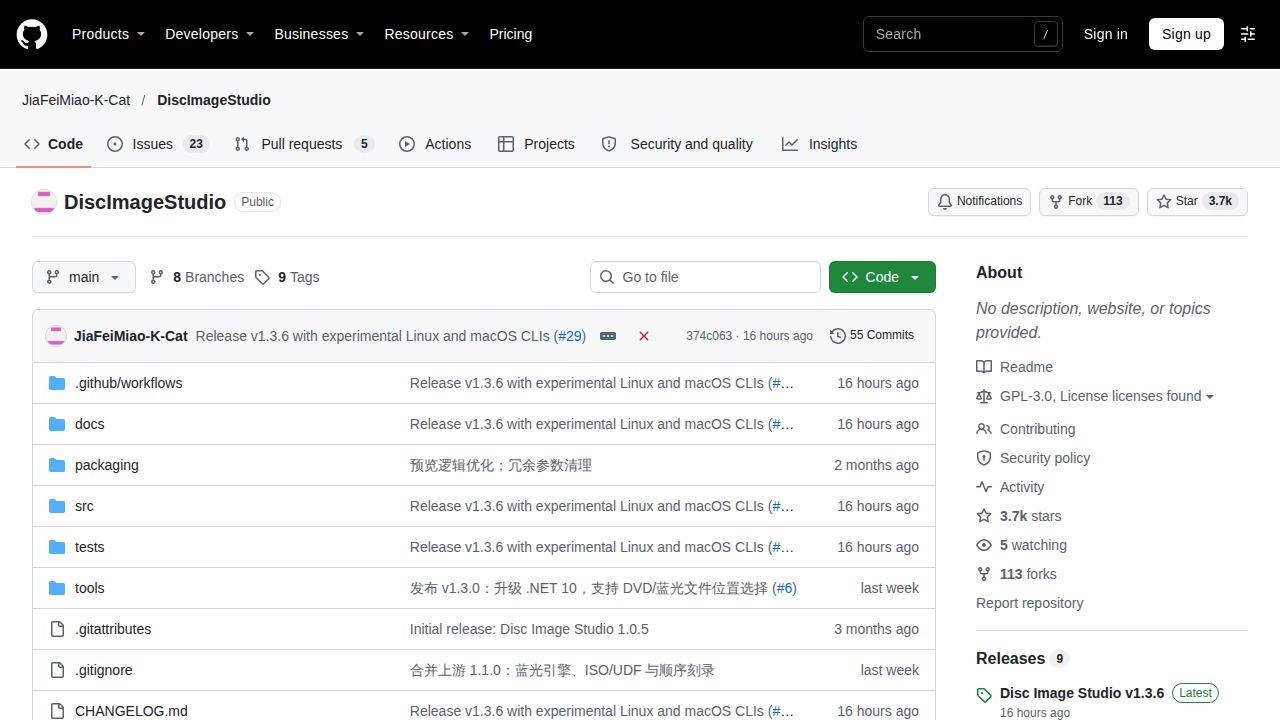
DiscImageStudio offers a method for creating optical discs with integrated visual designs by burning artwork directly onto the recording surface. This approach differs from traditional labeling methods, such as using adhesive stickers or specialized printing systems like Neato, which apply labels to the non-recording side of a disc. By burning the imagery into the disc itself, the artwork appears as part of the medium rather than an overlay.
The technical mechanism involves using the laser of an optical drive to etch images into the disc's surface. However, this process involves specific spatial and hardware constraints. Commenters on Hacker News noted that a specific region of the disc cannot simultaneously hold both an image and data; therefore, the disc must be partitioned, potentially placing data in an inner region while the imagery occupies the outer, unused portion. Furthermore, this functionality typically requires hardware compatible with technologies like LightScribe, which were designed to allow for such surface modifications.
Beyond aesthetic customization, the underlying technology of laser-etching onto optical media has been used in advanced research. One commenter shared a report regarding a 2012 study where a LightScribe drive was used to turn a graphite oxide coating on a DVD into graphene. By using the laser to illuminate specific areas of the coating, researchers were able to laser-print an ultracapacitor on graphene using consumer-grade technology. While DiscImageStudio focuses on visual artwork, it utilizes the same fundamental principle of precision laser interaction with the disc's surface layer.