The concept of 'Weight-Space Programming' suggests a shift in how neural networks are optimized. Rather than relying on symbolic optimizers like Adam or Muon, which use gradient descent to iteratively update weights, the premise is that frontier large language models (LLMs) can reason about and modify weights directly based on natural language goals. A recent study by researchers from MIT CSAIL and others claims that the GPT-6 Astra model can identify flaws in a network's weights—such as reasoning loops in the Qwen3.5-0.8B model—and fix them by editing a tiny fraction (0.016%) of the weights without using gradients. This supposedly allows for significant performance jumps, such as raising the MATH-500 score from 7.9% to 48.1%.
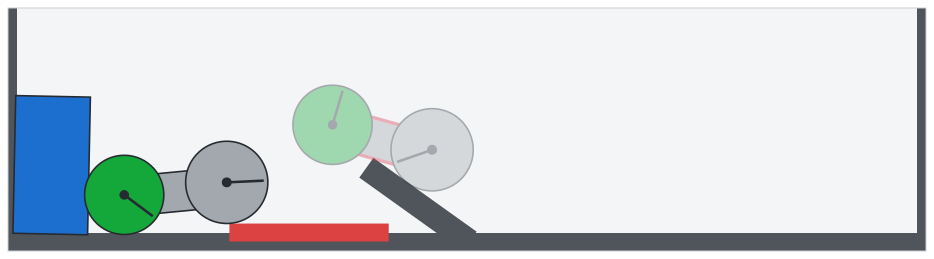
The image illustrates the successful performance jump in a car jumping task after Astra's weight edits.
However, a technical audit of the experiments reveals a distinction between how Astra interacts with small networks versus large ones. In experiments involving very small networks (ranging from 17,000 to 172,000 weights), Astra was indeed able to 'read' raw weights directly. In these cases, the raw floats were placed into the model's context window, and Astra was asked to identify the network's purpose or fix a specific failure. Because the weight count was low enough to be processed as a prompt, the model could perform a form of direct weight analysis. This demonstrated a 'gestalt' understanding of weight space where the model could correlate specific numerical patterns with functional behaviors.

The image shows a network playing Breakout, illustrating the functional behaviors that can be correlated with weight patterns.
For the headline-grabbing results involving the Qwen3.5-0.8B model, the mechanism changed significantly. Because a model of that size cannot have its weights fed into a prompt as raw floats, Astra instead utilized a Python kernel. In this scenario, Astra acted as an orchestrator: it devised and executed Python code to run the model on 50 batches of practice problems, analyzed the outputs to identify issues, and then wrote code to modify the weights. While this is a sophisticated form of ML engineering, it is fundamentally different from 'reading' the weights directly. The distinction is critical because the two results—direct weight reading on tiny networks and tool-assisted weight editing on large models—do not stem from a single unified technique. Instead, they represent two different ways an LLM can interact with weight space: one as a direct observer of numbers and the other as a high-level programmer using external tools to manipulate those numbers.
This distinction highlights a significant but nuanced advancement in AI capabilities. While Astra's ability to autonomously devise and execute these complex ML engineering tasks is a leap forward compared to previous models, it is not a single 'magic' capability. The achievement lies in the model's ability to reason through the engineering process—identifying a failure, designing a code-based solution, and executing that solution—rather than a singular ability to 'see' the weights of a large model in the same way it sees the weights of a tiny one. For researchers and engineers, this means that while 'Weight-Space Programming' is a viable path for optimization, the methods used to achieve it will likely remain hybrid, combining the model's reasoning with programmatic tools as the scale of the target network increases.