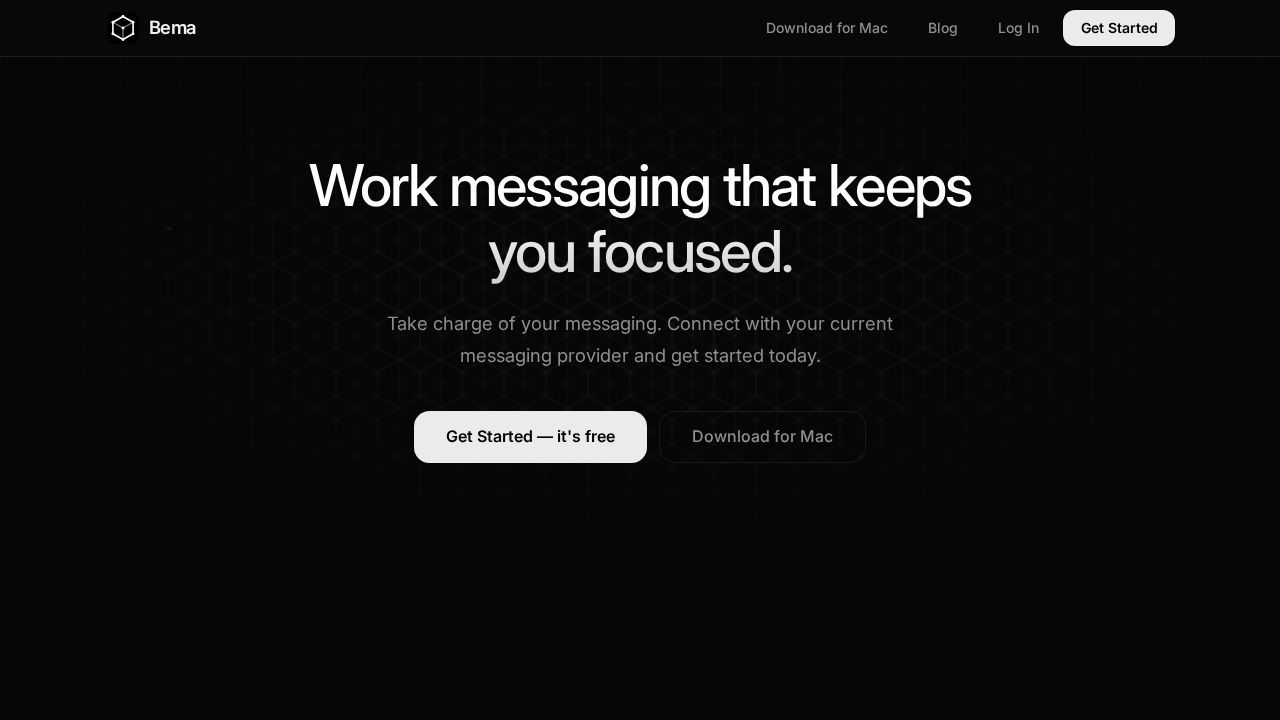
Bema was developed as a response to the growing complexity and distraction inherent in modern work messaging software. The platform's founder, Ben, noted that many users struggle with an overabundance of channels and the difficulty of locating specific information within high-volume feeds. To address these issues, Bema is built on a philosophy that encourages asynchronous communication—where users can respond at their own pace—while providing an 'option to break glass' for instances that require immediate, synchronous attention.
Technically, Bema functions as a layer that sits alongside existing tools rather than serving as a total replacement. The platform supports bidirectional message syncing with selected public channels in a Slack organization. Users invite the Bema app to specific public channels, and a setup wizard helps configure the organization's environment. This mechanism allows users to filter the 'signal to noise' ratio by choosing which specific streams of information are synced to the Bema interface, theoretically allowing for a more focused workspace.
Community feedback highlights both the potential and the hurdles of this approach. While some users expressed a desire for a solution to the 'signal to noise' problem, others raised concerns regarding organizational adoption and data privacy. Specifically, some pointed out that the current documentation lacks detailed information on how data is processed beyond a mention of Cloudflare in the privacy policy. Additionally, there are ongoing questions regarding how the platform handles complex threading and the practicalities of getting IT departments to approve third-party syncing tools in a corporate environment. Bema currently focuses on these core syncing capabilities, with the founder acknowledging that the specific mechanics of the Slack integration could be made more transparent in the platform's marketing copy.