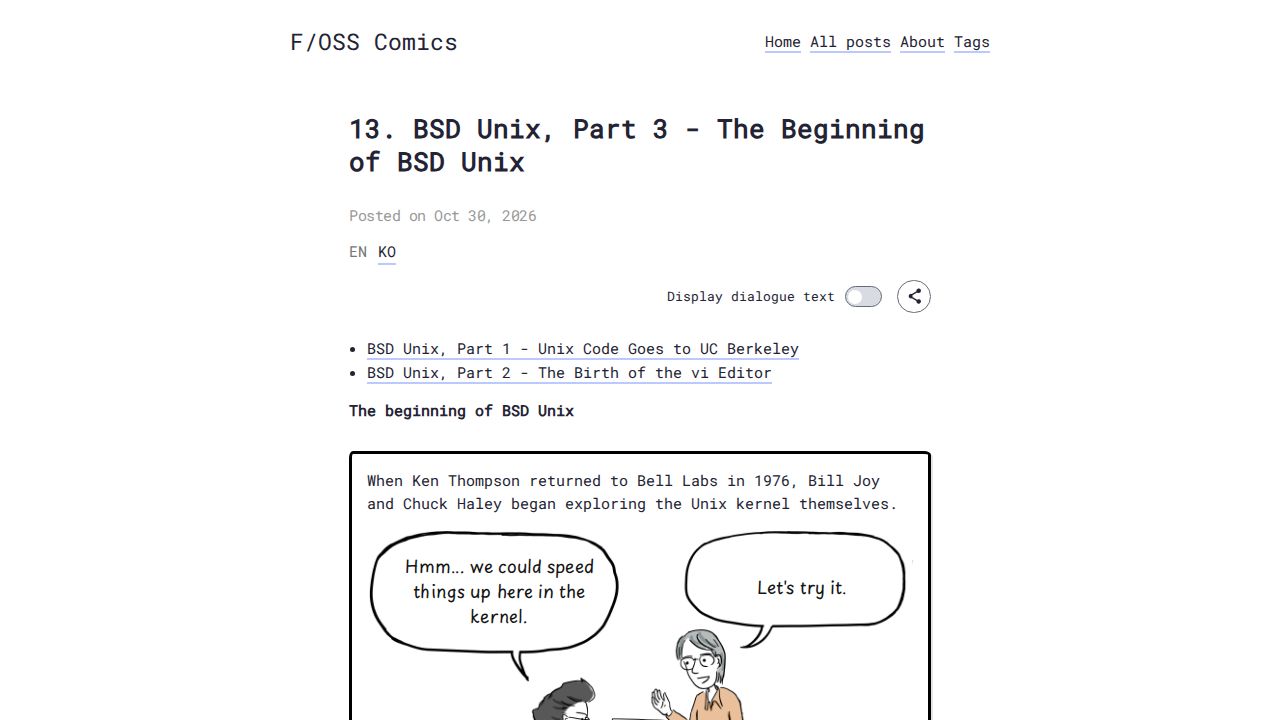
The history of BSD Unix is being re-contextualized for a modern audience through a visual medium: a comic series titled F/OSS Comics. By using illustrations to accompany technical narratives, the series aims to provide a 'human touch' to the evolution of computer science. While some observers noted that the format functions similarly to a text-based history with added visuals, the medium serves to make the complex lineage of the operating system more accessible to a broader audience.
The narrative covers specific technical milestones, such as the early development of the Pascal system and the evolution of line editors. For instance, the history involves the development of 'ex', a line editor derived from 'em'. These early tools formed the foundation of the interactive environments that would eventually shape modern computing. However, the transition from early hardware to software also involves nuances in historical accuracy; for example, early computing during the WWII era relied on electro-mechanical relays rather than the vacuum tubes that became common in later systems like ENIAC.
Beyond the technical specifications, the history of BSD is characterized by long-term community continuity and a degree of community-driven 'mythology.' Key figures from the early era of BSD, such as Marshall Kirk McKusick, remained active in the FreeBSD community well into recent years, providing a direct link to the system's origins. At the same time, the history of BSD is often subject to 'popular retcons'—narratives that may simplify or alter the actual technical progression. This tension between the lived history of the developers and the simplified stories told about them remains a central theme in the ongoing documentation of the BSD project.