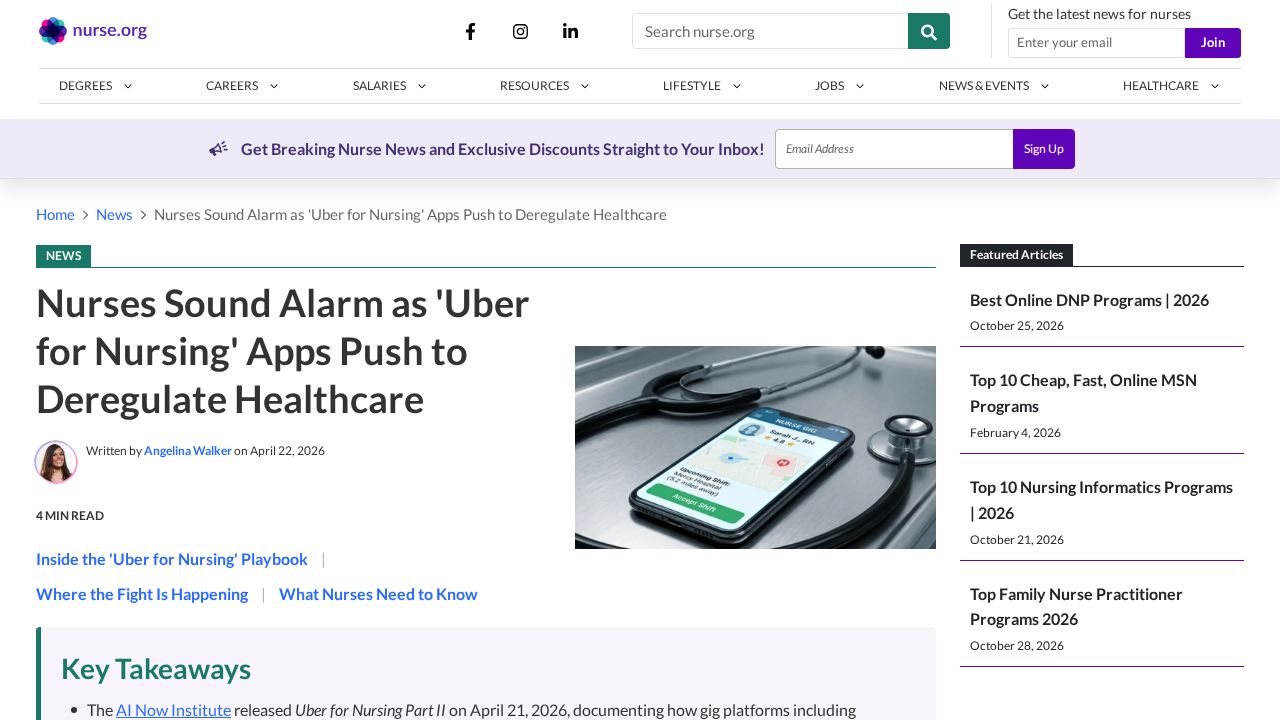
A new wave of 'Uber for Nursing' applications is attempting to disrupt the traditional healthcare landscape by creating a gig-economy marketplace for nursing services. Proponents of these platforms suggest that by bypassing traditional 'regulatory capture' and high overhead costs, these apps can offer more affordable, up-front pricing for patients. Some observers compare the current US healthcare system to the taxi cartels of old New York, suggesting that technology-driven disruption is a natural progression for a system perceived as being ripe for reform. These platforms aim to connect patients directly with providers, potentially using AI to streamline information extraction and reduce the need for traditional middle-men like insurance companies.
The mechanism of these platforms involves a shift from traditional employment to a contractor-based model, which significantly alters the cost structure of care. However, evidence suggests these platforms may employ aggressive data-driven tactics to manage their labor supply. Reports indicate that some platforms use data-brokers to identify nurses with high debt loads, subsequently offering these workers lower wages. This creates a marketplace where competition is driven by the financial desperation of the workforce. Critics argue that this model is fundamentally exploitative, relying on high levels of income inequality to recruit workers who have few other options for employment and are willing to accept minimal pay and a lack of benefits in exchange for immediate work.
The primary tension in this development lies in the trade-off between lowering healthcare expenses for the general public and the erosion of protections for the nursing workforce. While some argue that the medical field needs a 'shake up' to lower entry barriers and costs, others contend that nurses are the backbone of healthcare and deserve higher wages and protections rather than being subjected to 'dynamic pricing' and under-bidding. Furthermore, there is an unresolved question regarding safety and quality control: in a gig-economy model, it remains unclear how consumers can reliably verify the credentials and experience of a provider. The shift toward these platforms highlights a growing conflict between the desire for cheaper, more accessible healthcare and the preservation of a stable, well-compensated professional workforce.