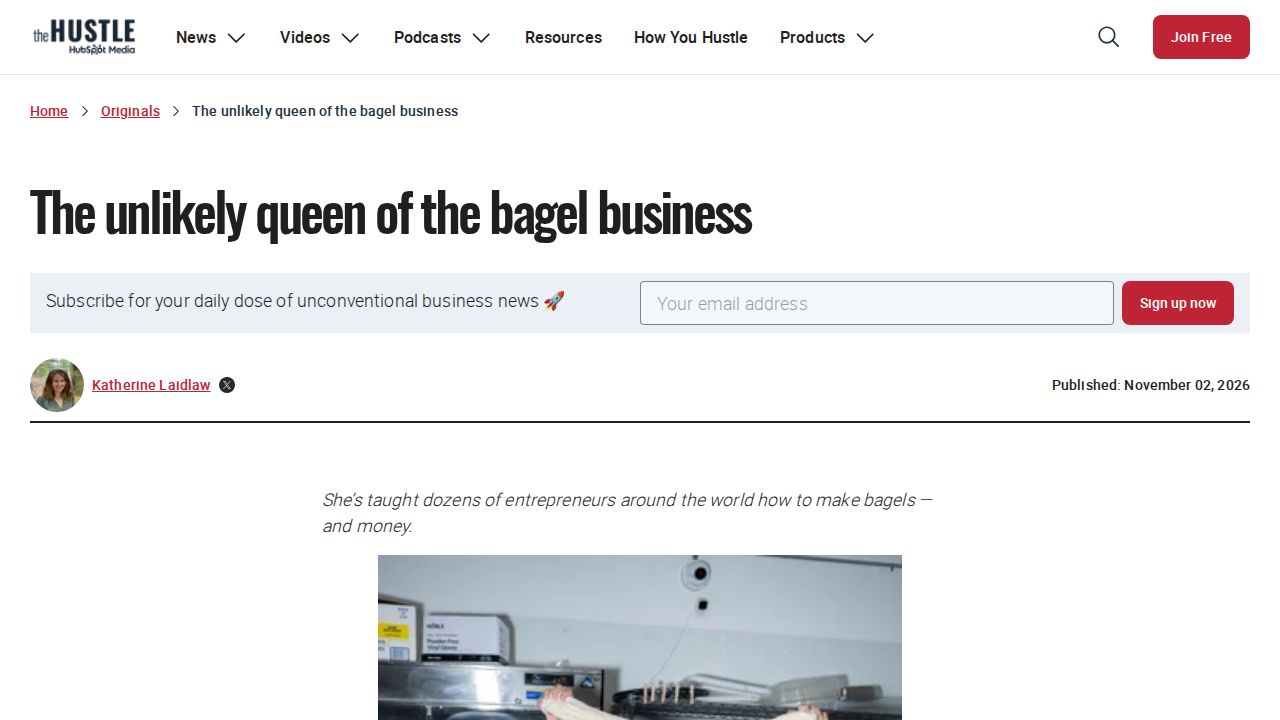
Beth George, often referred to as the 'bagel whisperer,' has spent over two decades refining the production of the perfect New York-style bagel. Her approach moves away from the 'impatient' mass production typical of many industrial bakeries, focusing instead on a process that involves hand-kneading, cold-fermentation, and a proprietary 'sponge' mixture—a pre-ferment added to the final dough to enhance flavor. George views the bagel as a work of art that requires specific physical attributes: it must be round, light, wrinkle-free, and possess a distinct 'glow.' To achieve this, she oversees every detail, from the precise temperature of the dough to the specific weight of each ring, which she ensures falls between 4.5 and 6 ounces.
Rather than utilizing a traditional franchise model, George operates a high-touch consulting academy. Clients enter into 15-month contracts that include a three-day bootcamp, refresher courses, and access to her guarded recipes under non-disclosure agreements. Her service includes providing budget spreadsheets, kitchen design plans, and ongoing 'bagel therapy'—real-time troubleshooting via text and calls to solve operational issues like broken ovens or inconsistent batches. This model allows proprietors to maintain independence and develop their own unique flavors while benefiting from her established R&D and operational framework. George charges a five-figure consulting fee and a 2% royalty if the business is sold within ten years.
George treats the viability of a bagel shop as a math problem, emphasizing specific overhead ratios to ensure profitability. She advises that rent should not exceed 10% of gross revenue, while the costs of goods and labor should each remain below 35% to provide a buffer for unexpected expenses. She argues that the key to success lies in perfecting the core product—the bagel and the sandwiches—rather than diversifying into unrelated items like ice cream or cappuccinos. While the barrier to entry is high, with a startup cost of approximately $500,000, her model prioritizes long-term sustainability through product excellence and disciplined financial management over rapid, low-quality expansion. However, the source does not provide audited success rates for her clients or a direct financial comparison against national franchise models to quantify the exact margin of her consulting success.