The current Hamburg Rathaus is a testament to the city's resilience, having risen from the ashes of multiple fires. The structure seen today was completed in 1897, following a 55-year period of reconstruction after the 'Great Fire' of 1842 destroyed the previous town hall. This history of destruction and rebirth is literally etched into the building's exterior. High on the tower, a Phoenix—the mythical bird that rises from its own ashes—sits above a gilded medallion inscribed with the word 'Resurgam' ('I will rise again'). This imagery serves as a permanent memorial to the city's survival and its determination to rebuild.
While the building features prominent statues of Holy Roman Emperors, such as Charlemagne and Friedrich I Barbarossa, their presence reflects a specific political strategy rather than a desire for monarchy. Because Hamburg never had a king of its own, it historically answered only to the Emperor to maintain its independence from local rulers like the Kings of Denmark. The facade honors these rulers to acknowledge this historical protection, yet it balances this power with symbols of autonomy. For example, the letters 'SPQH' (Senatus Populusque Hamburgensis) appear on the columns, mirroring the Roman 'SPQR' to remind viewers that the city was governed by its own citizens, not by the figures on the balcony.
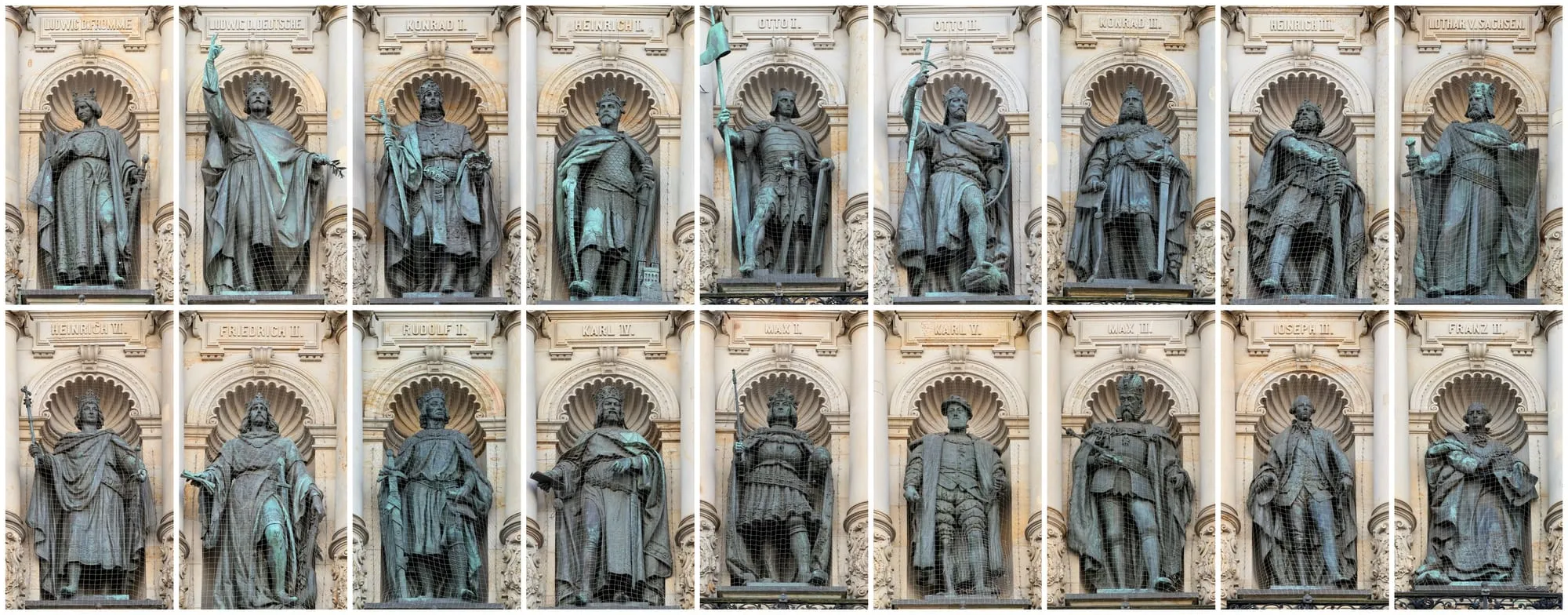
The article describes how the presence of these specific imperial figures reflects a historical political strategy to maintain Hamburg's independence.
The most distinct narrative of the Rathaus is found in its architectural hierarchy: the common people are placed physically higher than the emperors. Above the first-floor windows, 28 triangular gables feature stone busts of various professions, ranging from bakers and fishermen to judges and engineers. Half of these were modeled on real historical figures, such as the city's chief engineer and the mayor who led the building commission. By placing these tradespeople and civic virtues—courage, piety, unity, and wisdom—above the imperial rulers, the architecture communicates that the city's true foundation lies in its commerce, its people, and its hard-won freedom.
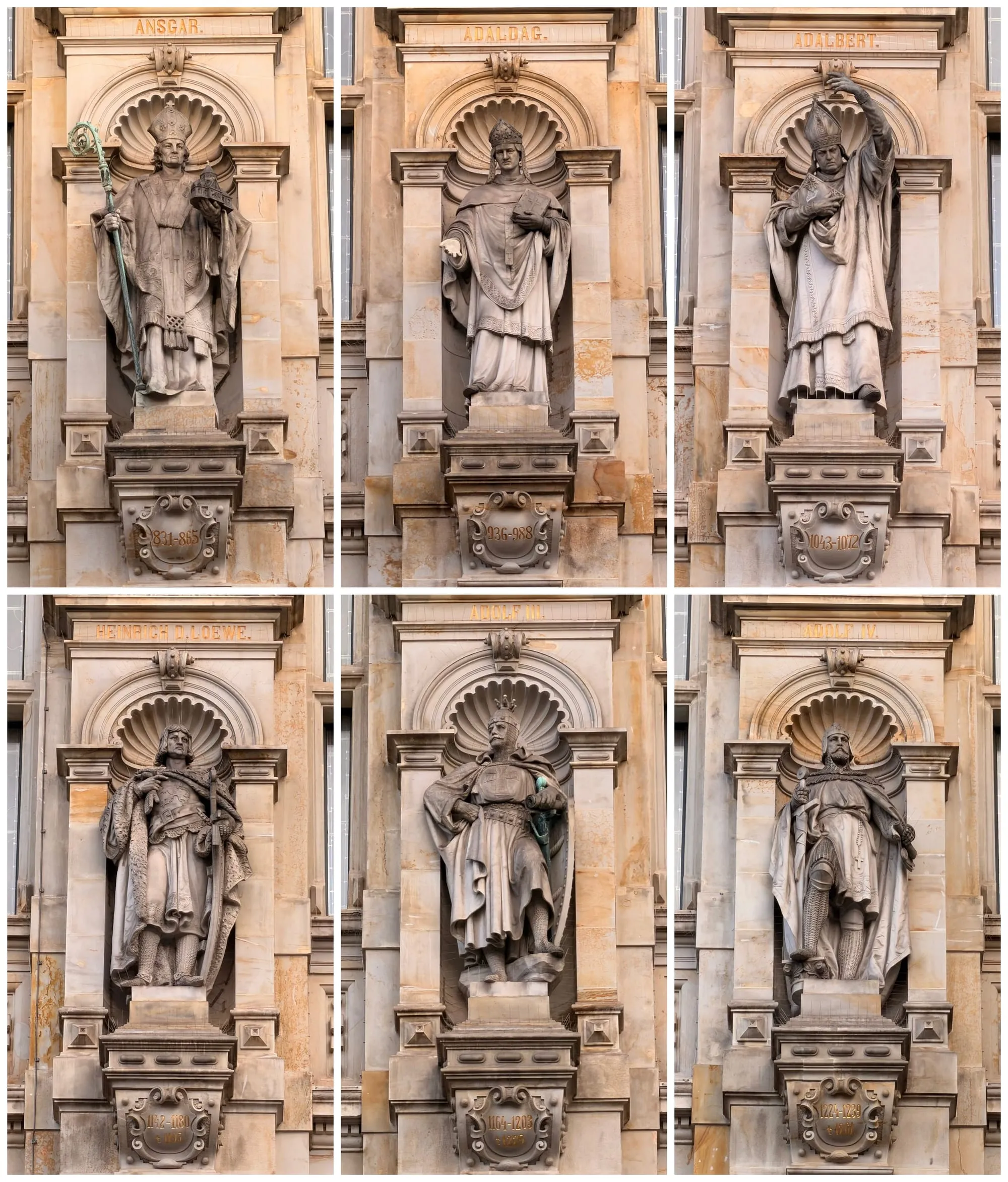
The text explains how 28 triangular gables feature stone busts of professions like bakers and fishermen to symbolize the city's foundation in its people.