A driver of a 2014 Renault Latitude discovered that their vehicle's dashboard clock was out of sync following a daylight savings change. Upon investigating the settings menu, they found that the 'Set time' option was missing entirely. Through reverse engineering of the unit's firmware—a TomTom Carminat LIVE system running a Linux 2.6.28.10 kernel—the owner determined that the navigation system was designed to hide the time-setting menu unless a legitimate navigation SD card was inserted. The system used Digital Rights Management (DRM) to verify the SD card's unique ID (CID) and signatures, effectively locking out users who did not own the official maps.
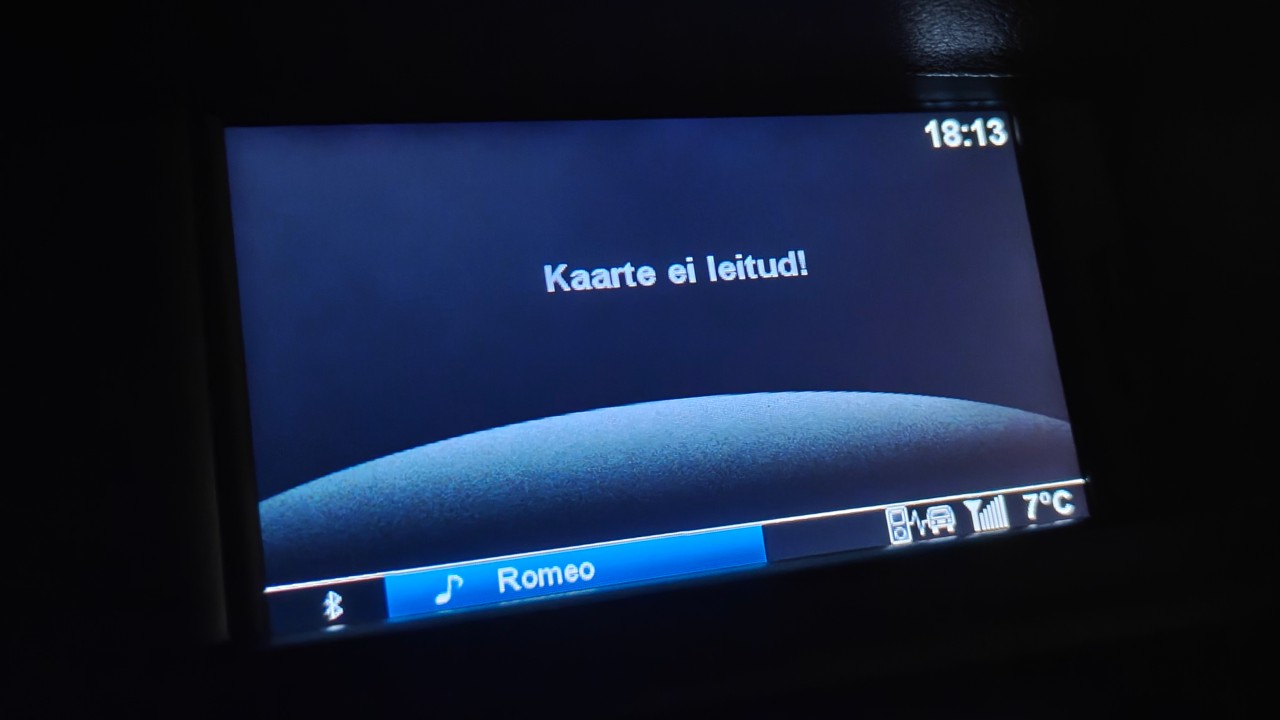
This visual demonstrates the system's behavior when it fails to verify the navigation SD card.
The system's security architecture presented several hurdles for unauthorized access. Most partitions were mounted with `noexec` permissions, preventing scripts or binaries on the external SD card from running. Additionally, while the owner identified a path traversal vulnerability in a script parser that allowed writing ASCII text to arbitrary locations, the root filesystem was mounted as read-only. This meant that even if a command could be written to the disk, it could not be executed or used to modify system configuration files directly. These layers of protection were intended to prevent map piracy but resulted in a system where even basic clock adjustments were inaccessible without official hardware.
To bypass these restrictions, the owner employed a technique common in kernel exploitation: manipulating the `core_pattern` file. By using the path traversal vulnerability to write a specific string to `/proc/sys/kernel/core_pattern`, they instructed the kernel to execute a payload script whenever a process crashed. They then triggered a crash by running `/bin/dbus-monitor`, which would fail to connect to the system bus and trigger a SIGABRT. This forced the kernel to execute a script located on the SD card with root privileges, successfully bypassing the `noexec` mount restrictions and allowing the owner to finally access the hidden time-setting menu. While the jailbreak achieved the goal, it highlights a design where map piracy protection creates significant friction for basic user functionality.
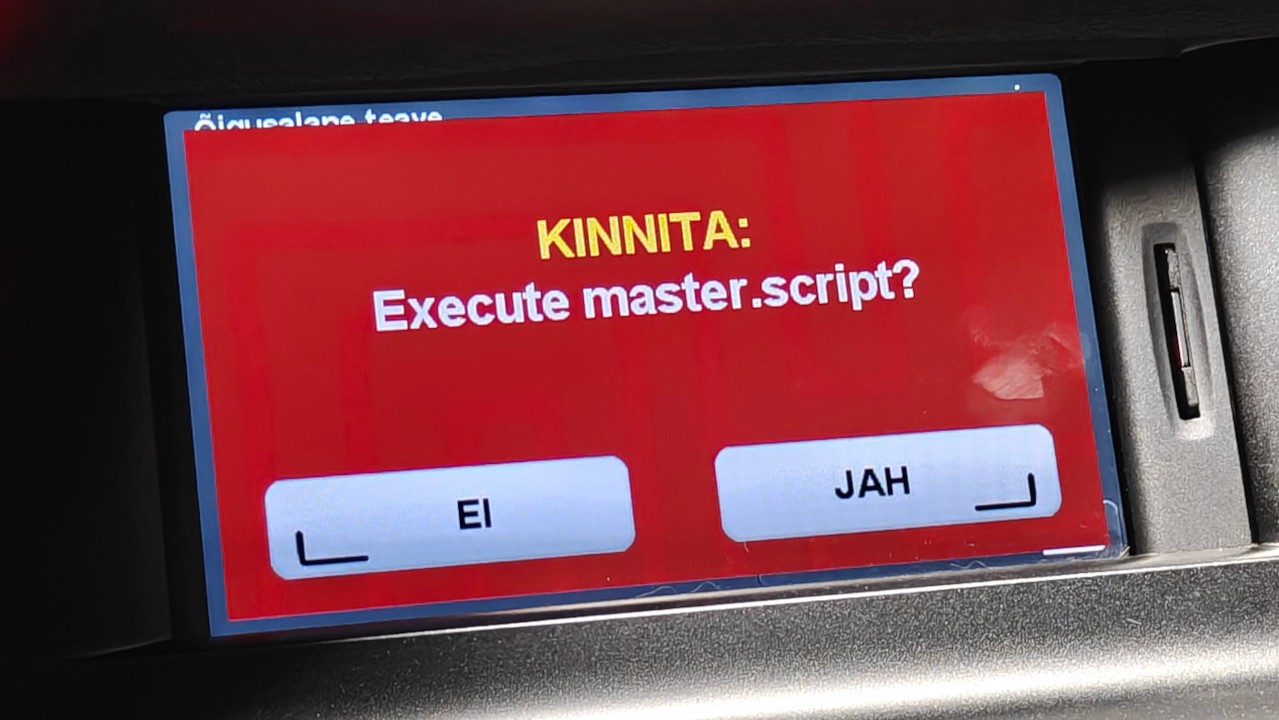
This image illustrates the successful execution of the payload script on the head unit's display.