The Herculaneum papyri are a collection of ancient scrolls that were carbonized and preserved by the eruption of Mount Vesuvius in AD79. Because the scrolls were turned into charcoal-like masses, they were physically impossible to unroll without destroying the brittle material. For centuries, the contents of these scrolls remained inaccessible, even after their excavation in the 1750s. Recent advancements in micro-CT scanning have allowed researchers to virtually unroll these scrolls, but the extreme temperatures of the eruption caused the papyrus to become so distorted and compressed that reading the text remained a significant challenge.
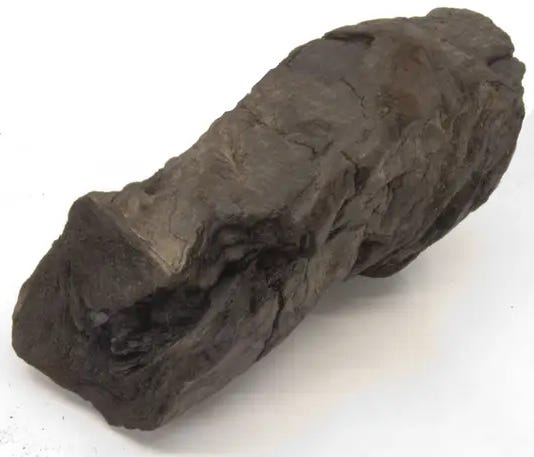
This image illustrates the physical state of the carbonized papyri, which are preserved as charcoal-like masses.
A breakthrough occurred when Liam Warner and Nicola Bodill successfully identified the first letters on the PHerc. 306B scroll. The team utilized a multi-step technical process to isolate the text. First, they used the VC3D GrowPatch tool to isolate the papyrus surface within a 3D scan, guided by surface predictions and a spiral-fitter to navigate the tight windings. To detect the ink, they employed a dual-model machine learning approach: the publicly available TRACE v3B model and a custom-tuned 'A-hn' model. By multiplying the outputs of these two models, a pixel was only identified as ink if both models agreed, significantly reducing false positives from the damaged papyrus surface.
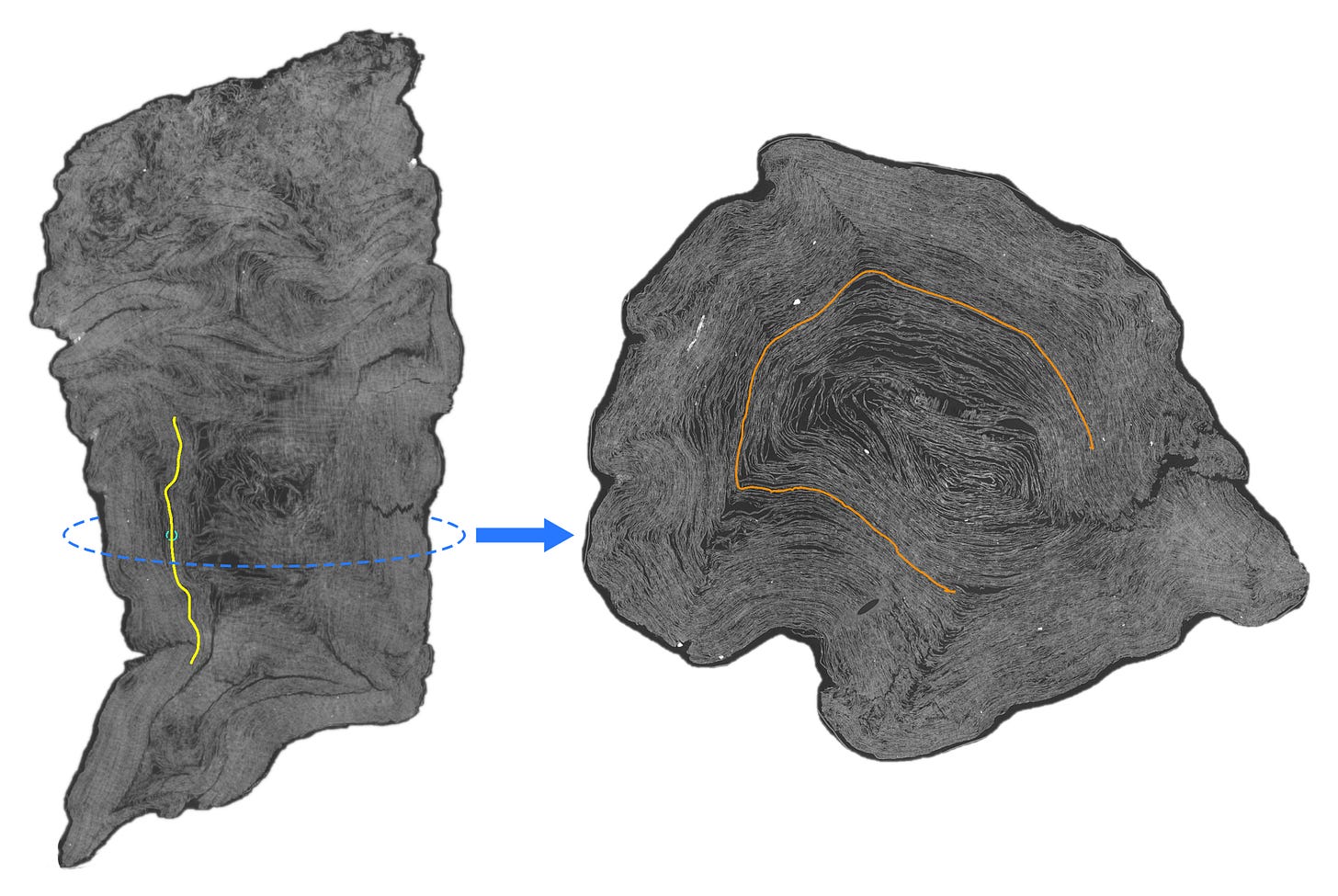
This visual represents the technical process of using VC3D GrowPatch and machine learning models to isolate text.
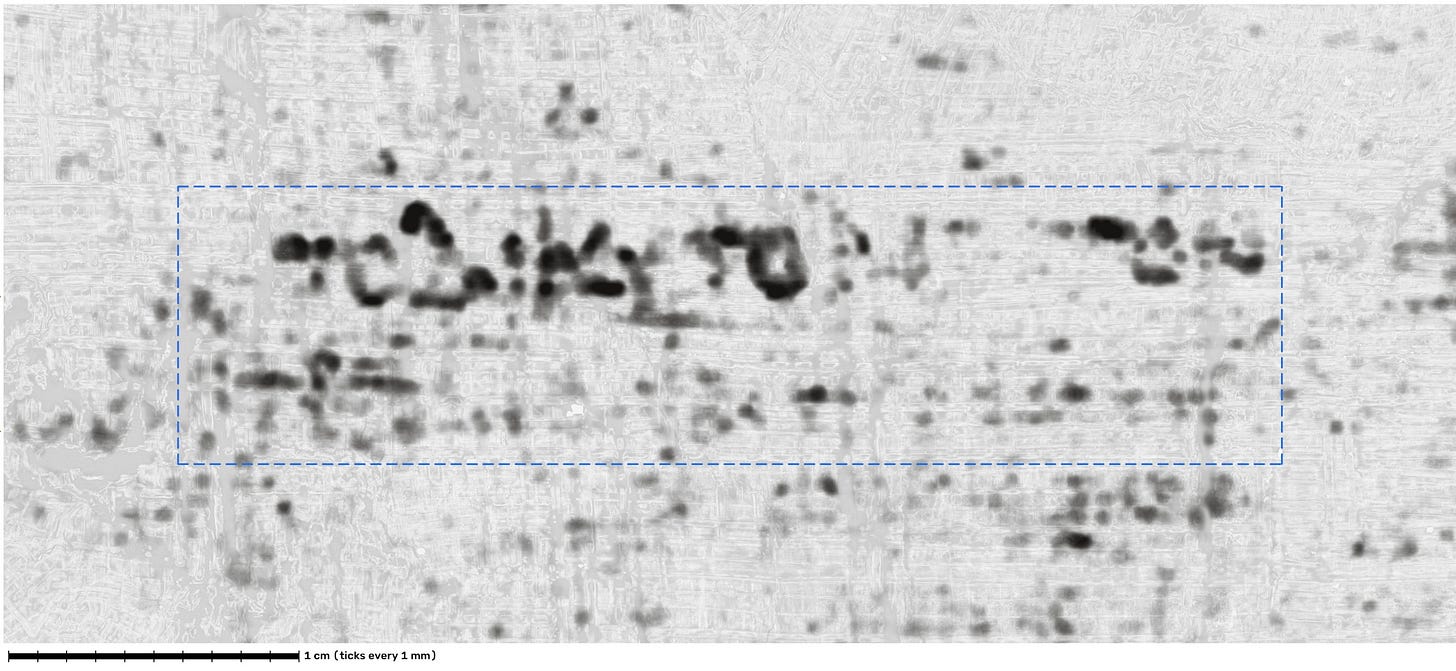
This image demonstrates how the TRACE v3B and 'A-hn' models work together to reduce false positives.
This technical precision allowed the team to resolve a specific palaeographical ambiguity. While the sequence 'τοδιαυτο' had been identified previously, the following characters were too faint to confirm. The team's improved ink detection revealed a decisive middle stroke on a Greek letter 'alpha' (α), which allowed them to confirm the phrase 'τὸ δι᾽ αὑτὸ αἱρετόν' (that which is in itself desirable). This expression is significant because it appears in various philosophical treatises, including works by Aristotle and Philodemus. While the success marks a major milestone, the scroll remains highly compressed, and the current achievement covers only a small segment—10 readable characters within a 4 cm² area. The ultimate goal of the Vesuvius Challenge is to scale these methods to achieve 70% readability of an entire scroll.