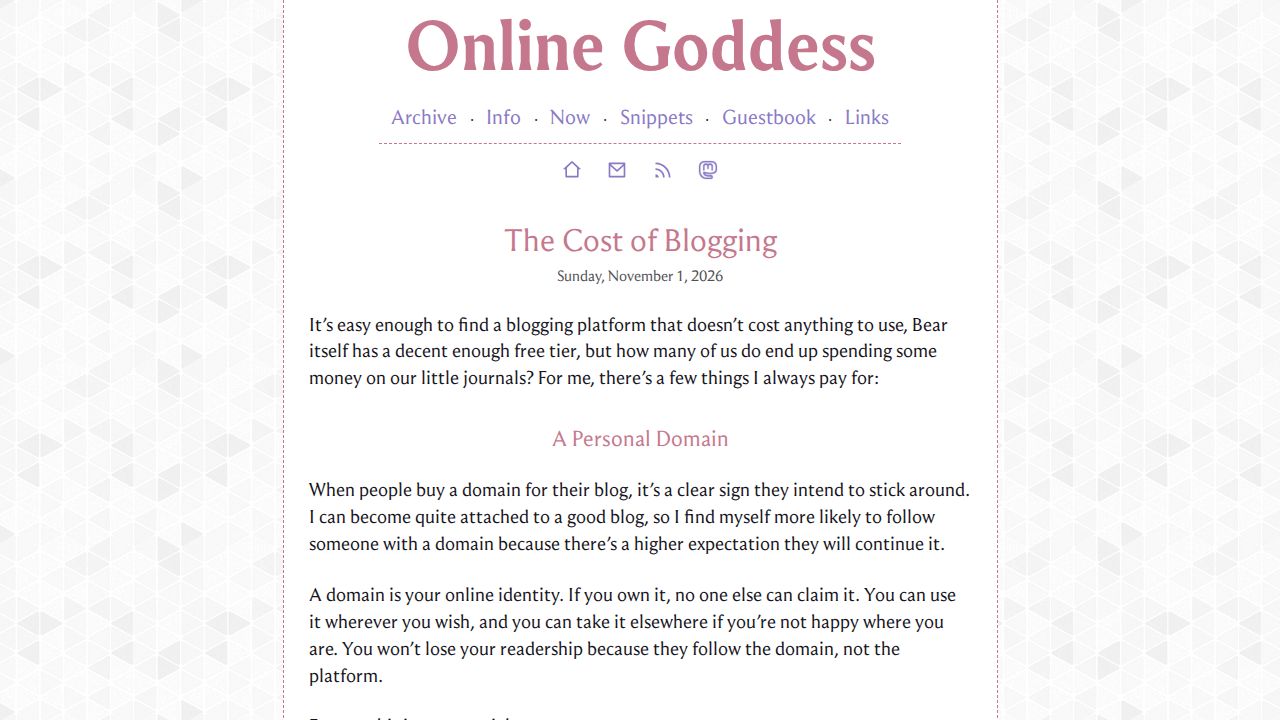
Maintaining a personal blog often involves a choice between free, platform-dependent services and paid infrastructure that offers greater autonomy. One of the primary investments for serious bloggers is a personal domain. Owning a domain serves as a portable online identity; because readers follow a domain rather than a specific platform, owning the URL ensures that a creator can move their content to a different host without losing their audience. For many, this is a foundational expense that signals a long-term commitment to the project.
Beyond the domain, the choice of hosting and platform involves a trade-off between cost and privacy. Opting for a paid subscription or hosting service can ensure that a user's personal information is not being harvested to fund the service, but rather that the subscription fee covers the operational costs. This model also supports the sustainability of the blogging ecosystem by helping to fund free tiers for users who cannot afford to pay. Additionally, some creators choose to host their own fonts directly to avoid usage tracking by third-party providers, opting for original font foundries that offer ethical business models.
The final layer of blogging costs often involves the tools used to create the content. While many platforms provide basic built-in editors, some authors prefer specialized writing software that offers more features, such as markdown support or custom font integration. These tools can range from free options to nominal subscriptions. For those seeking to minimize overhead, alternative configurations exist, such as using an open-source content management system (CMS) paired with a virtual private server (VPS). Such setups can reduce annual costs to a small fraction of the price of premium all-in-one platforms while still providing a robust environment for publishing content.