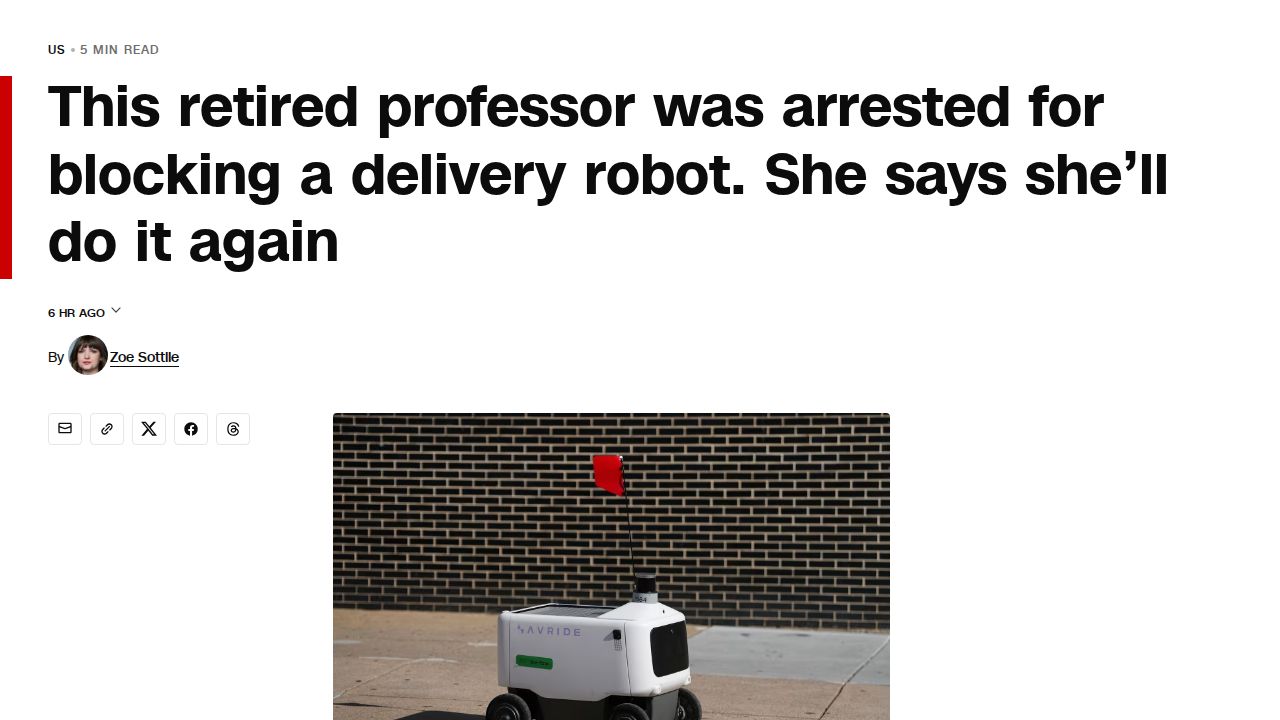
A retired professor in Philadelphia was arrested following a confrontation involving a sidewalk delivery robot. According to the report, the woman intentionally blocked the path of the robot as a form of symbolic protest. She stated she was under the impression that she possessed more rights than the robot, a comment that highlighted the growing tension between human pedestrians and autonomous machines in public spaces. The arrest occurred after she reportedly refused to comply with a police officer's instruction to move out of the way of the device.
The incident underscores a complex legal and social debate regarding the use of sidewalk space. While some argue that delivery robots pose physical hazards to joggers, children, and the elderly, others question the legality of allowing machines to occupy sidewalks at all. Proponents of the professor's actions point to the displacement of low-income delivery workers and privacy concerns regarding the robots' embedded cameras as primary reasons for protest. Conversely, critics of the protest suggest that the individual's actions were an inefficient way to address systemic issues, arguing that such 'petty' actions may not be the most effective path toward meaningful policy change.
Legal questions remain regarding the authority of police to intervene in such scenarios. Some observers noted that local regulations may require delivery devices to yield to pedestrians, potentially making the officer's order to move legally questionable. Others suggested that if robots are to be permitted on sidewalks, they should be treated with the same legal weight as cars to prevent harassment or intentional blocking. The situation remains a flashpoint for how cities will balance the convenience of automated logistics with the rights and safety of the public who share the pavement.