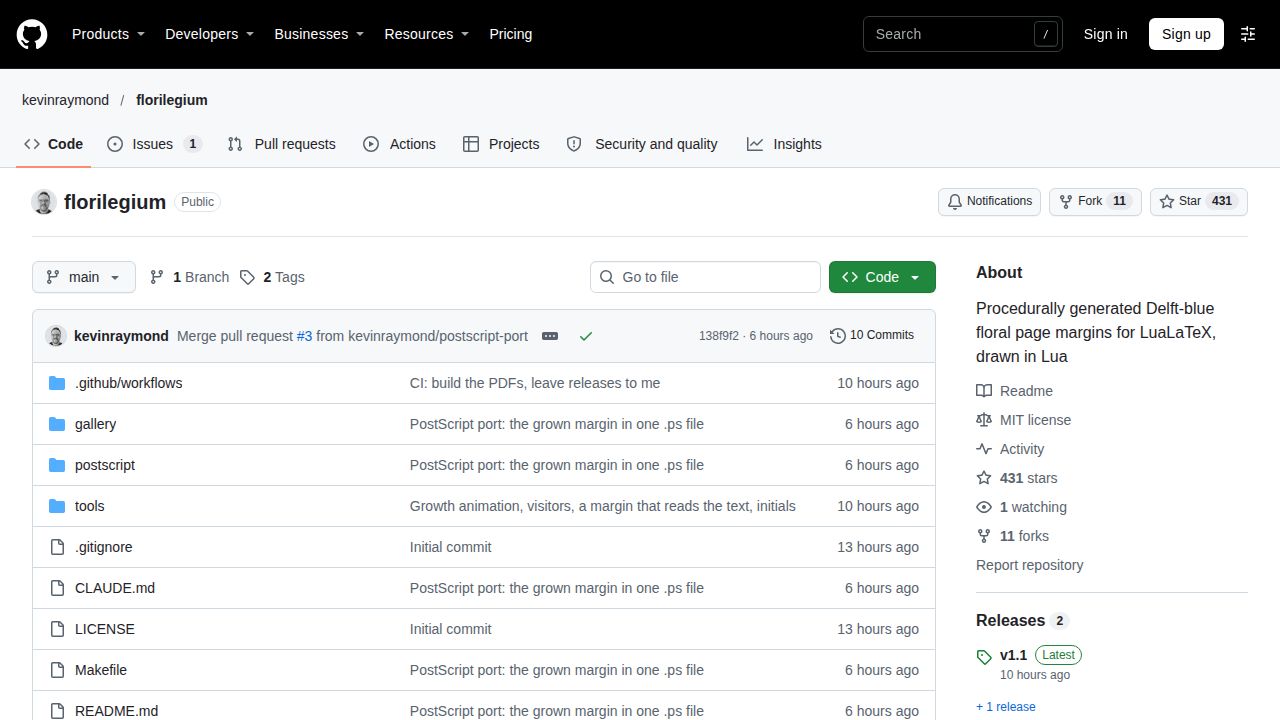
Florilegium is a project designed to bring procedural generation to the world of LaTeX, a high-quality typesetting system commonly used for scientific and academic documents. The project uses Lua to generate unique, floral-inspired decorations that can be placed in the margins or as ornaments within a document. By leveraging procedural generation, the project ensures that different print runs of the same document can feature different floral designs, adding a layer of dynamic variety to static typesetting.
The technical implementation relies on Lua to handle the generation logic, a choice that some observers noted as a sophisticated way to achieve complex visuals. The project's output is capable of producing high-quality aesthetics that some users compared to traditional TeX ornamentation, a craft historically associated with the work of Donald Knuth. While some users expressed a preference for the manual craftsmanship of traditional TeX, others were impressed by the ability to achieve such results through procedural means and even noted the possibility of animations within the PDF format.
Community discussion around the project highlighted various practical applications and technical observations. One user reported successfully using a model to convert the project into an Obsidian extension, using file names as seeds for the procedural generation. Others noted that similar procedural decorations have been used in the past for recreations of classical texts, such as Euclid's 'Elements of Euclid.' While some users expressed a sense of nostalgia for the era of manual TeX ornamentation, the consensus among those discussing the project was one of appreciation for the aesthetic beauty and the technical feasibility of the implementation.