Algebraic thinking allows mathematicians to make precise claims about objects whose exact values are unknown. By assigning neutral symbols like x, y, and z to variables, the discipline moves beyond concrete arithmetic to a system where the focus is on the relationships between components rather than their specific identities.
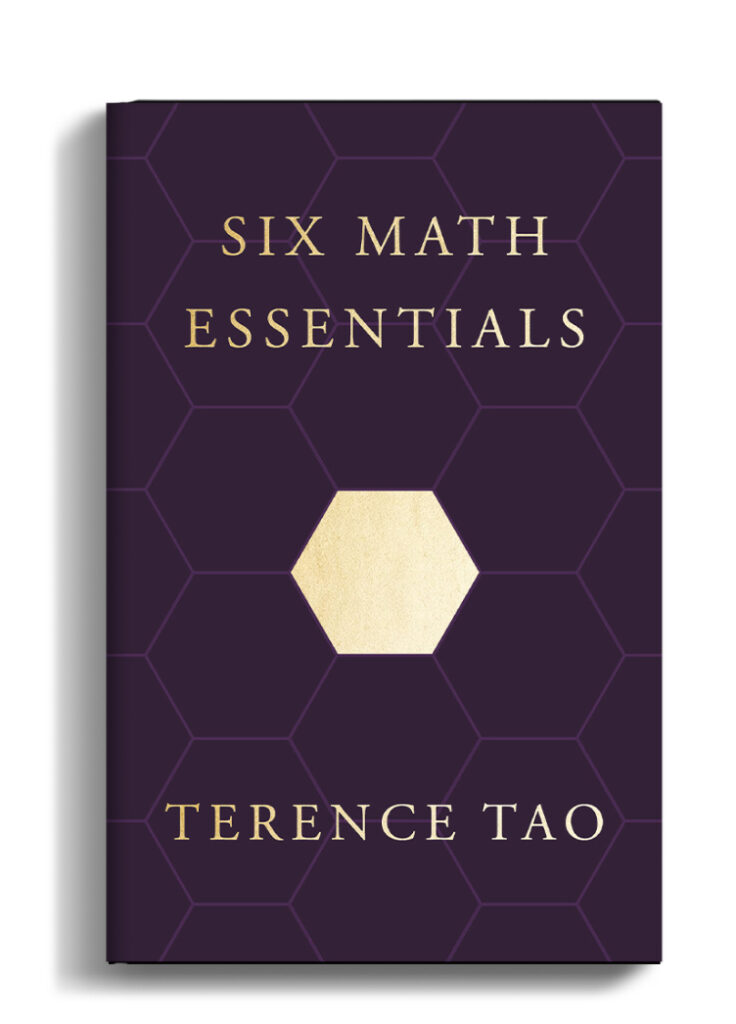
This image provides a visual reference for the book discussed throughout the article, which explores the interconnectedness of numbers, algebra, geometry, probability, analysis, and dynamics.
From Geometry to Abstract Symbols
Historically, the ancient Greeks approached algebra through geometry, converting problems into comparisons of lengths and areas. While functional, this was a clunky method because it required a concrete physical interpretation for every expression.
The shift to modern algebra, influenced by the Islamic world and al-Khwārizmī, introduced a systematic approach to solving linear and quadratic equations. This evolution freed mathematicians from needing a physical shape for every expression, creating a more elegant and powerful system of abstraction.
“Algebra is elegant precisely because it frees us from needing a concrete interpretation for every expression.”
— Algebra helps us navigate hard realities by making them abstract
The Mechanism of Abstraction
Algebra functions by identifying key unknowns and assigning them neutral symbols. This allows for the derivation of general laws that apply to a vast range of problems, rather than memorizing bespoke rules for every unique scenario.
Tao illustrates this with the example of physics: instead of learning a hundred different techniques for a hundred different problems, one can derive answers using a few organizing principles, such as Newton's F = ma, combined with algebra.
A practical application of this is the 'special cases' method. By setting specific variables to zero, a person can strip a problem down to its simplest form, solve that version, and then work the details back in to solve the general case.
The Risks of Formulaic Thinking
A significant pitfall of algebra is the tendency to 'plug and play' numbers into formulas without understanding the underlying assumptions. Tao argues that true algebraic thinking is about problem-solving and understanding why a calculation works.
He cites Johannes Kepler, who used algebra to prove that a wine merchant's stick-measurement method was accurate because the volume of a barrel follows a parabolic curve near its peak. Kepler's work showed that small variations in barrel shape would not invalidate the measurement because the volume as a function of height does not change much close to the peak.
The book aims to show that math is not 'magic' but a powerful way of thinking that anyone can learn. It focuses on the interconnectedness of these ideas and how they provide a transparent view of the world.

This image identifies Terence Tao, the mathematician whose work on algebraic thinking and the six central concepts of math is the focus of the article.

Chart drawn by HN Digest from figures reported by quantabooks.org; values are shown as written in the source.
What Hacker News readers are saying
- Experience: One commenter suggested that the book is quite basic and might not provide much value for readers who already hold a STEM degree. comment ↗
- Skeptical: Another reader expressed skepticism regarding the depth of the algebra excerpt, questioning if the content is intended for children or if it lacks sufficient visual aids. comment ↗
- Experience: A commenter argued that while it may not be the best in its field, it remains a solid introduction to the philosophy of mathematics. comment ↗
Summarized opinions from the Hacker News thread, not verified facts. Read the full discussion ↗