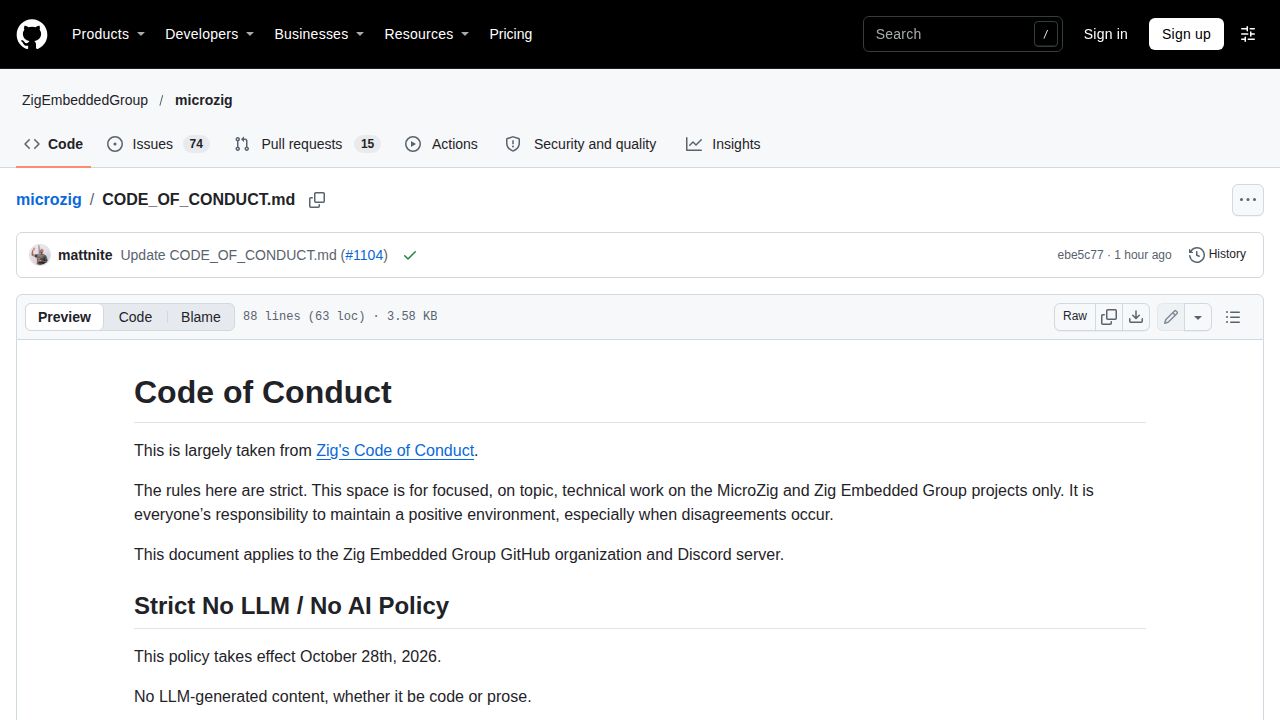
The MicroZig project, which is part of the Zig Embedded Group (ZEG), has officially adopted a strict policy prohibiting the use of Large Language Models (LLMs) and AI-generated content for project contributions. This policy, which appears in the project's Code of Conduct, explicitly forbids using AI for brainstorming, sharing AI-generated results, and finding bugs. The move was spearheaded by Matthew Knight, the project's most active maintainer, who stated that while he acknowledges the validity of using LLMs in many contexts, he believes that a project's preference for human-led development is incompatible with an AI-integrated workflow. He noted that he is imposing this preference as the lead maintainer and expressed that he has no hard feelings toward those who choose to create an LLM-focused fork of the project instead.
The policy is rooted in a philosophy that emphasizes the 'craft' of programming—the deliberate, manual effort of building and understanding software. Supporters of the move argue that it ensures contributors possess a clear, independent understanding of the code's implications and mechanics. One perspective shared in the community suggests that the policy acts as a filter: it may not hinder those capable of high-quality manual work, but it ensures that the project remains a space for human-centric development. By requiring that bug reports and fixes be the result of human assessment, the project aims to prevent the influx of automated reports where the submitter may not fully grasp the underlying issue or its potential impact.
The decision has sparked debate regarding the practical enforceability of such a rule. Critics point out that as AI tools become more sophisticated, it may become nearly impossible to distinguish between human-authored and AI-assisted content. Some participants questioned the logic of banning AI for bug discovery, arguing that if a tool finds a vulnerability, the bug exists regardless of how it was identified. Others expressed concern that such policies could lead to 'gross negligence' by ignoring modern tools that can identify exploitable vulnerabilities. However, the project's maintainers maintain that the goal is to ensure that the human contributor remains the primary driver of the logic, pushing the responsibility of thorough assessment back onto the individual rather than the machine tool. This creates a clear boundary: while the technology is not banned in the wider world, the MicroZig project is intentionally choosing a path of manual, human-led development to preserve its specific community identity.