Apple is expanding its professional laptop lineup with a new MacBook Pro model centered on a 'PROLED XDR' display. This new screen technology utilizes a tandem OLED panel, which consists of two self-illuminating pixel layers. By allowing each pixel to turn on and off independently, the display achieves a 10,000,000:1 contrast ratio and avoids the blooming or halos often associated with traditional backlit displays. The PROLED XDR panel is designed to deliver up to 2000 nits of peak HDR and SDR brightness, making it suitable for high-precision work in filmmaking, design, and medical imaging. It also supports both P3 and Adobe RGB wide color gamuts to accommodate different professional standards.
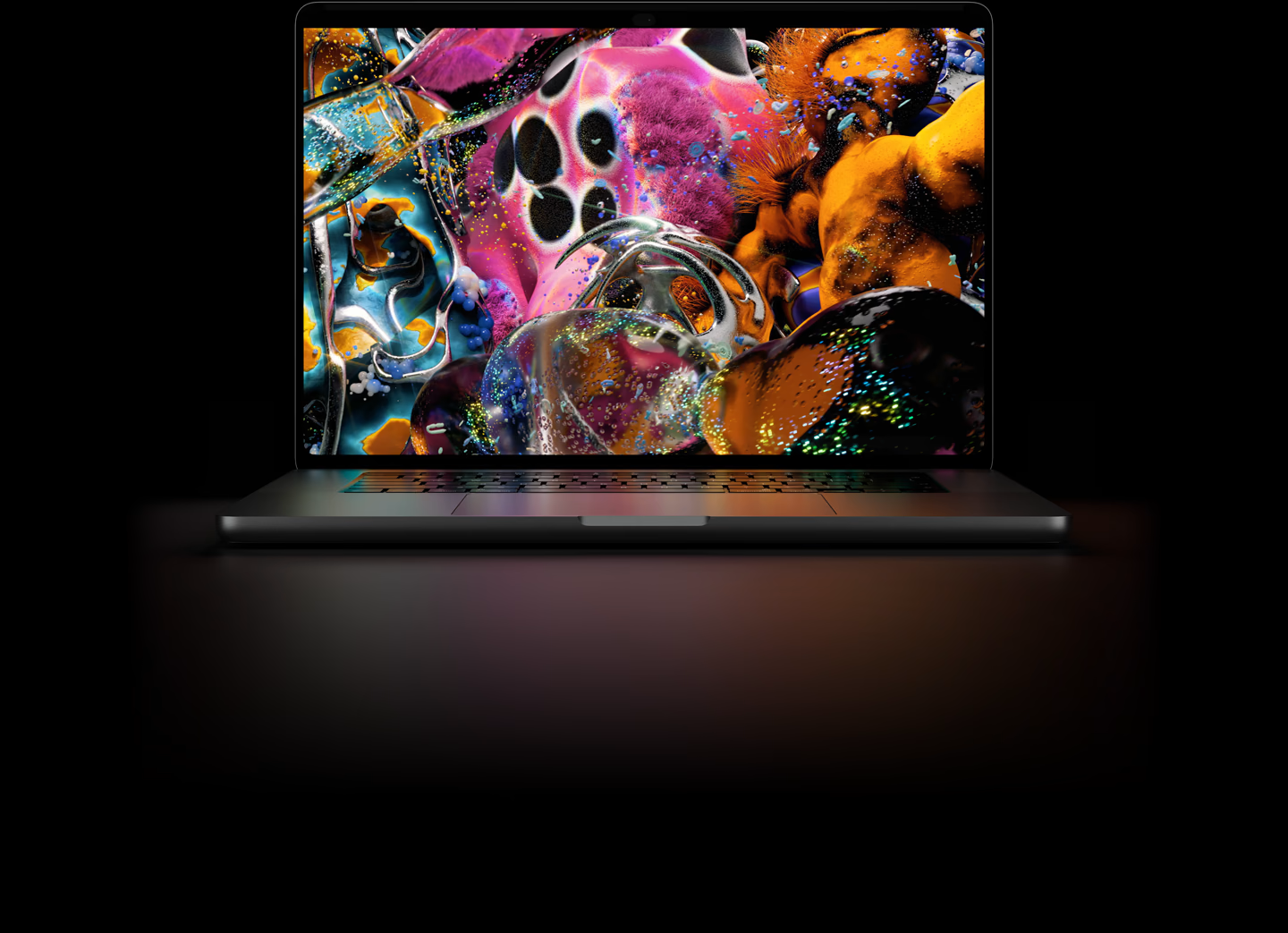
This image illustrates the high-contrast and vivid color capabilities of the new tandem OLED panel technology.
A significant addition to this model is the integration of a touch sensor built directly into the display panel rather than being layered on top. This design choice aims to reduce latency, allowing for more responsive multi-touch gestures such as scrolling, pinching to zoom, and drawing directly on the screen. Apple highlights several professional use cases for this interface, including allowing product designers to manipulate 3D prototypes, developers to test iOS app interactions, and music producers to adjust virtual instruments. The laptop also features a redesigned six-speaker sound system with 50 percent deeper bass and a 12MP Center Stage camera with advanced video stabilization to minimize camera shake when touching the screen.
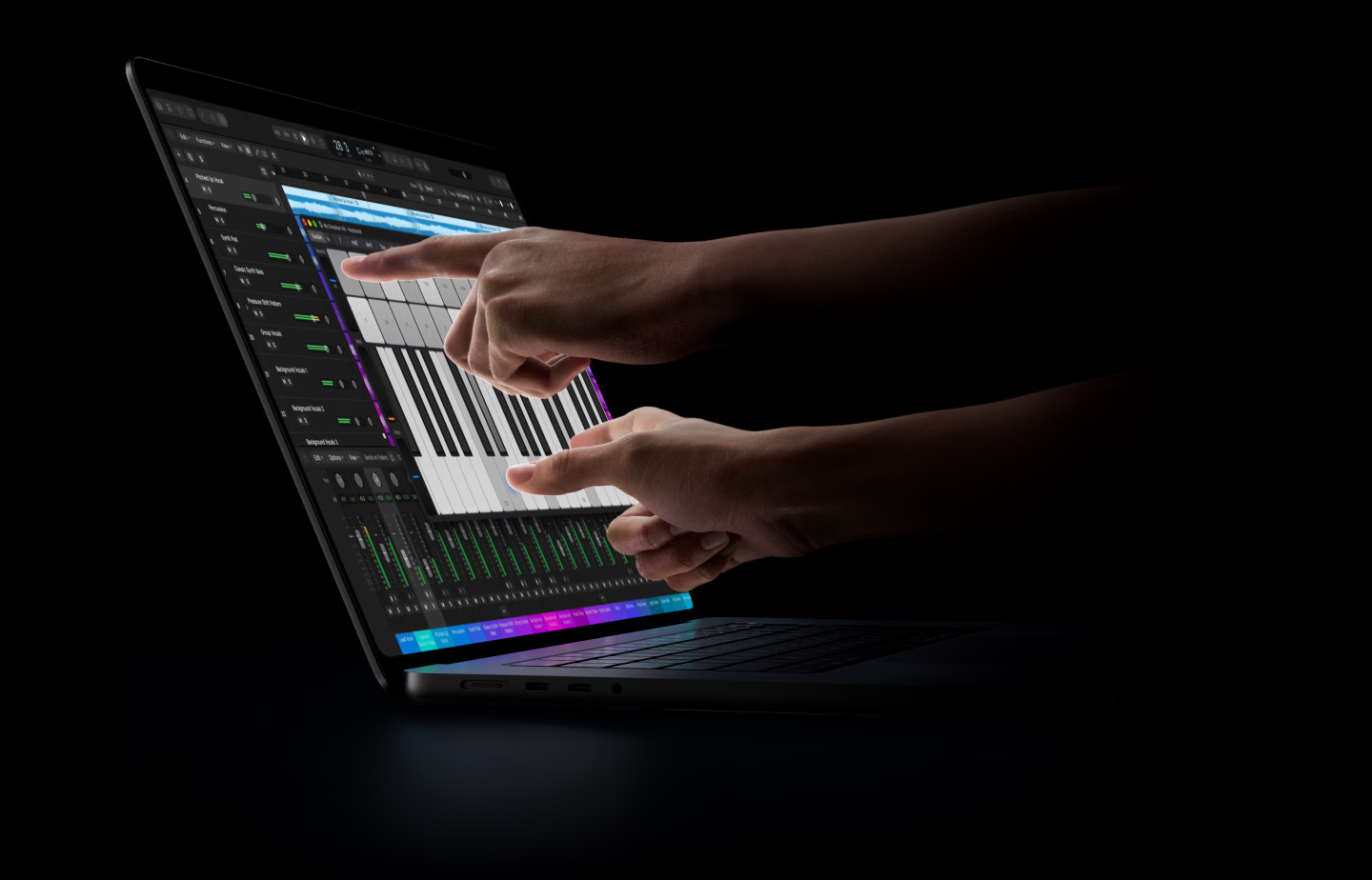
This photo demonstrates the practical application of the new integrated touch sensor for professional music producers.
The new hardware is powered by the M5 Pro and M5 Max chips, which include a third-generation ray-tracing engine and a Neural Accelerator for AI-driven tasks. These chips support unified memory configurations up to 128GB and storage capacities up to 16TB. Despite the addition of the touch display and advanced internal components, Apple reports a reduction in weight for both the 14-inch and 16-inch models compared to previous iterations. The 14-inch model now weighs 3.0 pounds, while the 16-inch model weighs 4.0 pounds. The device also introduces 'Dynamic Island' to the Mac experience, serving as a home for Spotlight and Live Activities, and supports Thunderbolt 5 for high-speed peripheral connectivity.

This image connects the new M5 silicon performance to professional video editing tasks.