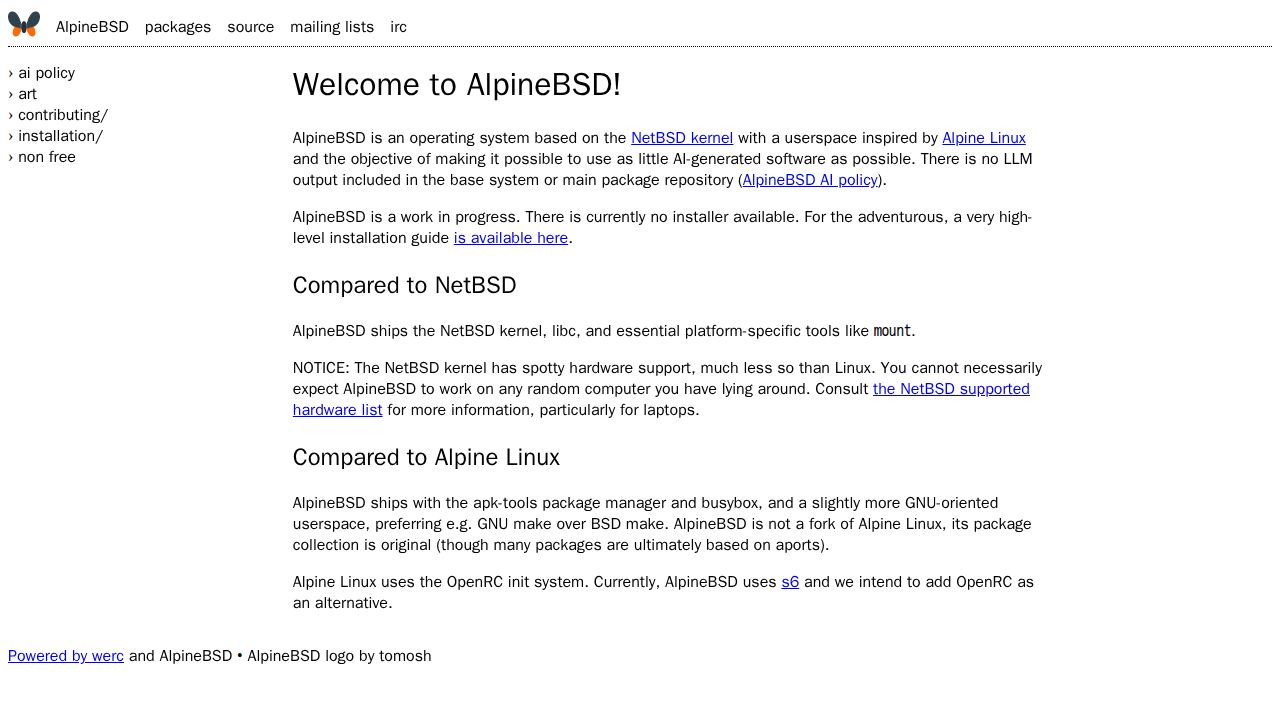
AlpineBSD is a new operating system project based on the NetBSD kernel, designed to offer a software environment that avoids the use of AI-generated code. The project draws inspiration from Alpine Linux, a popular distribution known for its small footprint and use in containers, but adapts those concepts to the NetBSD ecosystem. The primary goal of AlpineBSD is to provide a platform for users who prioritize human-authored code and want to ensure that the underlying system components have not been influenced by large language models (LLMs).
To enforce this "AI-free" policy, the project employs a strategy of pinning essential software packages to specific versions. According to the project's documentation, they pin software as a last resort, preferring to find alternatives or move packages into a "tainted" repository if they contain AI-generated components. Currently, the project pins several core tools in its "base" and "main" repositories, including binutils, gcc, gdb, libffi, perl, and xorriso. By locking these to versions known to be free of LLM-generated code, the project aims to maintain a clean software supply chain, even if it means forgoing upstream patches or requiring the community to maintain these versions independently.
The project's approach has sparked significant debate within the open-source community. Some observers have characterized the move as a form of "tribalism," arguing that the focus on the origin of the code rather than its quality or auditability is a subjective stance. Critics have pointed out practical challenges, such as the difficulty of maintaining pinned versions of complex tools like GCC or binutils without the benefit of upstream updates. Additionally, some users have questioned the practical utility of the project for those seeking to avoid AI, asking why they would choose AlpineBSD over standard NetBSD unless the project provides specific milestones or a unique community experience that justifies the extra overhead of a separate distribution.