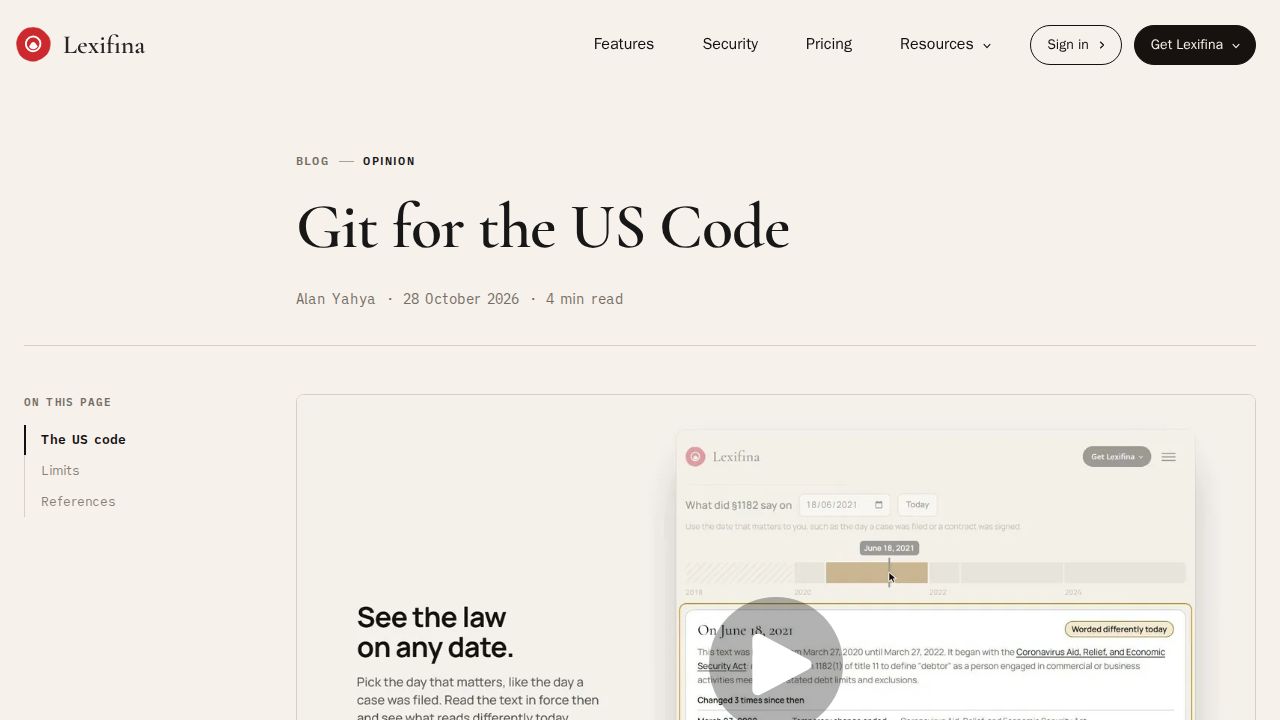
A project described by Lexifina proposes treating the United States Code as a version-controlled repository, similar to how software developers use Git to manage source code. The core concept is to track every modification, addition, and deletion within federal laws as a series of commits. By applying this software engineering methodology to legal text, the goal is to provide a clear, chronological history of how specific statutes have evolved over time, making it easier for researchers and the public to identify exactly what changed during the legislative process.
While the concept of "Law is Code" has been explored in other jurisdictions, such as a 2014 project for French law that visualized bill evolution using Git, the US application faces unique hurdles. Commenters on Hacker News noted that natural language laws are significantly more complex than software code because they contain numerous exceptions and context-dependent nuances. Unlike a deterministic function, a legal clause may behave differently depending on external factors, making it difficult to structure cleanly in a repository without incurring high "data structuring costs" or complex "exception handling" logic.
Practical implementation also faces significant barriers regarding data accessibility and transparency. Some observers pointed out that much of the legislative process can occur in secret, and the current public records are often difficult to parse with standard tools like regex or filters. Furthermore, there is a debate regarding the role of private companies in this initiative; some participants argued that for a project focused on transparency, the underlying codebase should be in the public domain to avoid profit motives that could potentially influence how legal history is recorded or presented. Currently, it remains unclear if a functional tool is fully operational or if the project is currently in a conceptual stage.