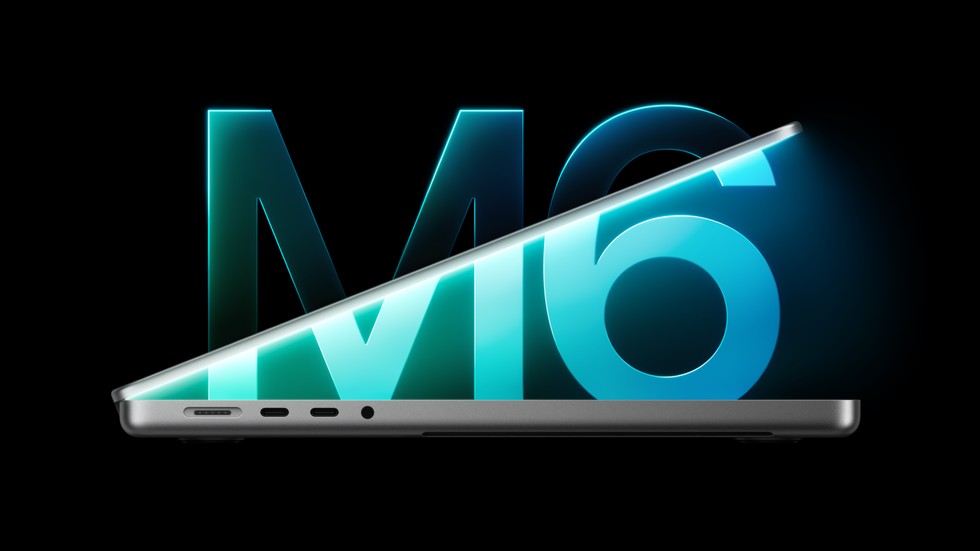
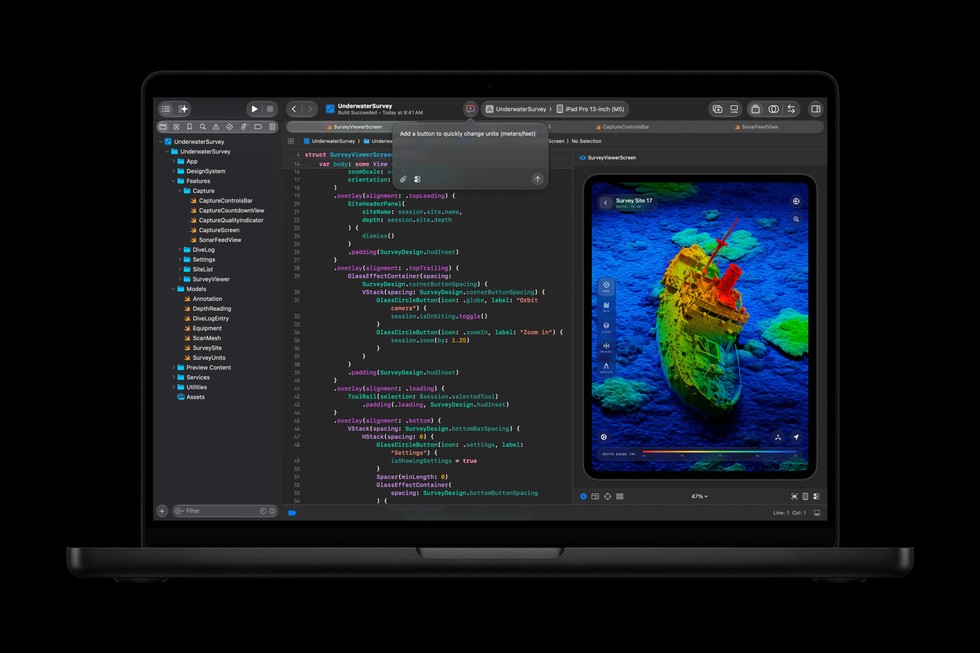
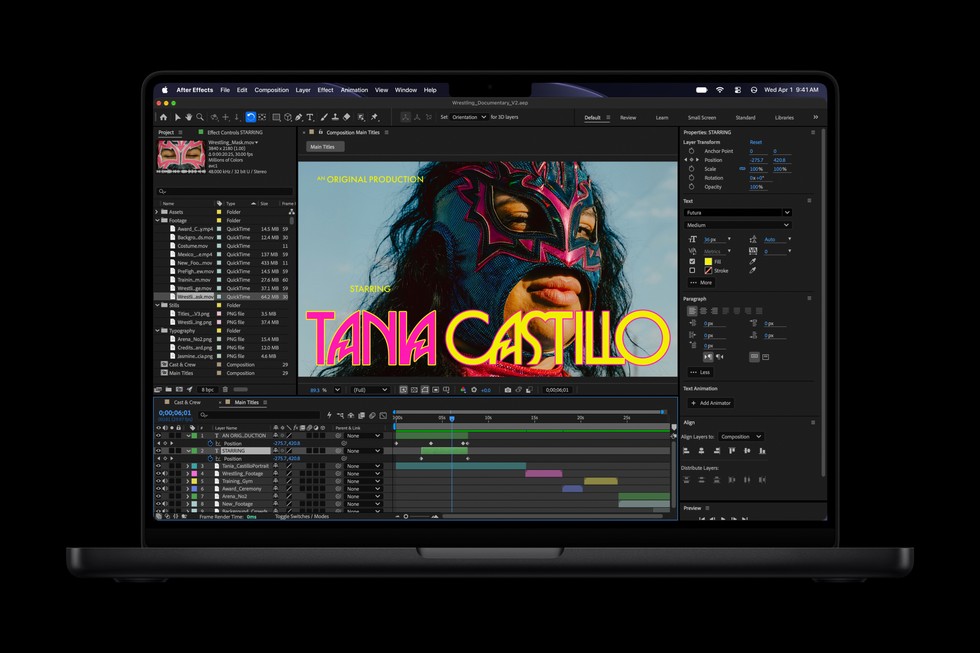
Apple has announced the new 14-inch MacBook Pro, which centers on the transition to the M6 silicon architecture. The new hardware is designed to balance high-performance computing with advanced AI capabilities, specifically targeting professional workflows such as 3D modeling, video editing, and software development. The M6 chip includes a 12-core CPU and a 12-core GPU, which Apple claims provides up to 30 percent faster graphics and 25 percent faster AI workloads compared to the previous M5 generation. For users upgrading from the original M1 silicon, the performance gains are significantly higher, with reported improvements of up to 11x in graphics and 13x in AI performance.
This image introduces the new hardware and the M6 chip architecture discussed in the opening paragraph.
This visual supports the mention of software development as a primary target workflow for the new hardware.
This image demonstrates the high-performance computing capabilities for video editing mentioned in the first paragraph.
The core of the new machine's AI strategy lies in its Dual 16-core Neural Engine and the integration of Neural Accelerators within each GPU core. These components are intended to accelerate local AI tasks, such as Large Language Model (LLM) prompt processing and image generation, while maintaining user privacy by keeping data on-device. The press release highlights specific performance benchmarks, noting that the M6 can achieve up to 13x faster time to first token for LLM processing compared to the M1-based 13-inch MacBook Pro. Additionally, the device supports Wi-Fi 7 and Bluetooth 6, and features a Liquid Retina XDR display with a nano-texture option to reduce glare.

This image illustrates the Liquid Retina XDR display and nano-texture options mentioned in the second paragraph.
Despite the significant hardware leap, the new model faces practical considerations regarding memory and value for different user segments. The MacBook Pro with M6 comes with 16GB of unified memory as standard, configurable up to 32GB, with memory bandwidth reaching up to 170GB/s. While the M6 offers substantial improvements over the M1, some users may find that older 'Pro' or 'Max' series chips still offer high memory bandwidth and large memory pools that can be more efficient for specific heavy-duty tasks. Furthermore, the transition to the M6 architecture introduces a new 'Liquid Glass' design element for the display, which, while offering a more focused aesthetic, remains a point of observation for users accustomed to previous iterations of the Liquid Retina XDR panel.