The Lycurgus Cup, dating to approximately 400 CE, is one of the most famous examples of dichroic glass in existence. This property allows the vessel to change color based on the observer's vantage point: it appears green when viewed in reflected light (lit from the front) and transforms into a deep red when viewed in transmitted light (backlit). For centuries, the mechanism behind this optical shift remained a mystery until 2007, when scientists identified the presence of gold and silver nanoparticles embedded within the glass material.
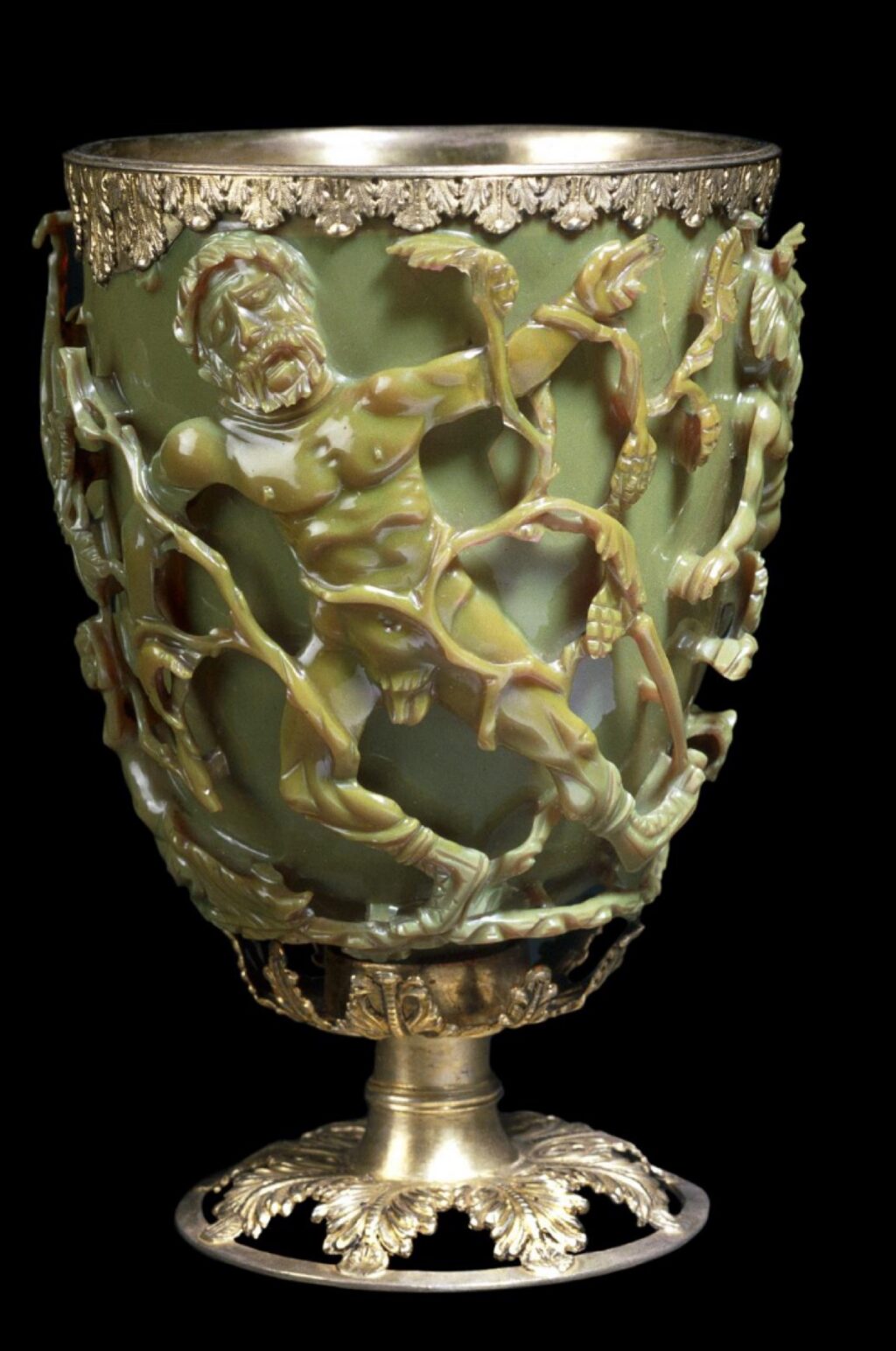
This image illustrates the cup's appearance in reflected light as described in the first paragraph.
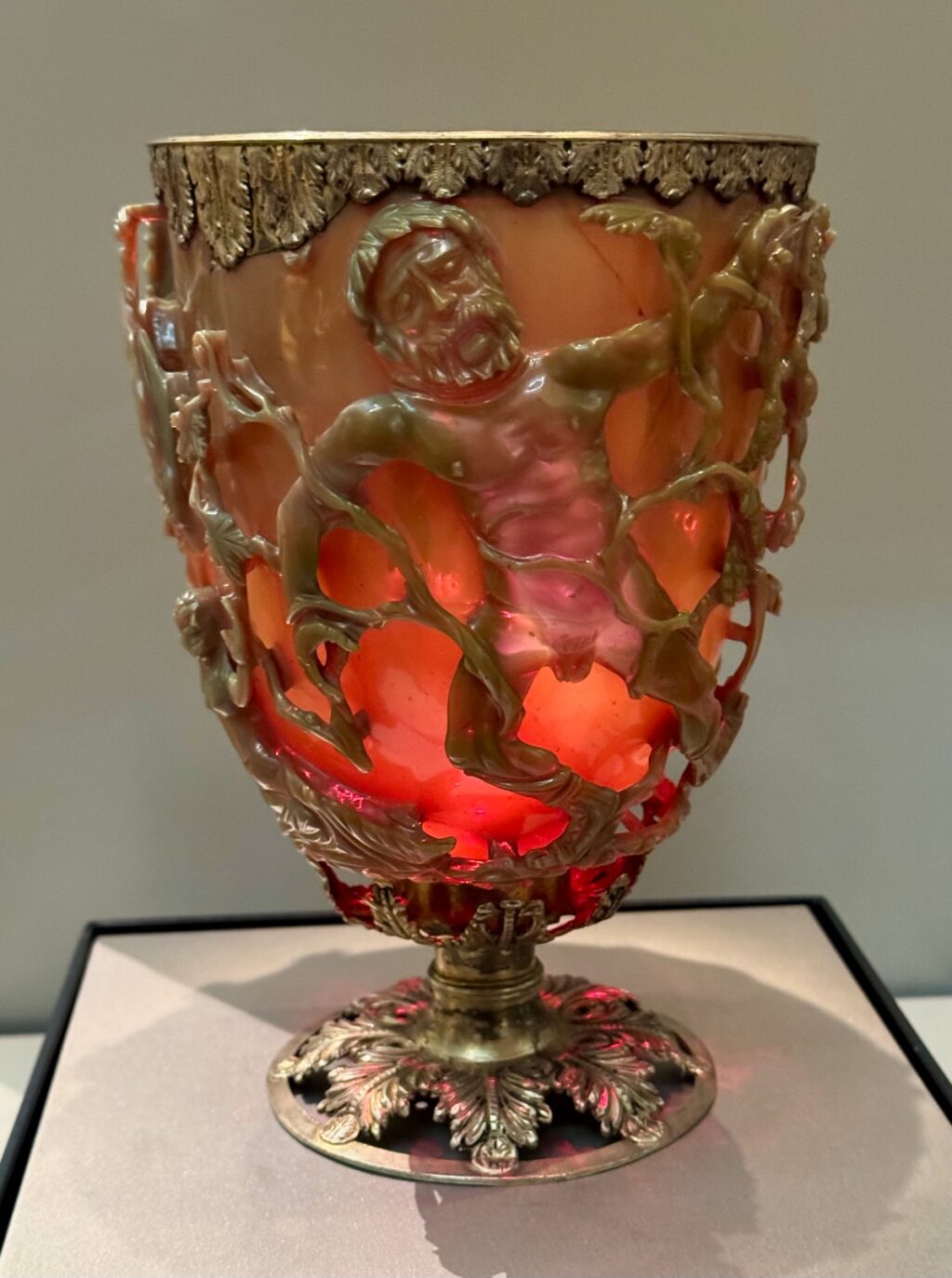
This image demonstrates the transmitted light effect mentioned in the first paragraph.
These nanoparticles, which are roughly 70 nanometers across, trigger a phenomenon known as surface plasmon resonance. Because they are embedded inside the glass rather than sitting on the surface, they interact with light in a way that scatters the blue end of the spectrum more effectively than the red end when backlit. It is believed that Roman artisans may have introduced these metals into the glass melt by adding salts to the sand (silicon) during the melting process. While the exact proportions are unknown, estimates suggest that as little as 330 parts per million of silver and 40 parts per million of gold were added to the glass flux to achieve the effect.
While the original Roman technique was likely a matter of empirical discovery—perhaps even accidental contamination from gold leaf or silver dust in the workshop—modern researchers have now established a consistent, replicable recipe. Scientists at the University of Sheffield, including Lisa Hollands and Caroline Jackson, spent years experimenting with furnace types, oxygen levels, and various materials to produce a contemporary glass that mimics the ancient dichroic effect. This breakthrough allowed glass artist Elliot Walker to create a new sculpture that pays homage to the original cup's form and optical properties, successfully bridging 1,600 years of glass-making history. However, a key uncertainty remains: while the Sheffield team has mastered a replicable method, it is still unclear whether the original Roman artisans were consciously controlling these minute metallic concentrations or if they were perfecting a process that relied on fortunate, incidental chemistry.
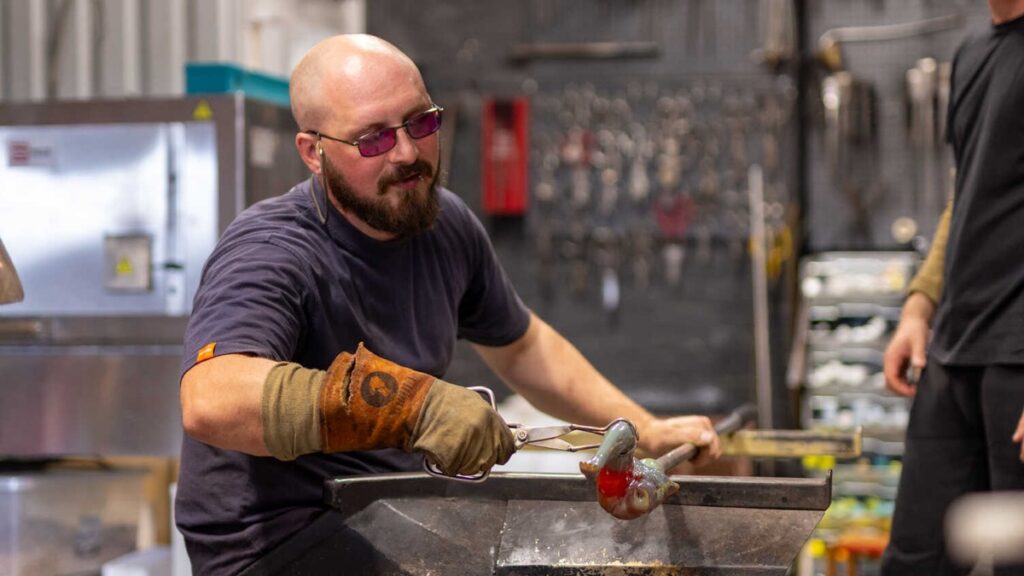
This image depicts the modern sculpture created by Elliot Walker using the newly established recipe.