Researchers at the University of Illinois Urbana-Champaign have developed a three-dimensional thermal invisibility cloak capable of concealing complex objects from infrared cameras. Unlike previous iterations of thermal cloaking technology, which were often limited to two-dimensional surfaces or functioned only when heat moved in a single specific direction, this new device can redirect heat flow around an object from virtually any angle. By guiding heat around a hidden area rather than simply blocking it, the cloak ensures that an infrared camera perceives a temperature pattern as if the object were not there at all.
The mechanism relies on a field called transformation thermotics, which explores how specially designed materials can manipulate heat flow. To achieve a fully 3D effect, the team engineered a new lattice-based material whose thermal properties can be independently adjusted in three directions. They fabricated this structure using 3D metal printing to create an intricate aluminum lattice, which provides high-efficiency pathways for heat conduction. They then used mold casting to fill the remaining gaps with a rubber-like material that conducts heat poorly. This hybrid structure allows the researchers to precisely control the movement of heat, effectively 'steering' it around the concealed space while maintaining a stable, protected temperature inside the cloak.
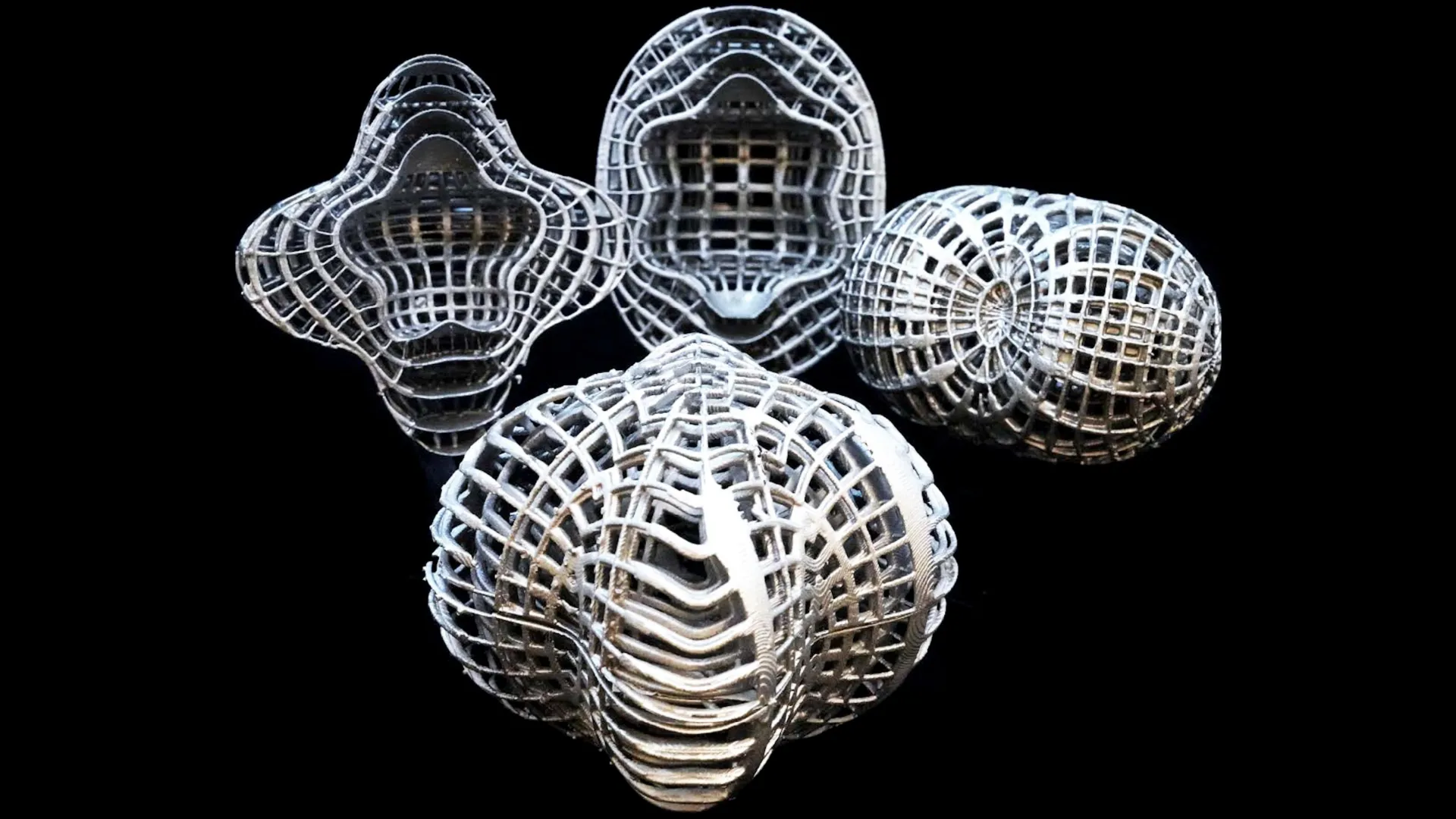
The researchers fabricated an intricate aluminum lattice and filled the gaps with a rubber-like material to create a hybrid structure that steers heat.
Experimental tests confirmed the device's effectiveness by placing it between hot and cold regions and monitoring the results with an infrared camera. The cloak successfully hid intricate 3D geometries, including shapes resembling human heads, while keeping the internal environment shielded from external temperature extremes. While this prototype is a significant advancement in passive thermal redirection, the researchers noted a key limitation: the current cloak only hides objects from external heat sources. A future challenge involves developing materials that can actively manipulate or distribute heat from objects that generate their own internal thermal signatures, which would expand the technology's utility in electronics cooling and advanced stealth applications.
This development could have significant implications for protecting delicate electronics from extreme environments and improving thermal management in microchips. By providing a way to hide and protect information carried by heat, the technology offers a new frontier for both industrial engineering and security applications. However, the current version remains a passive system; the transition to active heat manipulation remains the next major hurdle for the team's research.
(Source: University of Illinois at Urbana-Champaign, News Bureau; Nature Communications, 2026).