The landscape of AI image generation has evolved rapidly from early generative adversarial networks (GANs) to sophisticated multimodal systems. While early models struggled with specific details like human anatomy and legible text, modern iterations have largely solved these issues. For example, the difficulty with hands was often a result of models learning hands as a texture rather than a structural component. Similarly, text rendering improved significantly when models were given access to individual characters rather than just word-based tokens. Today, the primary distinction in the field lies between diffusion models—which are often faster and more repeatable—and multimodal models, which offer superior instruction following and native text rendering by processing language and imagery within the same architecture.
For developers and creators, choosing the right tool depends on the specific requirements of the project. Diffusion models like Flux or SDXL are often preferred for local execution, batch processing, and consistent results via 'seeds' (the initial random noise used to start the generation). In contrast, multimodal models like those integrated into ChatGPT or Gemini excel at conversational editing and complex layout instructions. However, these models often come with less control over specific output dimensions or seeds. A key practical takeaway for production is that users often 'pay for the canvas' rather than the content; a simple wooden table and a complex oil painting of the same size typically cost the same in terms of generation credits or compute time.

This image serves as a practical example of a diffusion model's output, illustrating the consistent results achievable through specific seeds and model selection.

This image provides a direct comparison to the FLUX model, showing how a multimodal model interprets the same prompt for a kitchen table.
Integrating image generation into production code requires a shift in how developers handle failures and consistency. Because image generation is a 'slow, failing job,' it is best handled by treating the output as an asynchronous task. Developers are encouraged to use a thin interface in front of various providers to account for the fact that APIs move quickly, with models being retired or updated frequently. For high-precision tasks like UI design or specific layouts, a hybrid approach is often most effective: using AI for the creative generation of assets while using traditional code to handle exact requirements like sizing, transparency, and palette application. This ensures that the 'taste' of the AI is balanced by the precision of standard software engineering.
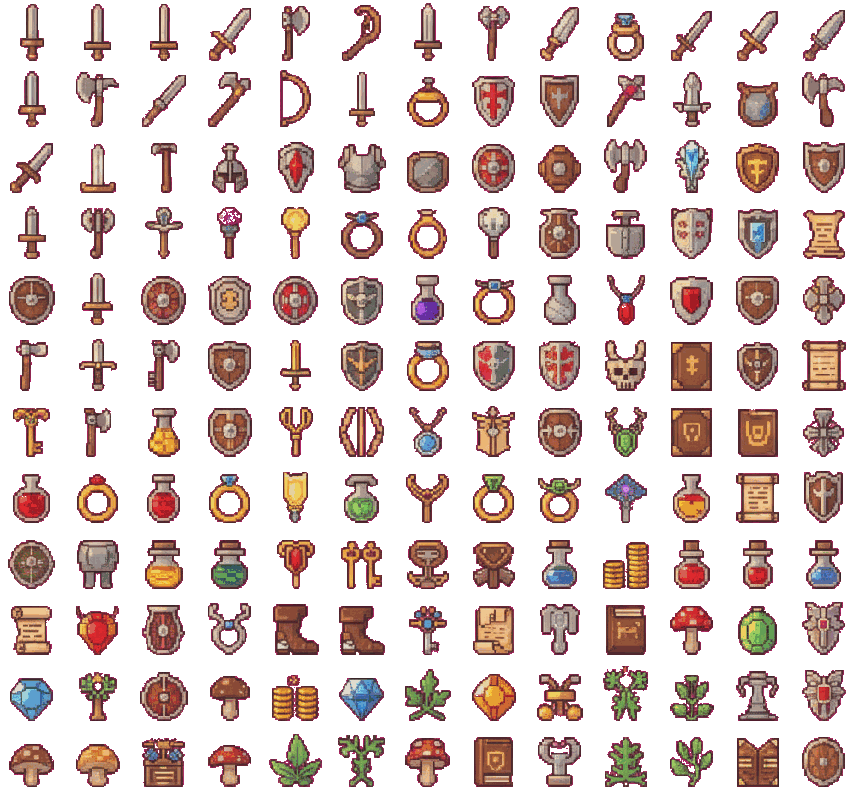
This image illustrates the hybrid approach of using AI for creative generation while using traditional code for precise sizing and transparency.
One emerging alternative to standard generative models, particularly for styles like pixel art, is procedural graphics. Instead of generating a full bitmap, this method involves using LLMs to generate a sequence of simple drawing instructions to recreate a scene. This approach can sidestep common generative issues such as grid misalignment, inconsistent palette choices, and high-frequency noise, offering a different path for achieving specific aesthetic goals without the unpredictability of pure diffusion.
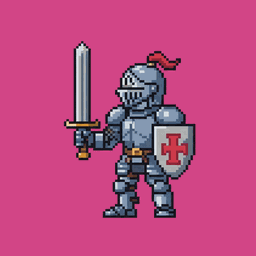
This image illustrates the specific aesthetic of pixel art, which the article discusses as a use case for procedural graphics over standard generative models.
Cost and accessibility also vary significantly across the ecosystem. Prices for API-based generation can range from a fraction of a cent to over 15 cents per image, depending on the model and provider. While local execution removes these costs, it requires significant hardware, such as a GPU with at least 7GB of video memory for models like Stable Diffusion. Ultimately, the most effective pipelines combine the creative strengths of AI with the deterministic reliability of traditional code to produce polished, usable results.