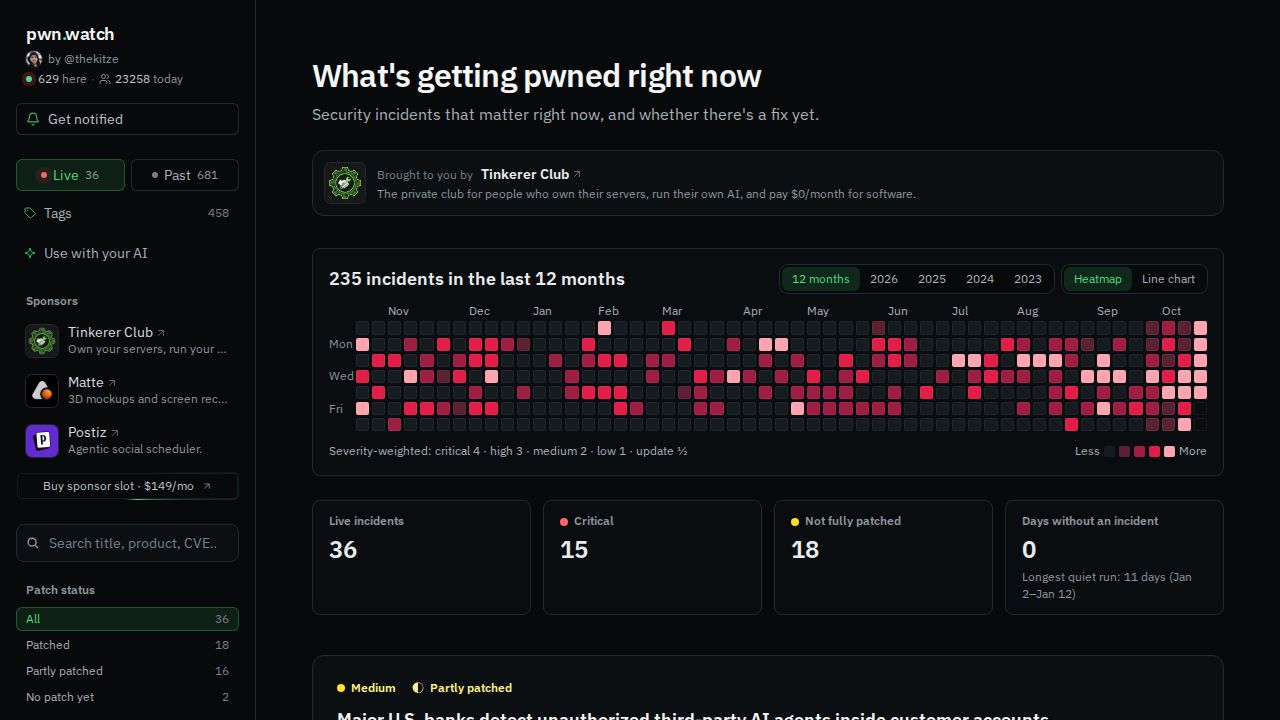
The platform pwn.watch serves as a real-time tracker for security incidents, offering a heatmap of vulnerabilities and active exploits. By aggregating data on what is currently being 'pwned'—a term used in cybersecurity to describe a system being compromised—the site provides a visual representation of the current threat landscape. The project aims to provide a high-level overview of the security posture of various entities, though some users have noted that the current density of information on the site can make it difficult to ingest quickly.
Discussion surrounding the tool highlights a growing concern regarding the role of Large Language Models (LLMs) in the cybersecurity ecosystem. Some observers suggest that this generation of LLMs could drive the largest wave of security incidents in history, as they provide both tools for attackers and potential avenues for automated exploitation. There is a notable debate regarding the 'ongoing' status of certain vulnerabilities; for instance, some users pointed out that a vulnerability listed as live and ongoing may have already been patched, raising questions about how the platform defines the lifecycle of an incident.
Beyond the technical tracking of bugs, the platform has prompted broader reflections on the future of digital security. Some commenters suggested that the increasing frequency of flaws might be a byproduct of a shift toward more complex, AI-integrated systems, while others argued that we are witnessing the final days of 'sloppy' human-written code as automated systems begin to identify and fix bugs more efficiently. The conversation also touched on the practical implications of AI agents interacting with traditional infrastructure, such as banking systems, where the distinction between a 'rogue' agent and a customer-authorized tool remains a significant point of contention regarding liability and security policy.