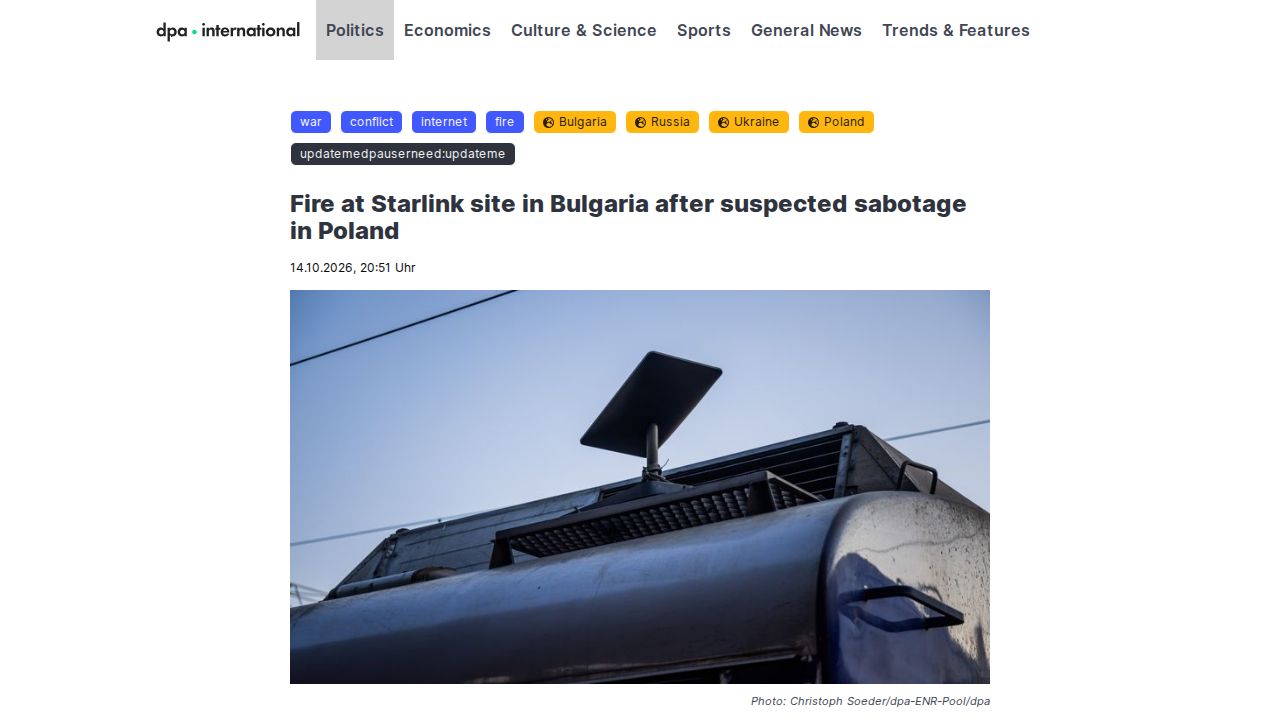
Bulgarian Prime Minister Rumen Radev confirmed that a fire occurred at a Starlink satellite internet facility near the capital, Sofia, during the first week of October 2026. According to reports from the pro-Western opposition alliance Democratic Bulgaria (DB), the fire was a deliberate act that destroyed 11 out of 17 antennas at the site. These antennas are part of the Starlink network, which provides critical satellite internet connectivity used in Ukraine's defense against Russia's invasion.
Authorities have detained two men, aged 20 and 21, who hold German passports in connection with the incident. Investigators are currently examining whether these suspects are part of a larger sabotage network. This investigation follows a separate incident on September 23, where a fire broke out at a Starlink ground terminal south of Warsaw, Poland. In that case, two suspects were arrested in Germany, and the Polish government suspects Russian intelligence services were behind the attack. Plamen Tonchev, head of Bulgaria's State Agency for National Security (DANS), characterized the Sofia incident as an act of sabotage and warned that similar actions could occur in the future.
While the Starlink facility near Sofia is privately owned, the Bulgarian Interior Minister, Ivan Demerdzhiev, informed parliament that the government has introduced additional security measures at similar facilities. However, he noted that the primary responsibility for protecting these sites rests with their private owners. The incidents highlight the vulnerability of ground-based infrastructure—the antennas and terminals required to connect satellite signals to local networks—which serves as a critical component of the broader Starlink constellation. Because these facilities are privately held, the transition of corporate infrastructure into strategic military assets creates complex questions regarding the security responsibilities of private entities in conflict zones.