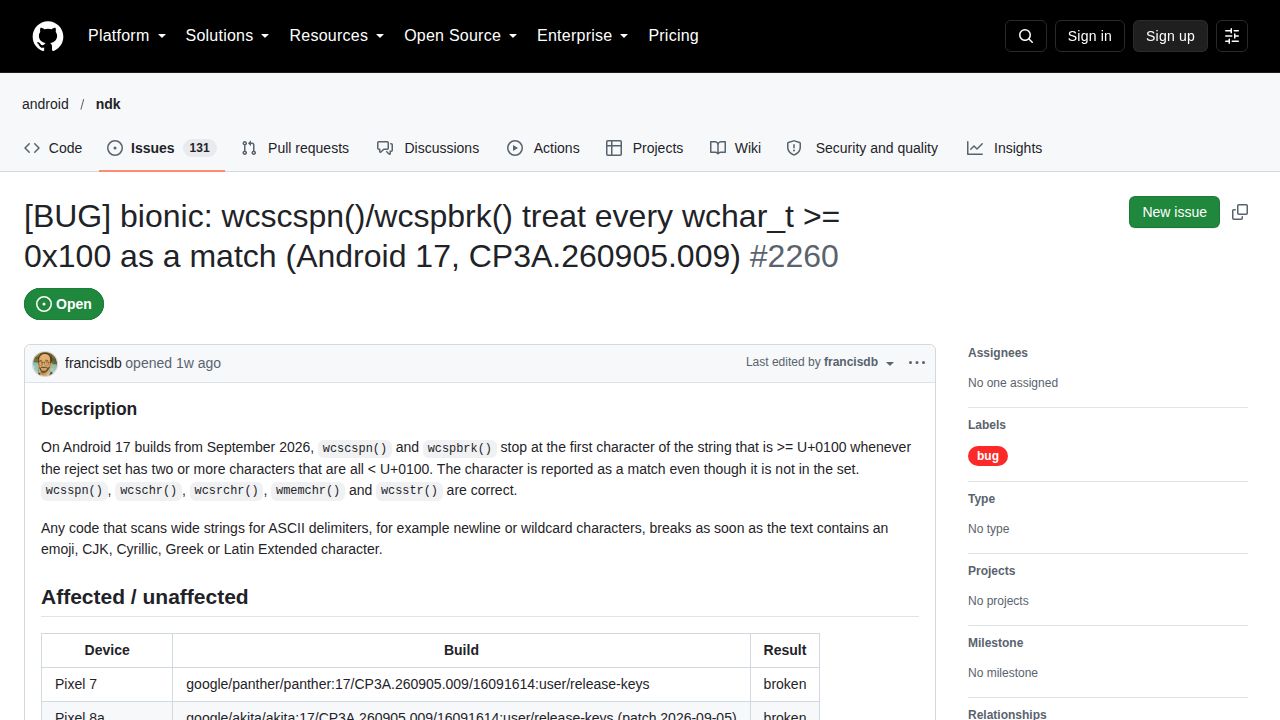
A recent bug report in the Android Native Development Kit (NDK) repository has highlighted a significant delay in the availability of source code for the Android Open Source Project (AOSP). The reporter noted that because the source code for certain libraries is not released concurrently with the binaries, they were forced to perform 'light reversing'—disassembling the library to understand its internal logic—to identify the root cause of a bug. This situation underscores a friction point in the Android ecosystem where the 'open' nature of the project is hampered by the timing of software distribution.
Several theories have emerged regarding why these delays occur. One prominent theory suggests that recent European Union regulations, which mandate that manufacturers provide security updates for a specific duration, may be influencing Google's release schedule. Under this theory, if the public release of source code is legally interpreted as the 'first release' of an update, Google might delay AOSP source availability to give hardware partners, such as Samsung, more time to integrate and build their own custom software layers (like One UI) on top of the base OS. Another perspective suggests that Google has intentionally shifted its strategy, removing specific device trees and exclusive releases from AOSP to prioritize its own hardware, thereby creating a discrepancy between the OS versions available to the public and those available to the open-source community.
The practical consequence of these delays is an increased burden on developers who rely on AOSP for third-party app development. When source code is missing, developers must rely on binary analysis to debug issues, a process that is significantly more time-consuming and error-prone than reviewing source files. Some observers noted that while the bug report's title was somewhat hyperbolic—as the core issue did not strictly require disassembly—the fact that a developer felt the need to reverse-engineer a library to report a bug indicates a breakdown in the expected transparency of the Android platform. As AI tools become more capable of performing automated decompilation, the gap between proprietary binaries and open source may continue to blur, potentially changing how developers interact with the Android stack in the future.</div>,