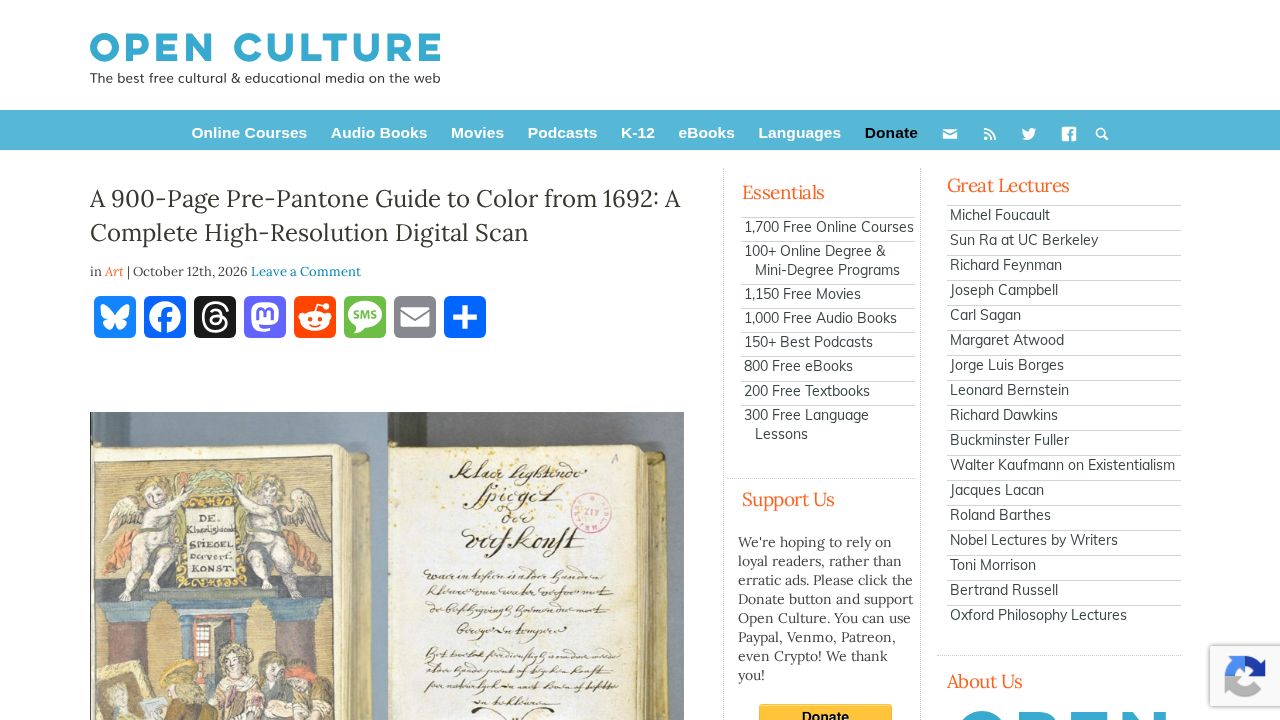
A massive historical reference work, 'Klaer Lightende Spiegel der Verfkonst' (Clear Mirror of the Art of Paints), has been brought to light through a high-resolution scan. Dating back to 1692, the 900-page volume serves as an extensive guide to color and paint, predating modern standardized systems like Pantone. The book was discovered in a French database by medieval historian Erik Kwakkel, who noted that while the work had been scanned previously, its historical significance remained largely unrecognized until his discovery.
The guide is notable for its detailed documentation of paint and water mixtures, featuring numerous color swatches. Because the book was produced in an era before modern mass-production printing, the physical replication of such a work would have been a significant undertaking. The vibrant colors preserved in the book's photographs suggest a high level of craftsmanship in the original production. The work provides a window into how artists and craftsmen categorized and mixed pigments centuries ago, offering a precursor to more systematic color theories that emerged in later centuries.
Discussion surrounding the find highlights the book's connection to broader historical color studies, such as Werner’s Nomenclature of Colour. Commenters noted that while the book is a remarkable artifact, its practical use today is limited by the technology of the time; for instance, reproducing the exact mixtures would be difficult and costly. Additionally, there is a technical consideration regarding how these colors appear on modern screens, with some noting that calibrated monitors might be necessary to accurately perceive the nuances of the historical pigments. The discovery serves as a significant addition to the study of art history and the evolution of color science.