Samsung's Q-Symphony is an orchestration system designed to synchronize audio across a TV's built-in speakers and external Samsung-branded hardware, such as soundbars and wireless speakers. In a recent setup involving a Q990D soundbar and Music Studio 7 speakers, a user attempted to leverage Q-Symphony to create a multi-speaker soundstage. However, the configuration revealed several technical hurdles, including a specific Wi-Fi limitation where the Music Studio 7 speakers refused to connect if the router's DFS (Dynamic Frequency Selection) was enabled. This forced the user to manually select a fixed 5GHz channel to establish a stable connection.
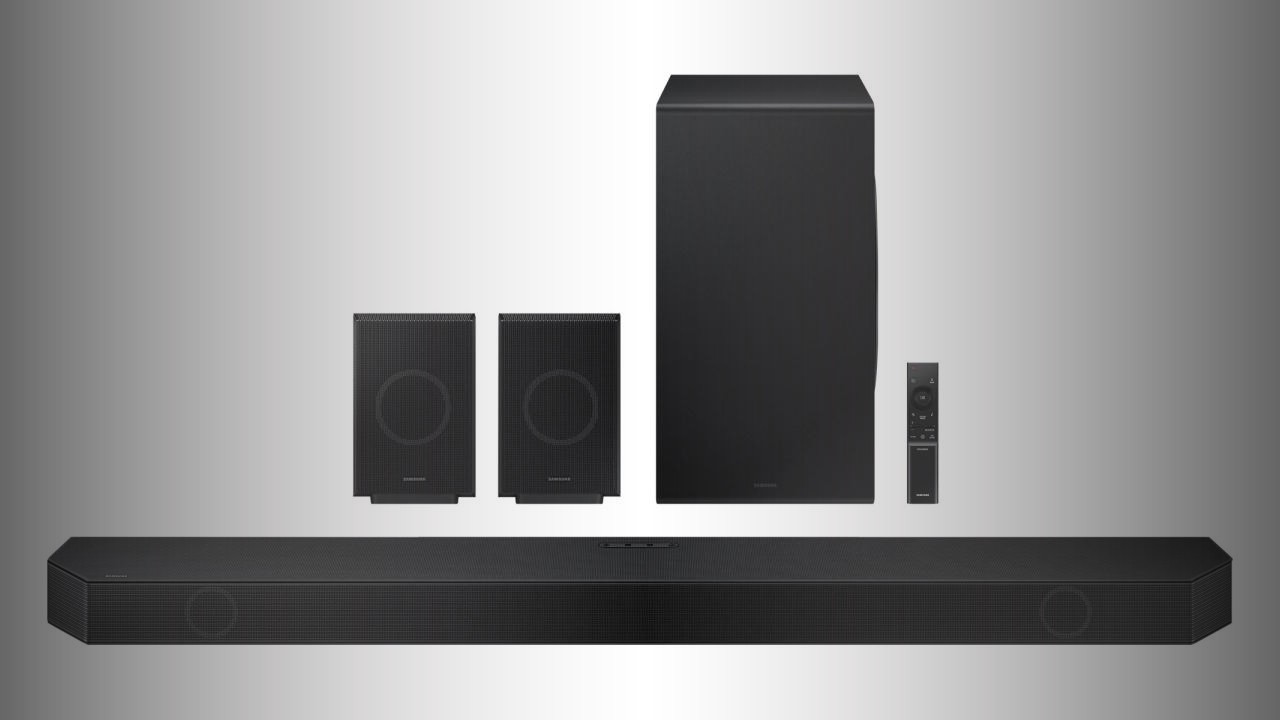
This image illustrates the hardware configuration involving the Q990D soundbar mentioned in the first paragraph.
While Q-Symphony allows for a hybrid setup—where a soundbar connects via wired HDMI eARC while other speakers connect wirelessly—it introduces significant synchronization challenges. The user reported a noticeable 'echo' effect when watching content. This occurred because the TV's built-in speakers played audio slightly ahead of the wireless speakers. Because Q-Symphony does not appear to insert a dynamic delay to compensate for wireless latency, the TV speakers must be disabled to achieve a clean audio mix. However, the user discovered that the option to disable these internal speakers within the standard interface is restricted to hardware released in 2026 or later.
To bypass this restriction, the user accessed the TV's 'service menu'—a hidden configuration area typically used for panel calibration and maintenance. By navigating to the power submenu, they found 'Min' and 'Max' volume settings. Setting the 'Max Volume' to 0 successfully muted the internal speakers without affecting the external Q-Symphony components. The user noted that this suggests the software check for muting the internal speakers might not be applied to wireless sources, potentially due to a lack of unified processing across different connection types. This workaround highlights a discrepancy where a functional hardware capability is effectively 'paywalled' behind newer model releases, forcing users of older hardware to use undocumented menus to achieve a standard audio experience.
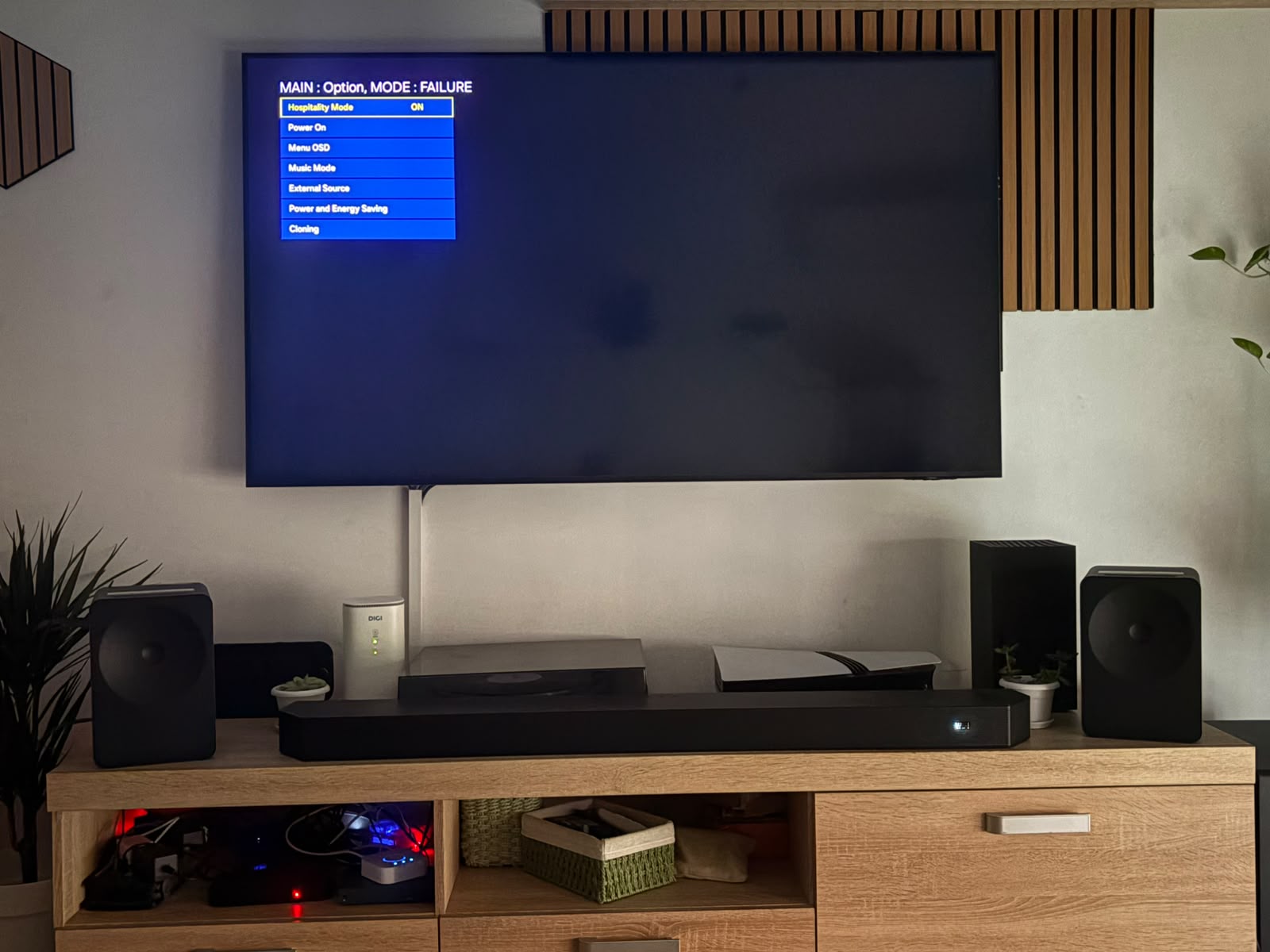
This image depicts the service menu used to manually mute internal speakers as described in the third paragraph.
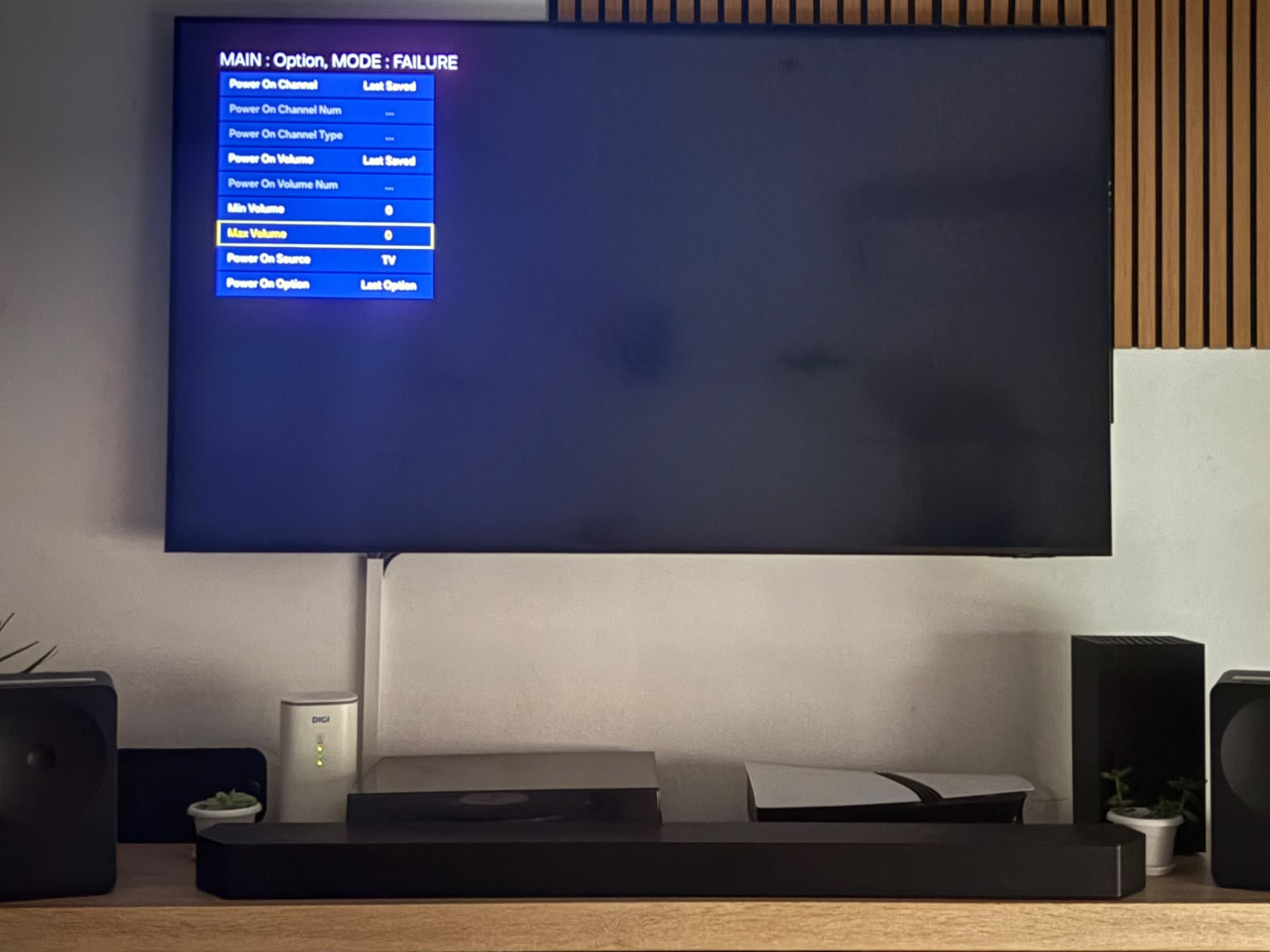
This visual supports the specific navigation steps described in the third paragraph for muting internal speakers.
Ultimately, the experience underscores the complexity of modern 'smart' home theater systems. While Q-Symphony aims to simplify the experience by allowing multiple devices to work in unison, the lack of transparent documentation regarding channel separation and latency management can lead to degraded audio. The user's findings suggest that while the hardware for muting internal speakers exists in older models, the software gate prevents it from being a standard feature, leaving users to rely on service menus or accept imperfect audio synchronization.
The user's experience also highlights a broader debate in the home theater community regarding the trade-offs between integrated soundbar systems and traditional AV receivers (AVR). While soundbars offer ease of use, they often lack the flexibility of a dedicated AVR, which can manage complex speaker configurations and independent channel routing more reliably. For those seeking the highest audio fidelity, the limitations of wireless orchestration and software-locked features may make a traditional, wired setup a more predictable alternative despite the increased cabling and configuration effort.
The primary source establishes the specific hardware used (Q990D soundbar, Music Studio 7 speakers) and the technical behavior of the Q-Symphony system. It also documents the specific service menu navigation and the 'Max Volume' workaround. The discussion cues provide additional context regarding the consumer sentiment toward Samsung's ecosystem and the technical advantages of traditional AVR systems over integrated soundbar solutions.
The user's report confirms that: 1. Music Studio 7 speakers require a fixed 5GHz channel and will not connect if DFS is enabled on the router (primary). 2. Q-Symphony does not currently provide a dynamic delay to sync built-in TV speakers with wireless external speakers, causing an echo (primary). 3. The software-level option to mute internal speakers is restricted to 2026+ hardware, requiring a service menu workaround for older models (primary). 4. Commenters on Hacker News noted that Samsung's ecosystem can be difficult to manage, with some users preferring traditional AVR systems for better reliability and audio separation (hn-50151971).