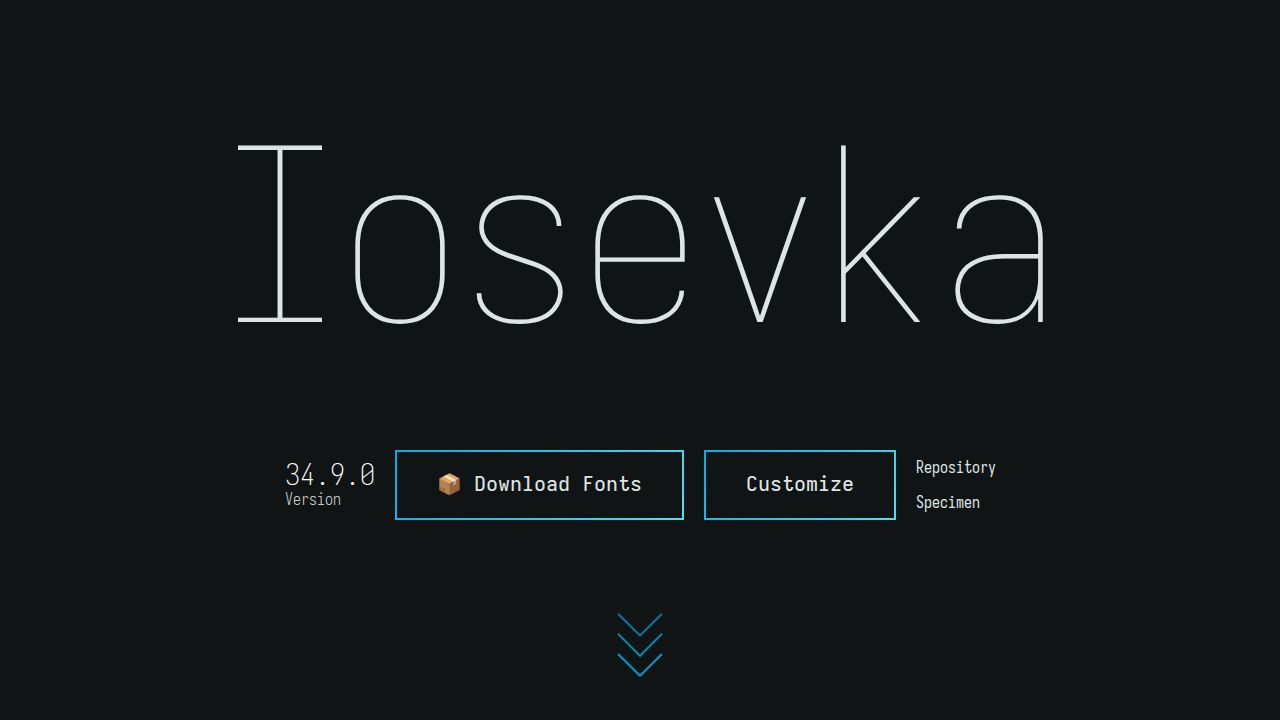
Iosevka is an open-source monospace font that offers both sans-serif and slab-serif styles. It is designed primarily for use in programming environments and terminals, where readability and space efficiency are paramount. The font is notable for its versatility, allowing users to choose between different widths and styles to suit their specific hardware and aesthetic preferences.
One of the most distinctive technical aspects of Iosevka is its programmatic generation. The font's author, be5invis, developed a custom Domain-Specific Language (DSL) called PatEL (Parametric Type Expression Language) to generate the typeface. This system allows users to customize the font's parameters and build their own versions—such as TrueType (.ttf) or TrueType Collection (.ttc) files—using the build system provided in the project's repository. This level of customization enables users to create specific configurations, such as 'Iosevka Term' or variants that mimic other popular programming fonts.
User reception of the font highlights both its strengths and its polarizing design choices. Many users praise its space efficiency, noting that its condensed variants allow for more characters to be visible on smaller screens without sacrificing legibility. However, the font's use of 'code ligatures'—where certain character combinations like '==' or '/>' are merged into single glyphs—has sparked debate. While some users find these ligatures aesthetically pleasing and helpful for scanning code, others argue they can make certain symbols harder to distinguish or count, leading to a preference for standard character spacing in some contexts. Additionally, the font's unique visual style has been described by some as a significant adjustment for those accustomed to more traditional monospace fonts like JetBrains Mono or Courier.