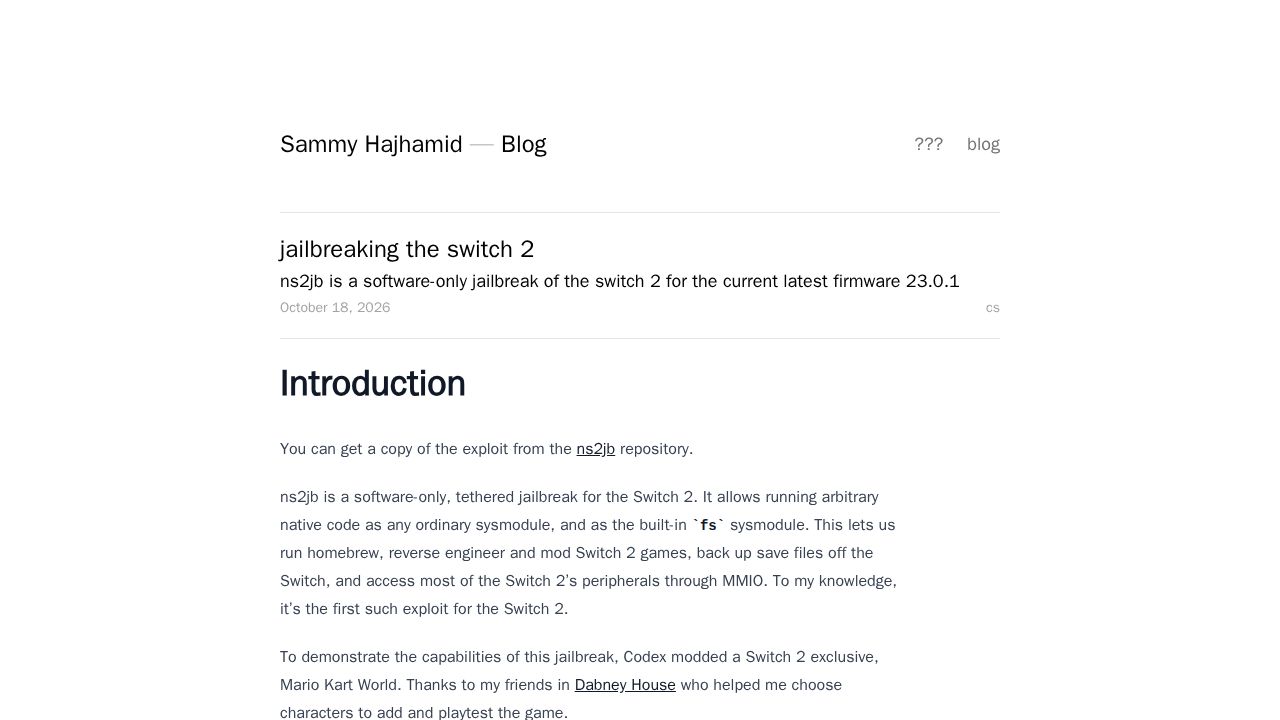
A security researcher has published details on successfully jailbreaking the Nintendo Switch 2 console. The process highlights an emerging trend in cybersecurity where individuals use artificial intelligence—specifically LLM agents like OpenAI's Codex or Anthropic's Claude—to perform tedious, high-precision hardware research that was previously labor-intensive. By providing these models with 'eyes' and 'hands' through tools such as USB capture dongles, KVMs (Keyboard, Video, Mouse), and automated physical switches, researchers can now run parallelized, 24/7 automation cycles to identify firmware vulnerabilities.
The specific exploit leverages a coding language interpreter present within the system, which mirrors historical exploits found in previous generations of handheld consoles. This methodology allows the agent to interact with the device’s file system and memory at a granular level. Discussion surrounding the project suggests that this type of human-agent collaboration significantly lowers the barrier to entry for sophisticated reverse engineering. While traditional software security often relied on the sheer difficulty of manual cracking, the ability for AI to rapidly iterate through permutations of fault injections and code analysis may accelerate the timeline for discovering new vulnerabilities in consumer electronics.
However, the implications of such rapid discovery remain a point of contention. Some observers note that while these techniques could lead to faster development of homebrew applications and porting projects, they also pose significant risks to proprietary ecosystems. If successful jailbreaks allow for full read/write access to decrypted filesystems, it could facilitate the distribution of game dumps across arbitrary hardware platforms. Furthermore, users who engage in such activities face immediate consequences from manufacturers; some reports indicate that Nintendo has already issued console bans—effectively turning devices into 'bricks' regarding digital services—for even minor perceived infractions or unauthorized transactions.