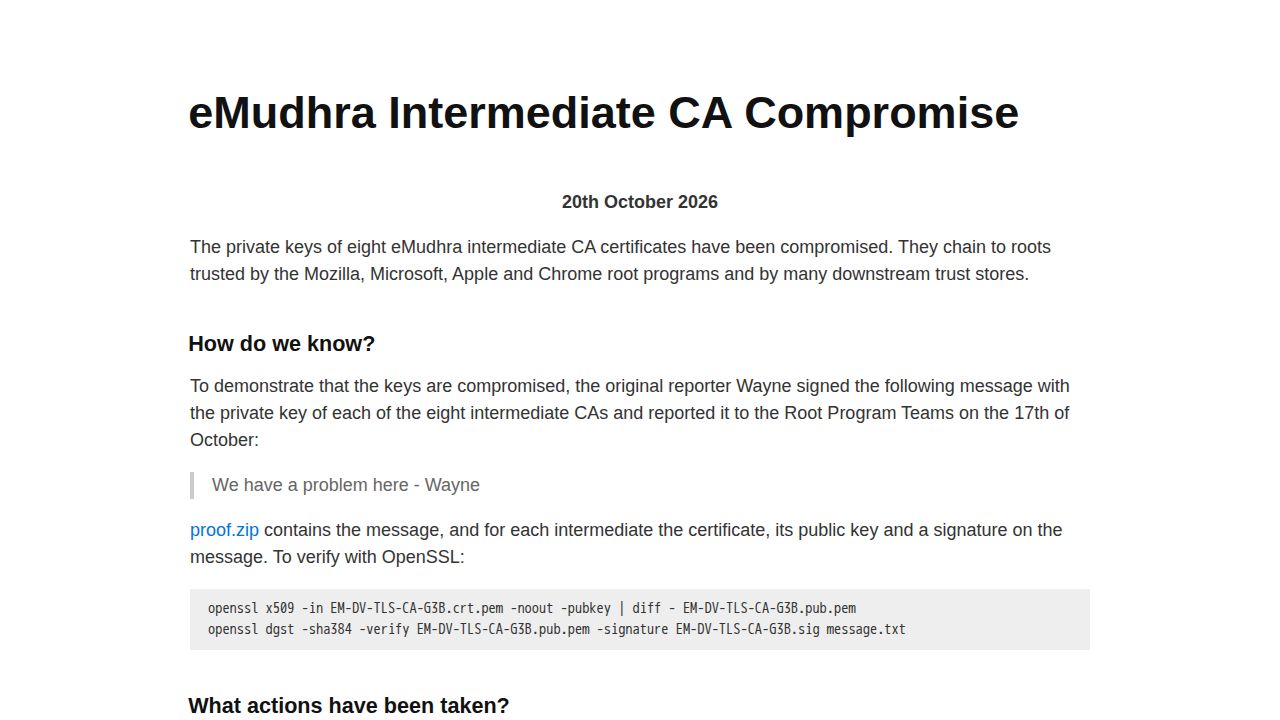
A significant security vulnerability has been identified involving the compromise of private keys for eight eMudhra intermediate Certificate Authority (CA) certificates. These certificates are critical components in the chain of trust that allows web browsers and operating systems to verify the identity of websites. Because these intermediates chain back to root programs trusted by major tech giants—including Mozilla, Microsoft, Apple, and Google Chrome—the breach could theoretically allow an attacker with access to the keys to issue fraudulent certificates and intercept encrypted traffic.
The compromise was demonstrated by a reporter who signed messages using each of the eight affected private keys on October 17, 2026. Following this disclosure, major browser vendors began blocking the certificates. For example, Firefox and Chrome blocked them within days, followed by Apple devices on October 19 and Microsoft products on October 20. While the CA has revoked the compromised certificates, the primary challenge remains for clients that do not automatically consume revocation information; such users must manually update their software or system trust stores to ensure they no longer recognize the breached credentials.
The technical nature of the compromise suggests a severe failure in key management practices. Reports indicate some of the compromised private keys were extremely weak, with one reportedly being as simple as a single digit. This highlights a systemic issue where certificate policies may be technically sound but poorly enforced at the issuance level. To mitigate the risk, developers and users are encouraged to update specific software packages, including Go (versions 1.27.3+), Electron, Python's certifi library, and various Rust-based web trust libraries, which have released patches specifically addressing these compromised roots.