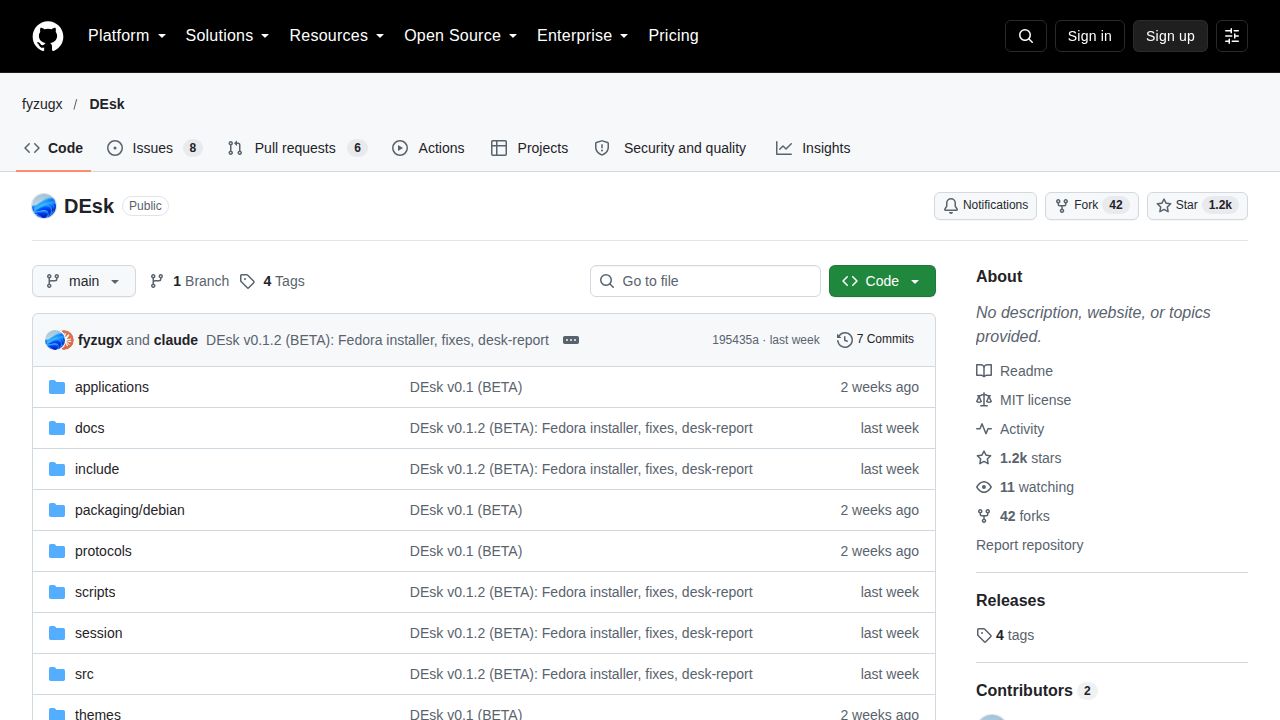
DEsk is a Linux desktop environment built on the Wayland display protocol that intentionally departs from the 'flat' design trends dominant in modern computing. Instead of minimalist, two-dimensional interfaces, DEsk utilizes skeuomorphism, a design philosophy where digital elements mimic the textures, shadows, and physical behaviors of real-world objects. The project aims to provide a more tactile and immersive experience, moving away from the 'clean' and 'sleek' aesthetics of contemporary operating systems to favor a more expressive, ornamental style.
The project's implementation focuses on creating a sense of physical presence within the software. For example, the interface includes interactive elements like keys that must be 'turned' to perform actions, such as shutting down the machine. This approach is intended to leverage spatial memory and provide a more substantial feeling of interaction, reminiscent of older hardware or high-fidelity game environments. By using these physical metaphors, DEsk attempts to create a digital twin of a physical workspace, where buttons and switches provide a sense of depth and mechanical feedback that is often missing from modern, glass-like user interfaces.
While the project has garnered interest for its nostalgic and experimental appeal, it faces practical challenges regarding consistency and software integration. Some users have noted that the animations for physical interactions, such as turning a key, can play inconsistently, making the current state of a button unclear at times. Furthermore, a significant hurdle for skeuomorphic projects is the compatibility of application toolkits; while the desktop environment itself can be highly stylized, modern toolkits like GTK and libadwaita are often designed to resist deep theming, which can make it difficult to maintain a cohesive aesthetic across all installed applications. Despite these limitations, DEsk represents a niche but growing interest in UI variety and the return of 'beauty' and depth to the Linux desktop experience.