A significant data breach has exposed a vast archive of internal communications belonging to the Alternative für Deutschland (AfD), a far-right political party in Germany. The breach resulted in the theft of more than 421,000 emails, totaling approximately 281 GB of data. According to reports, the compromised data includes messages from prominent party figures, including co-leader Alice Weidel and co-founder Alexander Gauland. The AfD has stated that the attack targeted an email service provider used by the party, affecting a number of accounts, some of which had been inactive for years.
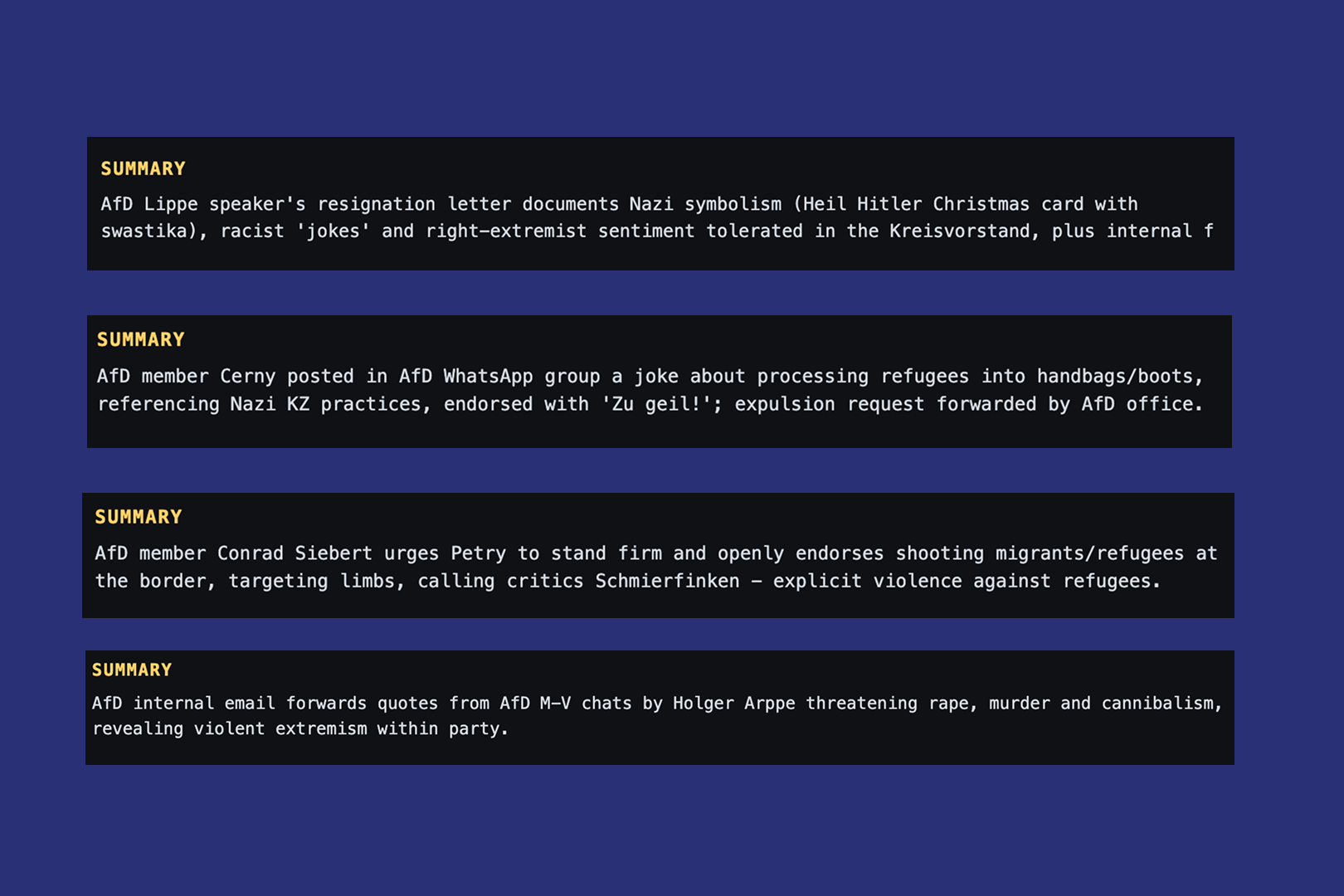
This image serves as a visual summary of the data breach involving the Alternative für Deutschland party.
While the party claims the attack was quickly detected and stopped, the leaked material has been published online, including summaries of various internal exchanges. These summaries reportedly contain sensitive personal information such as ID card photos, bank statements, and membership lists from local branches. Beyond administrative data, the leaked content has drawn scrutiny for its ideological content. Reports indicate that some internal communications contain racist slurs, antisemitic theories, and discussions regarding the treatment of refugees at the German border. Some specific examples cited in the leak include a Christmas card featuring a swastika and the phrase "Heil Hitler," as well as threads signed off with "Heil und Sieg."
The leak occurs as the AfD continues to rise in national opinion polls and has recently secured significant electoral wins in several German states. The disclosure of these emails provides a raw look at the party's internal culture, which some observers suggest could be used as evidence in ongoing efforts to evaluate the party's standing relative to German constitutional standards. However, the method of acquisition—a hack rather than a formal public records request—raises questions about the legal and ethical implications of using such data for political analysis or legal proceedings. It remains unclear who was responsible for the cyberattack or if further data beyond the initial 421,000 emails was compromised during the breach.