Sixteen years after the Deepwater Horizon oil rig explosion released over 4 million barrels of oil into the Gulf of Mexico, researchers are finding that deep-sea ecosystems have struggled to recover. A study published in the Proceedings of the National Academy of Sciences reveals that in the years immediately following the 2010 disaster, populations of several key species—including octopus, squid, krill, shrimp, and lanternfish—declined by at least 60 percent. The research utilized acoustic surveys and thousands of netted samples to monitor a broad swath of the Gulf, finding that these populations have not significantly bounced back in the intervening years.
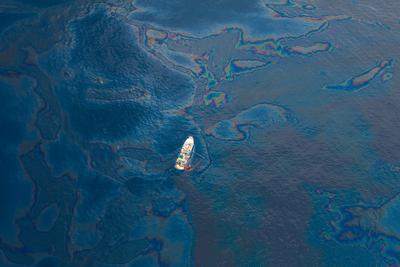
This image illustrates the 2010 Deepwater Horizon oil spill, which released over 4 million barrels of oil into the Gulf of Mexico.
The study highlights a severe impact on the ocean layer extending from approximately 600 feet deep to more than two miles down. While the researchers stopped short of making a definitive causal link, they noted that the oil spill is the most parsimonious explanation for such a rapid and severe decline in animal life. Beyond sheer numbers, the research identified a decrease in genetic diversity among these populations. This loss of diversity is a significant concern for scientists, as it may mean these species lack the necessary genetic traits to adapt to a rapidly changing environment.
Ongoing environmental monitoring has also detected oil-related compounds in the flesh of deep-sea squid and octopus, as well as in fish eggs. These contaminants can impair reproduction, hinder development, or lead to premature death. Furthermore, lingering pollution may interfere with the sensory systems of deep-sea fish, which rely on their sense of smell to locate mates. These combined factors—population collapse, reduced genetic variety, and persistent chemical contamination—suggest that the ecological footprint of the 2010 spill remains a significant hurdle for deep-sea recovery.
