Death Plan Switch is a self-hosted software solution designed to manage 'dead man's switch' scenarios for solo developers and small business owners. The tool addresses a specific logistical gap: ensuring that if a developer suddenly becomes incapacitated, their clients and stakeholders are notified in a structured, orderly fashion. Rather than acting as a secure vault for passwords or documents, the system serves as a notification engine that triggers a series of escalating communications based on a weekly check-in schedule.
The mechanism operates on a timeline of escalating alerts. Every week, the system sends a check-in email to the user. If the user fails to press a manual button on a web page within the allotted time, the system begins a countdown. At the 72-hour mark, the system contacts a designated 'next of kin' to ask if the user is well. If the next of kin confirms the user is safe, the process ends. If they report a problem, the system immediately sends pre-written messages to a wider list of contacts, such as backup developers or legal representatives. This tiered approach is intended to prevent unnecessary panic by ensuring family members are consulted before broader business notifications are dispatched.
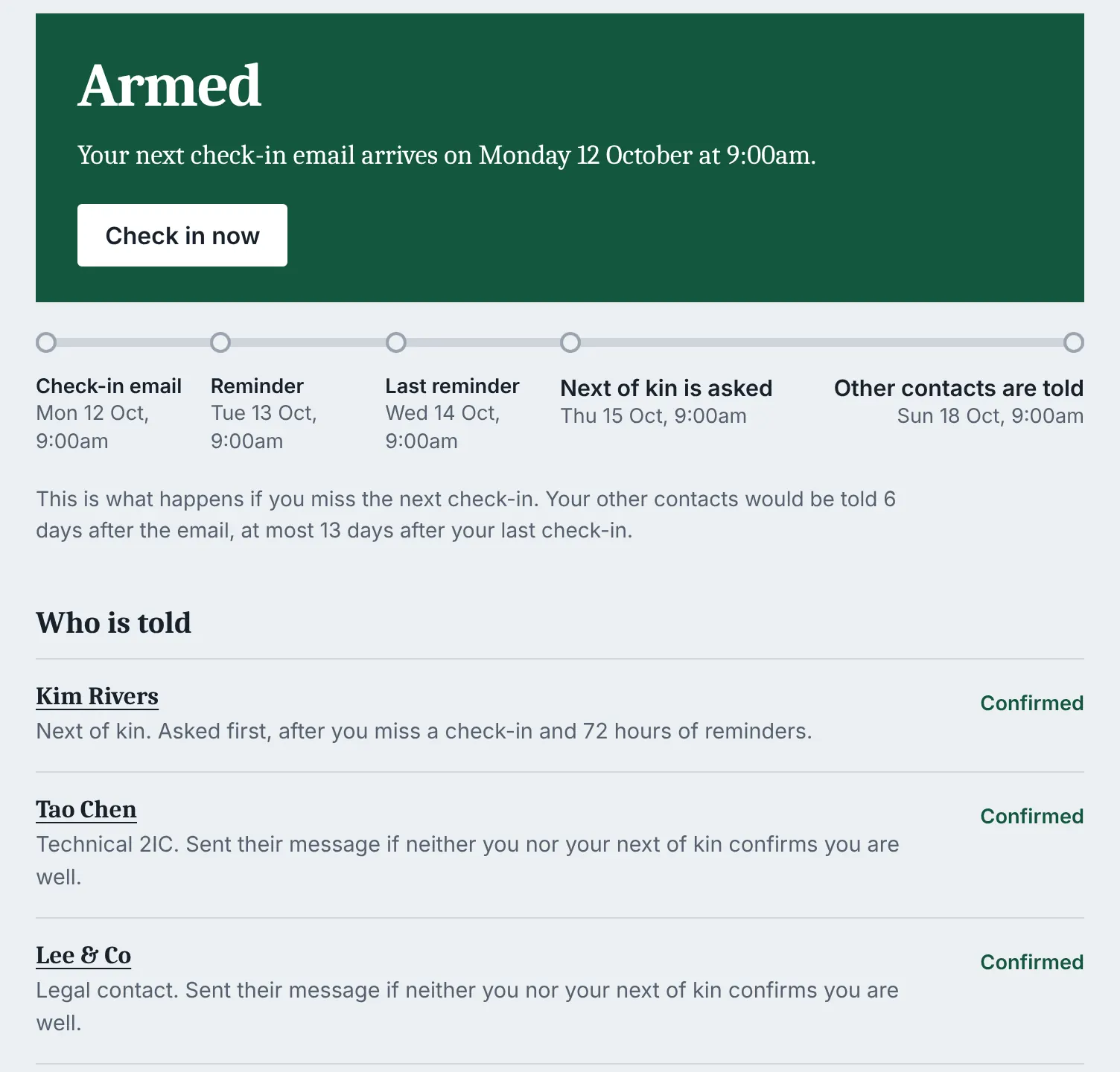
This image illustrates the core mechanism of the tool, showing the countdown and the list of contacts that will be notified if the check-in is missed.
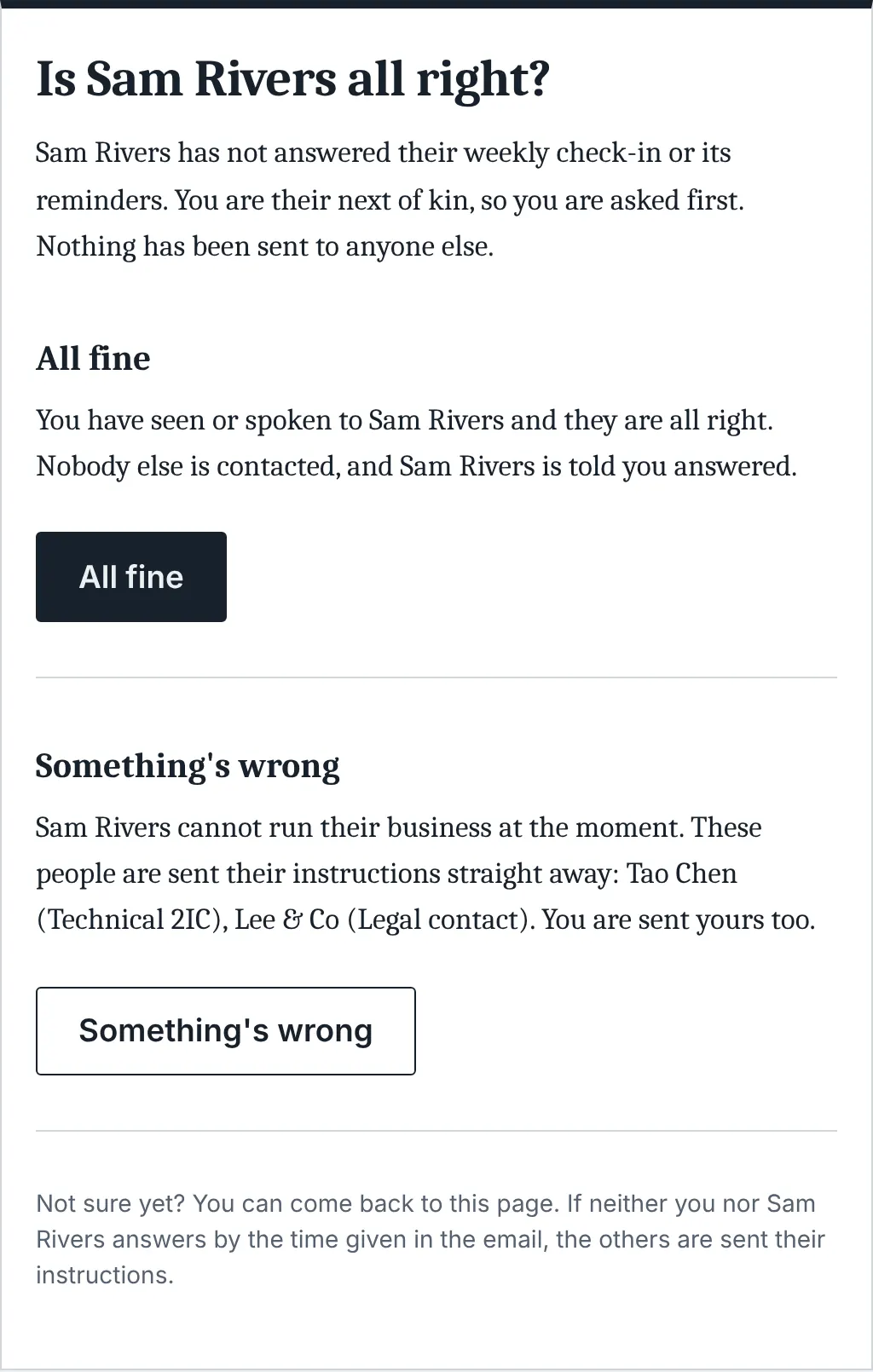
This visual supports the description of the tiered escalation process where family members are consulted first.
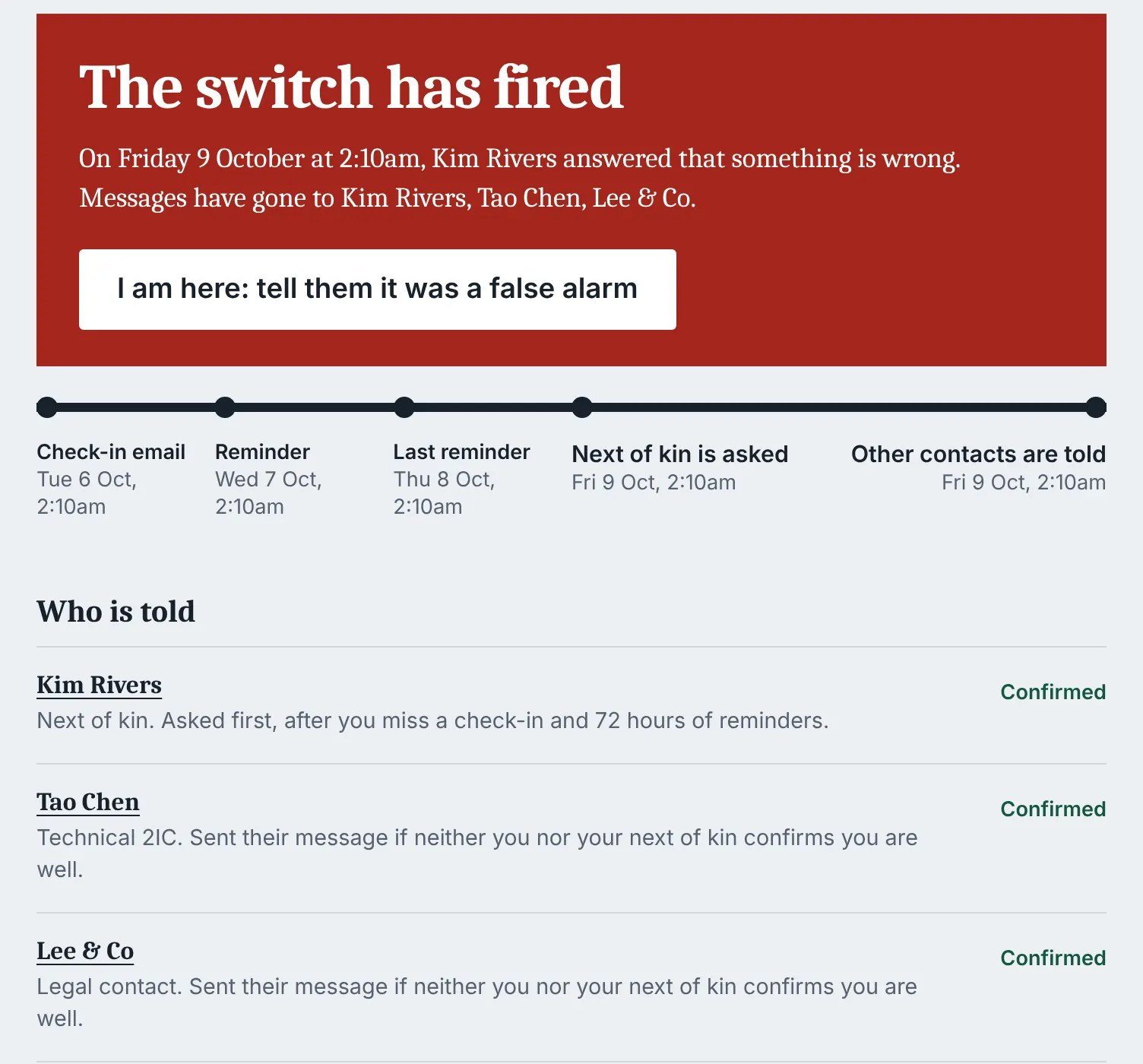
This image demonstrates the final stage of the escalation process described in the second paragraph.
Because the tool is designed for privacy and reliability, it requires the user to host it on their own infrastructure. It functions as a web application requiring a PHP 8.1+ environment, an SMTP account for outgoing mail, and a cron job or external scheduler to trigger the check-in process every 15 minutes. The developer emphasizes that the system is not a guarantee of service; it relies entirely on the uptime of the user's server and mail service. Furthermore, the tool is intentionally limited to email notifications, avoiding the complexities of SMS or app-based integrations to keep the deployment simple for the end user. The project is released under the MIT license, allowing others to use or modify the source code for their own continuity planning.
While the tool provides a structured notification path, it does not replace comprehensive business continuity planning. Users are responsible for ensuring that the messages sent by the system point to the correct locations for encrypted documents or keys, which the tool itself does not store. Additionally, the system requires consistent maintenance; the user must actively interact with the check-in button weekly to prevent the 'switch' from firing. If the user's server goes offline or the cron job fails, the system cannot perform its function, making independent hosting on a separate infrastructure from the primary business sites a recommended configuration for reliability.
One significant limitation of the system is its reliance on the user's manual intervention. If a user simply forgets to check in, the system will proceed with the escalation. To mitigate this, the developer designed the check-in page to require a physical button press rather than just a page load, preventing automated email scanners from accidentally resetting the timer. However, the ultimate success of the plan still depends on the user's diligence in maintaining the server and remembering the weekly check-in, highlighting that the tool is a component of a larger personal safety and business continuity strategy rather than a standalone solution.
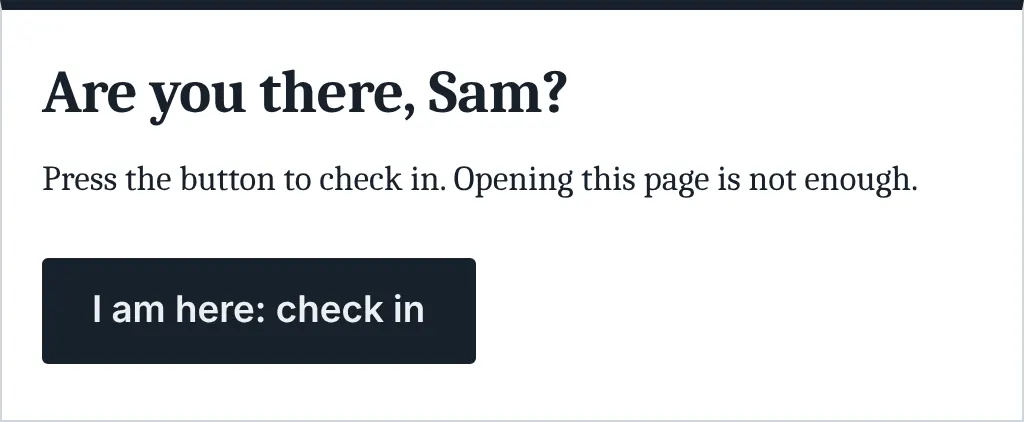
This image illustrates the manual intervention required by the user to keep the switch from firing.
One notable technical detail is the installation process, which is designed to be completed within a browser. The installer automatically generates the necessary crontab line for the user, which is the primary manual step required to keep the scheduler running. By keeping the software lightweight and focused solely on the notification logic, the developer ensures that the system remains easy to audit and maintain, even for those with limited technical overhead. The project is currently available for free, and the developer has invited feedback on the user experience and potential points of failure to refine the tool's reliability for solo practitioners.