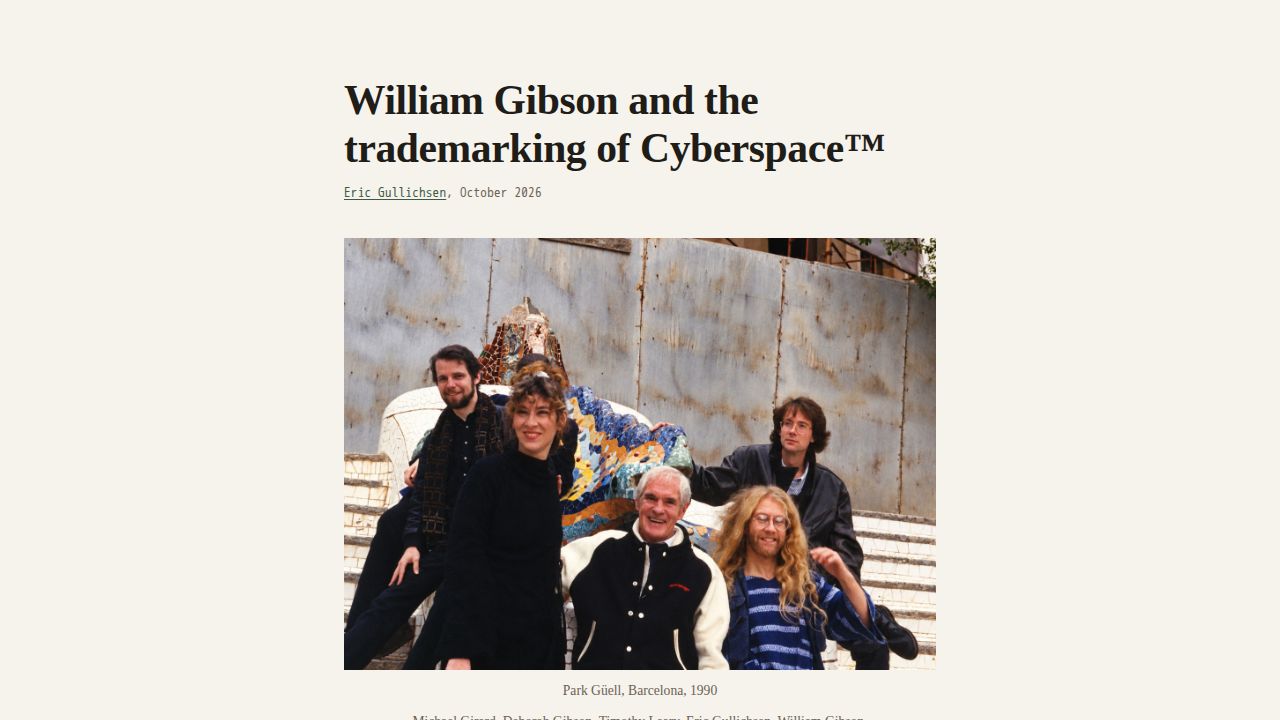
A persistent piece of tech lore suggests that the novelist William Gibson, famous for his 1984 novel *Neuromancer*, attempted to trademark the name of a researcher in retaliation for a corporate trademark filing. According to a firsthand account from a former Autodesk Research Lab employee, this story is a myth born from a combination of corporate friction and a prank by cultural figure Timothy Leary. The researcher, who worked on early virtual reality systems in the late 1980s, clarifies that while the core conflict regarding the term 'cyberspace' was real, the specific retaliation was fabricated.
In 1989, as Autodesk began developing virtual reality products, the company applied to register 'cyberspace' as a trademark. The researcher, who was close with Timothy Leary—a fan of Gibson’s work—was informed that Gibson was 'miffed' by the move. The researcher sent a conciliatory letter to Gibson, which was met with a formal legal objection from Gibson's lawyers. However, the narrative shifted when Leary, described as an 'incorrigible prankster,' circulated a rumor that Gibson was attempting to trademark the researcher's name, Eric Gullichsen, as a retaliatory strike. This rumor was later embellished by other figures in the scene and eventually became accepted as historical fact.
The reality of the situation highlights the tension between literary influence and corporate branding. While Gibson did object to the trademarking of 'cyberspace'—famously noting that "Autodesk is not the street" in a later meeting—the specific 'trademarking of a person' remains a piece of folklore. The story serves as a reminder of how quickly anecdotes can be amplified into myth within tech subcultures, especially when they involve high-profile figures and the early, loosely defined era of the digital revolution. The researcher notes that while the legal friction over the term was genuine, the personal retaliation was a prank that simply stuck to the public consciousness.